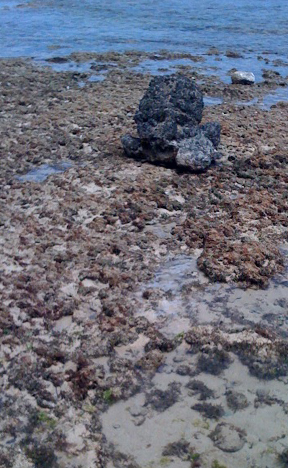
View of the art market—what will tomorrow bring?

22 05 2010

Shall we pick this one . . .
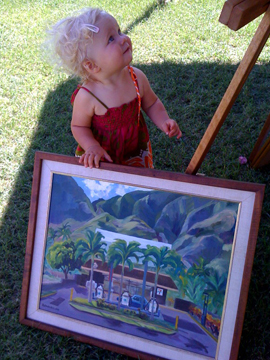
... or that one up there?

No one bought much art today at the Native Hawaiian Arts Market, but there were plenty of art appreciators.  I am happy to show my work and talk about it with others. I met some very nice people, and some friends stopped by.

The artists are expecting a Sunday crowd tomorrow, the 23rd, at the Bishop Museum, on the last event day of Maoli Arts Month. (Please see two posts earlier for info.)

Miss Marvelous liked “Gas Pumps in Paradise,” an earlier work painted in 1993 of the 7-Eleven and gas station in Kaaawa the day Bula Logan led a sovereignty march along Kamehameha Highway.

The painting was part of my “Painting the Town” collection of all the public structures in Kaaawa: the post office, the fire station, the school, the bath house, the library (bookmobile), and two bridges.

I remember organizing with Pat, the then director of Swanzy Beach Park, an art show reception to open the new covered lanai for the park facility. I showed the paintings with environmental portrait photography of the people who worked in the buildings. The only advertising was a hand-painted roadside sign by the summer fun kids that read, “Everybody come.” And everybody did!  Times have changed.

Rather than keep “Gas Pumps in Paradise” as a leaner becoming shop worn in the studio, I’ve marked it down to $200.00, solid koa frame included. The amount is half the original price.

Miss Marvelous enjoys the art show with her mom
Copyright 2010 Rebekah Luke


Let’s meet at the Native Hawaiian Arts Market at the Bishop Museum

14 05 2010

Welcome Spring

Looking for a venue to show my paintings, I asked for and am granted a spot at a two-day Hawaiian native arts fair—the Native Hawaiian Arts Market & Keiki Art Festival. I can’t say how many artists are showing in this 5th annual MAMo (Maoli Arts Month) event, but anytime there is a gathering of Hawaiians expressing themselves it’s worth noticing, especially if one lives in the Islands. It’s a good thing to keep up with the host culture of where you live.

So please save the dates: May 22 and 23, Bishop Museum grounds, entrance on Bernice street between Kalihi street and Kapalama avenue in Honolulu, 9 a.m. to 5 p.m. Special admission (see below).

With Native fine art and craftmanship, art that is now and art that is part of our ongoing living history, one can appreciate how the indigenous, or maoli, peoples, are evolving and what we have to say about ourselves, our land, and the universe.

The artwork you see will be for sale. It is a joy to support Native Hawaiian made products in Hawaii. At the Arts Market buyers can know that the Hawaiian artists can keep all the money earned from their original creations, as opposed to giving a commission to a gallery. Several sponsors and grant makers, led by the PA‘I Foundation, make this possible.

My own paintings, the ones on the PAINTINGS link of this website and several new canvases, are in the studio in different stages toward completion, gearing up for this event. The last time I exhibited actual pieces in a public gallery was in 2007 in a group show with my hapa Chinese cousins at Gallery on the Pali in Nuuanu. So, I’m very excited to return to the art scene in Honolulu.

This week I’ll be signing, varnishing, framing, inventorying, and pricing the work while DH builds a few more display easels. DH is my main easel, and perhaps he will take a break from his Bishop Museum docent gig to join me in greeting you when you come next Saturday and Sunday.

You’ll have a fabulous time. Meet the artists and talk to them about their work. Bring $5 admission. That will get you into the Bishop Museum galleries including the new Hawaiian Hall, as well. Bring a lot more kala (money) to buy some art. Artists have to eat too. 😉 Thank you and all the organizers and supporters of Maoli Arts!

Copyright 2010 Rebekah Luke


Before and after the party

10 05 2010

Granddaughter’s birthday, Mother’s Day, visits from grandparents, aunties, and friends from across the ocean.

Hawaiian tradition calls for a celebration when a child turns one because, in olden times, many children did not survive the first year of life.  Thankfully, our family’s littlest one is healthy and thriving! Hauoli la hanau!

While the rest of the family opened the imu (underground oven) to take out the kalua (baked) pork, turkeys, and uala (sweet potatoes) for the luau celebrating her first birthday,

Opening the imu. It's hot!

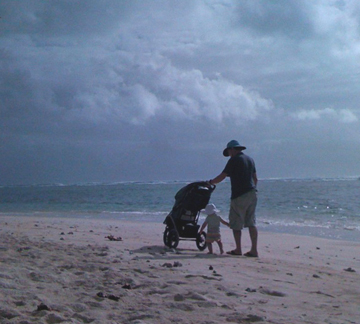
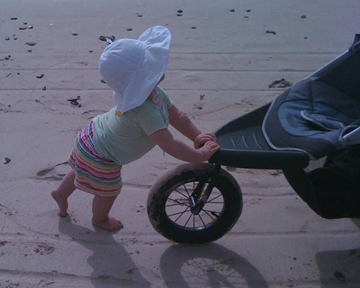
Miss Marvelous and her Papa went for a morning walk along the beach.

Miss Marvelous and Papa

Let me! I'm one now!

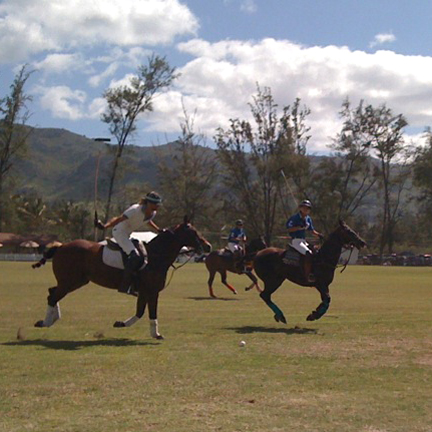
Next day was Mother’s Day, and we took a relaxing drive to Mokuleia on the North Shore to see the polo matches. White team won 4-3.

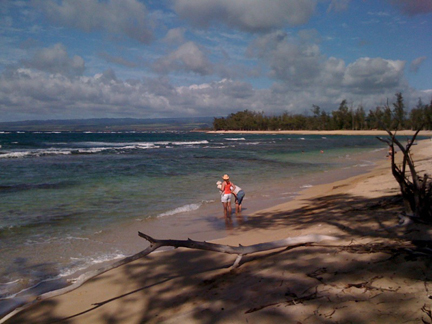
Beach at Mokuleia

White team won 4-3

Copyright 2010 Rebekah Luke


Movies on a rainy day – these filmmakers are Hawaiian

2 05 2010

More and more indigenous Hawaiians are finding not only their voices but their audiences. I find that exciting. The Oiwi Film Festival opens today at The Honolulu Academy of Arts Doris Duke Theatre. The festival features the collective voices of Native Hawaiian filmmakers and runs through May 26, different movies on different days. Tickets are affordable at $8 with a dollar off for students, seniors and military. If you’re a member of the Academy of Arts, five bucks gets you in. I posted more information on kalahuihawaii.wordpress.com.


In Hawaii, May Day is Lei Day

1 05 2010

The art of lei making is showcased today with the annual lei contest at Kapiolani Park in Waikiki. May Day is Lei Day in Hawaii after all. The public can see different styles of lei in categories of colors and age groups of the lei makers.

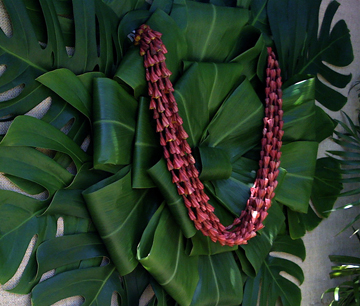
Last year’s 2009 grand prize winner was a drape of many strands of plumeria buds cleverly snipped and strung kui style. So simple, but different, and what an elegant statement!

Plumeria comprises the 2009 grand prize winner

The blue ribbon in last year’s mixed category was this beauty:

I apologize, I did not record the names of the lei makers, but I’m betting they are entering their creations again today.

Once, in the 1970s when we both did work for Sunset‘s Hawaii office, I had the pleasure of accompanying horticulturist Horace Clay who identified the plant materials in each lei as the contestants brought in their entries early on May 1. They came in from all islands, and Horace had a great time telling anecdotes about the plants and where or how far someone had to go to gather the material. The lei makers were so happy and proud of their lei. They had stayed up into the wee hours of the morning making them. I thought all of them were magnificent.

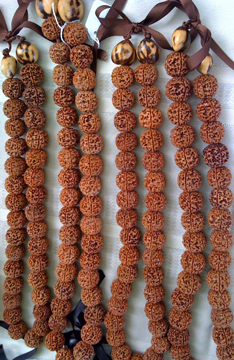
My friends Kamakea and Kai who come from a long family line of Hawaiian lei makers made these blue marble lei in the next photo to look like jewelry. I saw them for sale at last Saturday’s hoolaulea at Hauula Elementary School. Hawaiians use all sorts of natural plant materials, not just flowers, to adorn themselves. What looks like carved round Oriental wood beads is actually the inside of a blue marble (Elaeocarpus grandis) fruit.

Blue marble lei — by Kamakea & Kai

The brilliant blue skin is peeled away, revealing a fuzzy hairy seed. Kamakea and Kai wire brush and wash away the fuzz—a time-consuming job. They further clean out the indentations of each sphere with a Dremel tool. They drill holes for stringing and finish the necklaces with two polished kukui nuts and ribbon. Before all of that, however, they gather a supply of blue marbles. It’s a lot like fishing: seed lei makers don’t tell where their favorite spot is!

If you have time today, head on down to Kapiolani Park to see this year’s beautiful lei. They could inspire you in your own art work, in lei or other medium. In the event the judging takes a while, be prepared to wait for the viewing to open. There are other related Lei Day activities in the park to see, such as crafts and food and Hawaiian music and hula dancing.

Copyright 2010 Rebekah Luke


Perpetuate the Hawaiian national anthem

25 04 2010

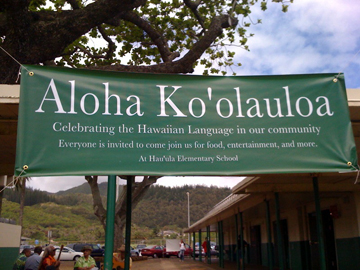
Yesterday’s long menu of activities all around the island was a feast for anybody interested in going and doing. Pick any venue, and one was sure to be entertained. I committed to a hoolaulea (country style backyard fair) at Hauula Elementary School, helping out at the Hawaiian civic club booth. Live Hawaiian music and hula, craft booths, local Hawaiian-style food, community exhibits, free parking.  The event drew attention to the Hawaiian language immersion schools on our coast.

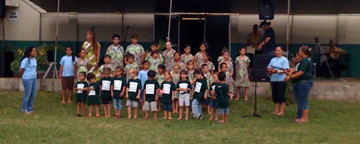
The singing of “Hawaii Ponoi” by the children impressed me the most. “Hawaii Ponoi” is our national anthem, and we stand when it is played or sung. When I was a kid, we learned the words to the first verse and the chorus, and we sang the chorus two times. Yesterday, I was blown away when, after the chorus, the children of Aha Punana Leo and Ke Kula Kaiapuni sang the other verses. Wow, that’s so maikai (good)! A proud, chicken-skin moment!

Haumana (students) and kumu (teachers) of Ke Kula Kaiapuni o Hauula, Ke Kula Kaiapuni o Kahuku, and Aha Punana Leo o Koolauloa

Here are the “Hawaii Ponoi” lyrics written by King Kalakaua to music composed by Henry Berger. They were first sung in 1874 at Kawaiahao Church.

(1st verse)
Hawaii ponoi
Nana i kou moi
Ka lani alii
Ke alii
============
(Chorus)
Makua lani e
Kamehameha e
Na kaua e pale
Me ka ihe
============
(2nd verse)
Hawaii ponoi
Nana i na alii
Na pua muli kou
Na pokii
============
(3rd verse)
Hawaii ponoi
E ka lahui e
O kau hana nui
E ui e
Copyright 2010 Rebekah Luke


Watching the tide, planning my day

25 04 2010

When the tide is low I can walk far along the beach and hardly notice any bothersome civilization on Kamehameha Highway.

Not a minus tide, but a slow gradual ebb to just zero, long enough to walk from Swanzy Beach to Kalaeokaoio and back, completely on the sand, at least two miles worth.

The air is so cool.

The few houses between the water and the road and the rustling of coconut palm fronds muffle any traffic sounds. It’s easy to notice the bird songs mixed with the audible rhythm of waves breaking on the horizon reef and the quiet crackles-and-pops from the emerging tide pools.

The wide beach lures out kids and grownups one by one to play. An older couple in bathrobes enjoys coffee and scenery from their lawn chairs. A kolea pauses.

Smells of limu. Tastes of salt.

On the return trip I rescue flowered lavender flip-flops left by a little girl playing in the sand.

An amusing sculpture surprises. Oh, … hello!

Back in the studio and examining the tide calendar, I see the next similar low tide will be next week on May 1, 2 3, 4 and 5 — in the morning. If you go, give thanks and always keep a watchful eye on the sea.

Copyright 2010 Rebekah Luke