The story of the boat lei

21 07 2010

Every two years in July about 50 sailing yachts compete from San Francisco Bay to Kaneohe Bay for the Pacific Cup, “the fun race to Hawaii.” It’s organized and hosted by Pacific Cup Yacht Club in Northern California and Kaneohe Yacht Club in Hawaii. The boats have handicap starts and sail under the Golden Gate Bridge and across the sea to arrive around the same time, hopefully, and in time for the parties ashore on Oahu.
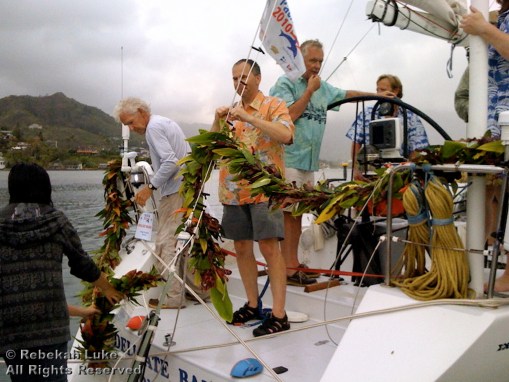
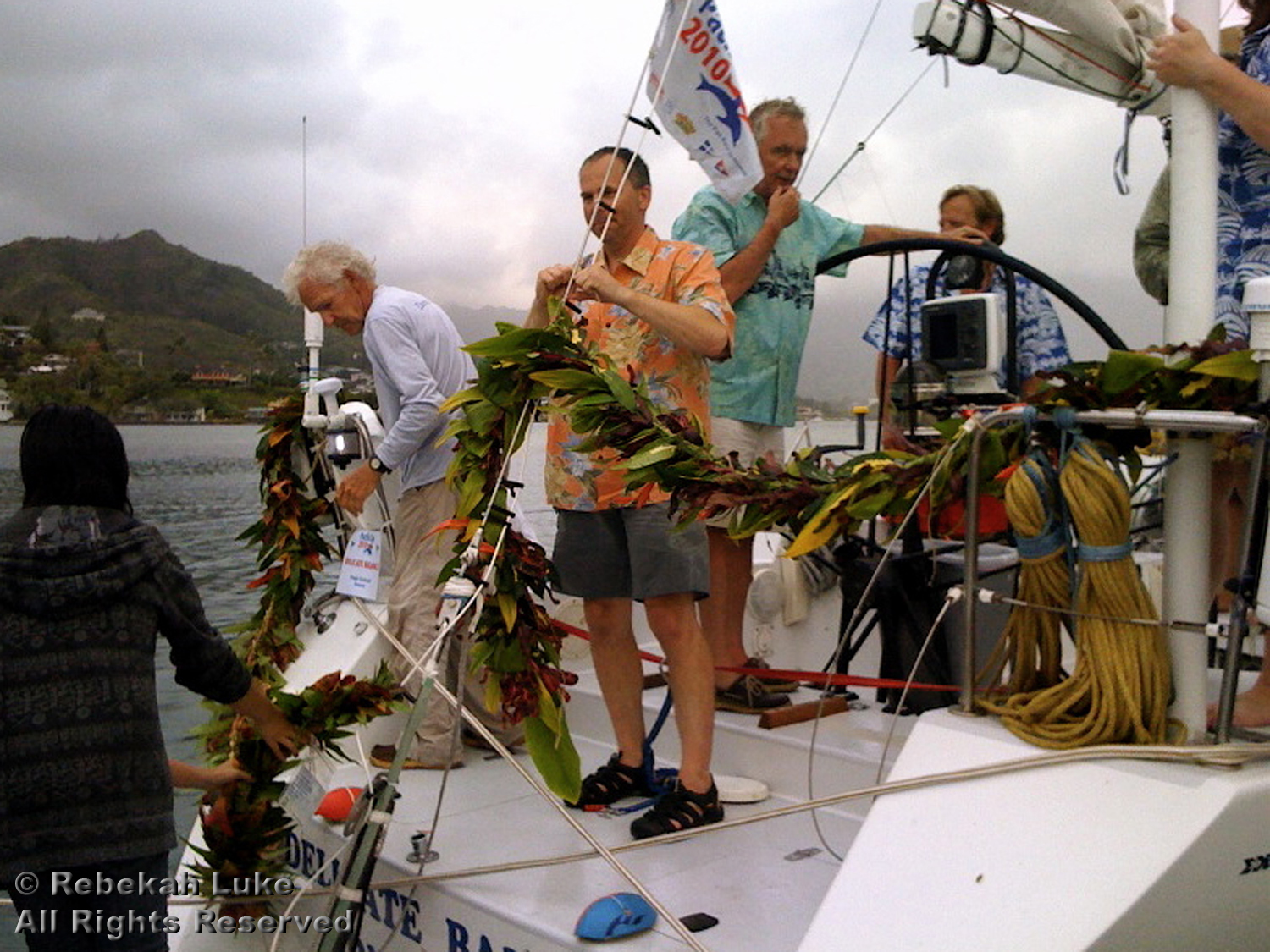
Delicate Balance arrives at Kaneohe on a cloudy afternoon. Two boat lei welcome her.

Many years ago I became the volunteer chair of the Boat Lei committee for KYC. I’m affectionately known as the Boat Lei Lady! A boat lei is a giant 12-foot garland of fresh, tropical foliage to greet and honor the vessel that carried her skipper and crew safely across the ocean.

Some call it a bow lei because it is attractive draped over the front end of the boat. Because most of the Pacific Cup yachts tie up stern to, we renamed it boat lei. It may be fastened anywhere as a decoration. The custom of presenting the lei has become a Pacific Cup tradition.

It takes many hands to make the boat lei for this event. The finished products are beautiful works of art and much admired. Event organizers inform the racers, family and friends they may pre-order the lei so it’s ready for their favorite boat when it arrives.

Last Friday, Saturday, and Sunday my crew made 45 boat lei! Many thanks to Michael and Bobbi for the promotion in California and for handling the sales from the e-store. That was a big help. Thanks to Kaneohe Yacht Club for lending the workspace. And, of course, mahalo (thanks) to all the lei artists for their remarkable team effort. Some KYC members also pitched in, and we are grateful for their contribution.
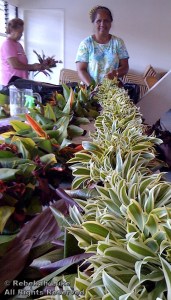
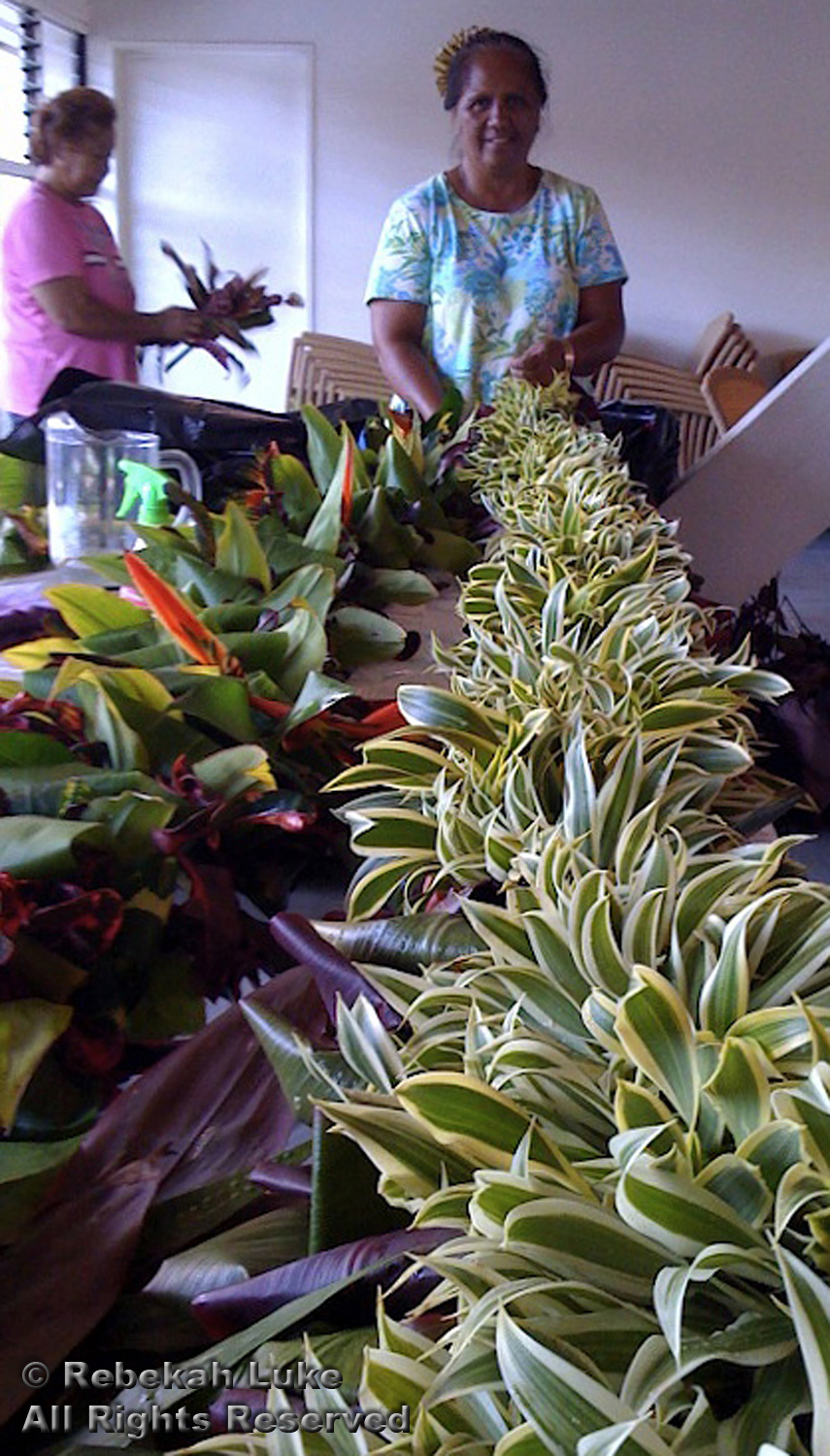
Haleaha finishes her 12-foot lei made with variegated Song of India clusters and red ti leaves

How do we make the lei? And how are we able to make so many? I’ve been asked. I will tell you! But first a little history and a funny story.

LITTLE HISTORY. In the early years I worked with  members of Hale Kuai Cooperative, a Native Hawaiian organization, to design the basic lei. We wanted cut foliage that would hold up in the sun, rain, trade winds, and salt air and look pretty for at least a couple of days in the elements.

We settled on lai (say LAH-EEE, leaves from the ti plant), lauae (say LUH-AU-AY , a fragrant yet sturdy fern … Phymatosorus scolopendria, syn. Microsorium scolopendria), and multi-colored croton leaves. Our friend Kapa showed us how to use floral wire to bind the foliage; she learned the use of wire from her kumu hula. And Aunty Havana, who is a master at making hat lei, showed how to combine everything into lovely creations, once she figured out how to translate small to big. The lei became a product of the Co-op.
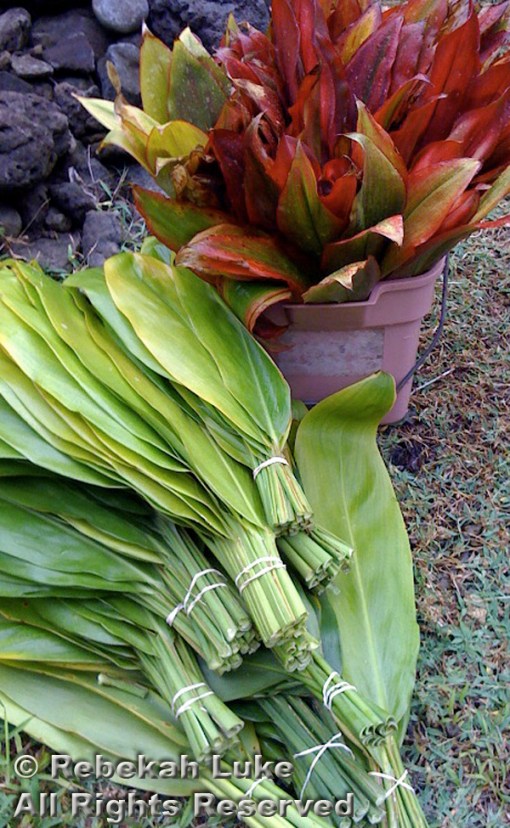
Green and red ti leaves. When picked from the stalk, they are called la‘i.

In more recent years, I have partnered with Koolauloa Hawaiian Civic Club to supply the boat lei. Volunteer members and friends gather the plant material from their gardens and from the mountains, donating the material and their time to the project. Other members and friends, who are artistic and enjoy lei making, work professionally as floral designers for a few days and assemble the lei.  The net proceeds from the sale of the lei provide scholarships for Native Hawaiian club members and/or their children.
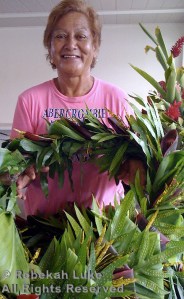
Clover's lei

FUNNY STORY. The very first year of my boat lei experience, we made the lei fine, but I had not given any thought to delivering the lei. I was so involved in providing a product that it did not occur to me that the boats would arrive at any time of day or night, 24/7. OMG! It was too late to organize any shift work.
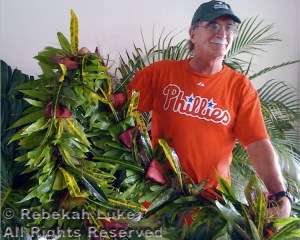
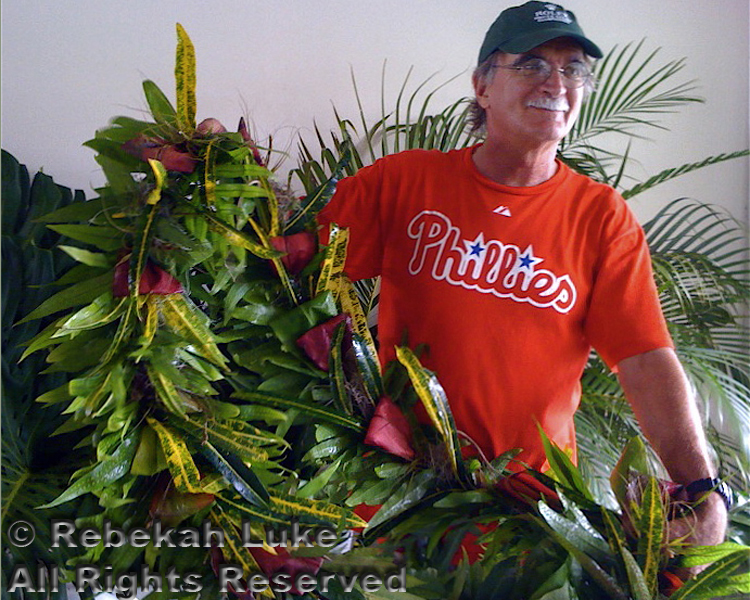
Pekelo's lei. Yellow-and-green croton and red ti provide accent color among the other greenery.

DH (Darling Husband) has a sailboat moored at the yacht club. He and I monitored the ETAs, and for an evening arrival, we would catnap on his little Mugquomp and wake up as the radio crackled to announce a boat had crossed the finish line. As we climbed out of our bunk and put on our jackets, for it was cool and a little rainy, we were fascinated and impressed by the radio conversation between Iwalani of the Escort committee and each arriving yacht. In her very calm, reassuring, professional, and gracious way, Iwalani gave the information and instructions on how to enter and come down the channel (with coral reef on both sides) to the dock at night. We had enough time on foot to greet the boat with a big lei.

DH and I were very short on sleep that year. Someone later suggested that we arrange for the Leis and Trays committee to deliver the lei. Brilliant! That committee is much larger and greets the boats with Hawaiian music, lei and mai tais for the captain and crew. Why not the lei for the boat too?

HOW TO MAKE A BOAT LEI

The style of the lei is known as wili (say WEE-LEE), meaning to wind. We wind by hand—one must have strong hands to tug—using wire instead of a natural twine or raffia traditionally used to make a hat or neck lei. Wire allows us to put the work down and makes it easier on our hands. Our lei are 12 feet long, but shorter lengths make lovely bouquets, wreaths, and table decorations. Allow enough time to gather & prep the materials and make the lei. It takes about two hours to make, excluding time to gather.

Each artist has his/her “line,” so do not worry that your lei does not look like someone else’s. It won’t. The variables are selection and placement of the plant material as well as the available supply of the greenery and flowers. Here is the basic way to construct the lei.
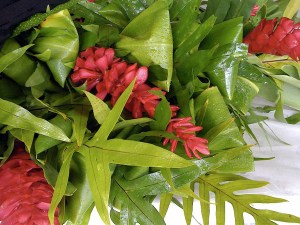
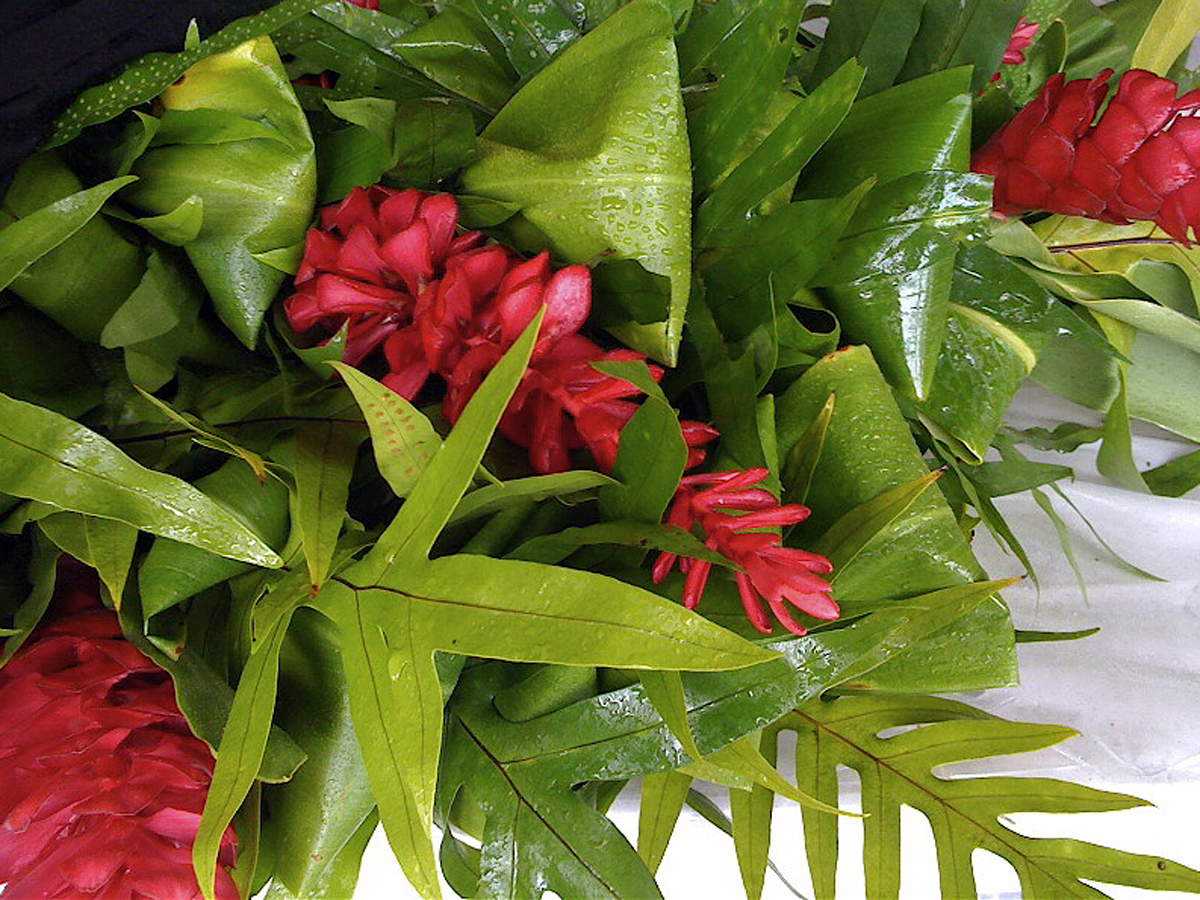
Ti, lauae, and red ginger combo

Materials to make one 12-foot lei:

1 kaau (which is 40) each of ti leaves, lauae, croton leaves. Be sure to leave about 4 inches of the stem on. The stems provide the slightly stiff backing for the lei. Do not strip the mid-rib from the ti leaf.

A few tropical flowers—such as, heliconia, red ginger, bird of paradise, bougainvillia clusters—with 6-inch stems to intersperse throughout the lei (optional)

One 24-gauge paddle wire from the floral supplier or craft store. One paddle is enough for one and a half lei, or approximately 18 feet total.

String to tie on the finished lei to the boat

Gloves (optional) to protect hands from croton stains

33-gal. plastic trash bag (optional)

Ululani's lei

Tools:

Work surface such as a table or floor, hand clippers, scissors, spray bottle of water

Step 1. Gather and prep materials by sorting by color and size, cleaning, and bundling.

Step 2. Pick a palette of 3 or 4 types of leaves if you have a wide choice. Include ti and lauae in your palette.

Step 3. Take the tip of a large ti leaf and turn it under to meet the stem, shiny side out, bending it in half but not creasing it. Fasten the tip to the stem with the wire, winding it around the leaf 5 inches from the ends. Begin winding about 5 inches from the beginning of the wire, securing both the ends of the leaf and the wire together. Grasp the two ends of the leaf and the end of the wire with one hand (if you’re right-handed, use your right hand), and wind the wire with the other hand, going around about 5 times. Be sure to pull the wire taut. This is the start. You will use one continuous length of wire and not cut it until the end (unless the wire accidentally breaks).

Step 4. With the tip of the ti leaf facing up and pointing toward you, place a lauae leaf on top with stem pointing toward you. Wind the wire around 1/2 inch down from your start 3 times, again pulling taut. Next add some croton in the same way, 1/2 inch down. Then add another ti leaf. This grouping forms your pattern.

Step 5. Repeat Step 4. Alternate placement right and left, if you wish, to cover the sides. With each addition, come down about 1/2 inch. Remember to pull the wire taut as you wind so that your lei does not come apart.

Keep the width of the lei the same by checking the sections you did earlier. If your lei is getting wider (this is common with beginning lei makers), allow less material to show or leave more space as you add. Just be sure your wire is wound every 1/2 inch, catching all the stems. From time to time, turn your lei over to examine the back. Hold your lei up with one hand and give it a good shake to make sure it is secure. From time to time, spray the lei with water to keep it fresh.

Step 6. After the lei is the desired length, end it by winding the wire around itself about 10 times. Snip wire with scissors. Tie string with a square knot to the lei at 4 or 5 points as a way to fasten the lei to the boat.

Step 7. Keep the lei cool until ready to decorate. A cold air-conditioned room is ideal. Mist with water.

Step 8 (optional). For transporting or brief storage, roll the lei into a wreath and place in a 33-gallon plastic trash bag. Leave an opening for the lei to breathe.

And that’s the story of the boat lei. Enjoy your creation!

Copyright 2010 Rebekah Luke


High energy circulating these days

16 07 2010

Can you feel it? Do you detect the energy? Do you feel that all your dreams will come true? Visualize, be open to possibilities, and seize the day! My list of what’s happened to me since my last post is long and scrunched up into a brief time. It’s mostly good. The events may fill a blog post or two, but not today.  So, just want to say thanks for visiting Rebekah’s Studio and hope you will surf around and enjoy some of the articles in the meantime and come back again.


If it’s Thursday, it must be Ho‘omaluhia!

9 07 2010

View of the Ko‘olau Mountains from Ho‘omaluhia

My painting group and I are busy putting together an August exhibition of our artwork at Ho‘omaluhia Botanical Garden Visitor Center in Kaneohe, Oahu. It opens on August 3, with a punch-and-cookies reception on August 5 (Thursday) from noon to 2 p.m. If you are in the area, please come to see it! If time permits, see the garden too. You may click on the garden link above to read about the garden, and on the link below for details of the art show. – Rebekah

CLICK FOR THE INVITATION


Mango from heaven

1 07 2010

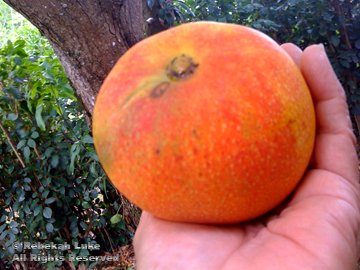
Oh joy! I found a gift in the healing space and turned it into a refreshing summer treat. A similar thing happened last season, about the time I launched this blog. I was thinking to myself, “I’m hungry,” when I glanced in the garden and saw one luscious fruit on the ground. Its name is Hayden (or Haden). Mahalo e ke Akua!

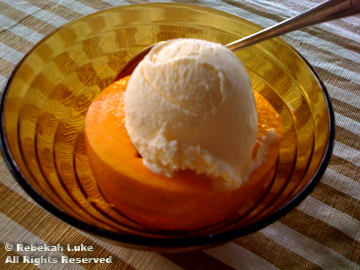
Fresh mango

a la mode

Recipe: Run a knife around the waist of the fruit (NOT through the stem end), twist apart into halves, twist pit to remove (over the sink, eat pulp around seed before discarding), fill cavity with vanilla ice cream. Enjoy immediately. Mmmm, good.

Copyright 2010 Rebekah Luke


Touring Kauai

30 06 2010

Aloha everyone!

Been gone. I went holoholo (driving) on Kauai with DH and his sister Penny’s family from Pennsylvania. Two days and one night. Six people, one van.

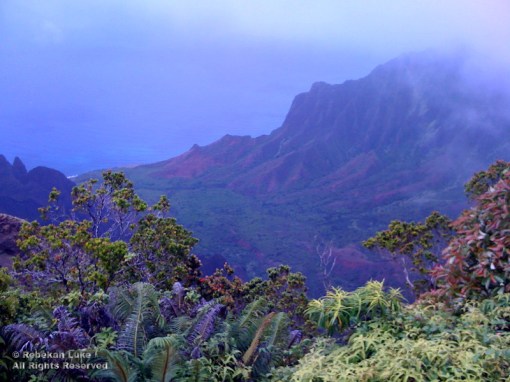
Kalalau Valley

From Lihue Airport, around the island in a counter-clockwise direction the first day to the end of the road at Kee Beach; then clockwise to the end of the road (PuuoKila lookout) on the second day, touring the highlights most first-time visitors see.

My camera of choice for some time now is the iPhone 3G version 3.1.2. Hope you enjoy my unaltered photos and that they inspire you to create!

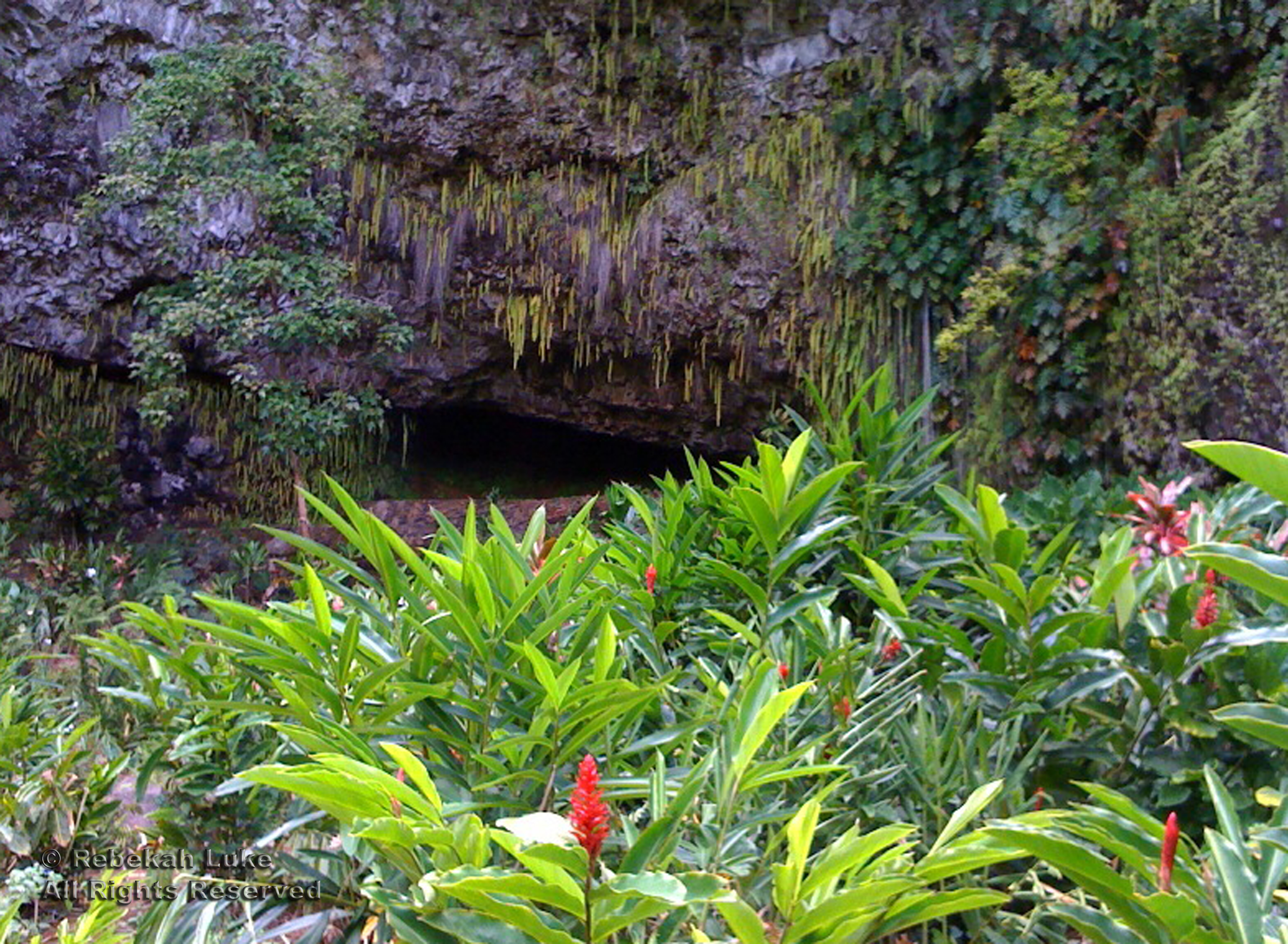
Fern Grotto at Wailua River

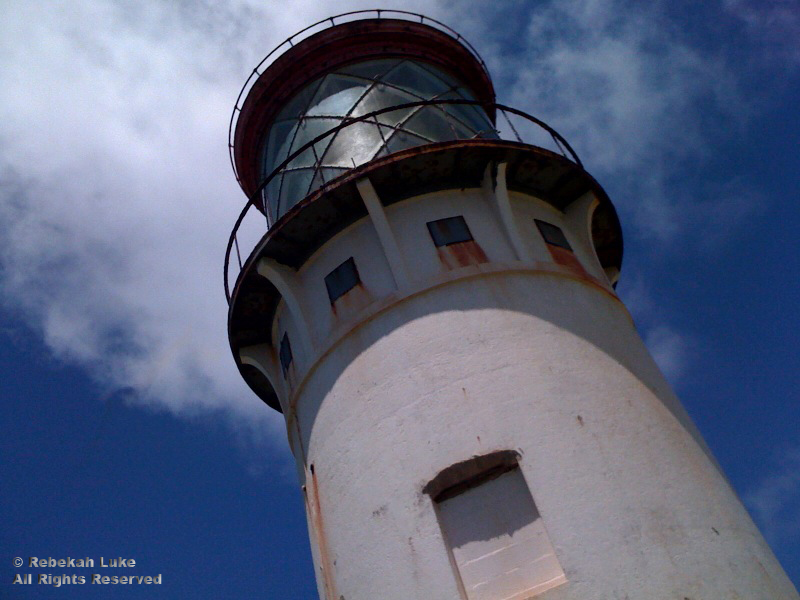
Old Kilauea Lighthouse - a national historic landmark. The surrounding area is a national wildlife refuge.

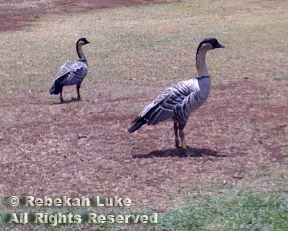
Endangered nene (native Hawaiian goose) (Branta sandvicensis)

Hanalei Valley with loi kalo (taro gardens)

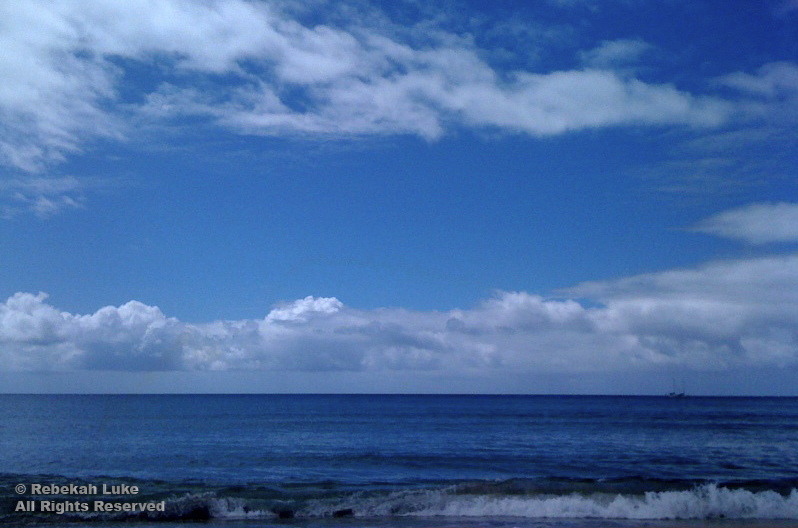
Hanalei Bay and sailboats

Maniniholo Dry Cave

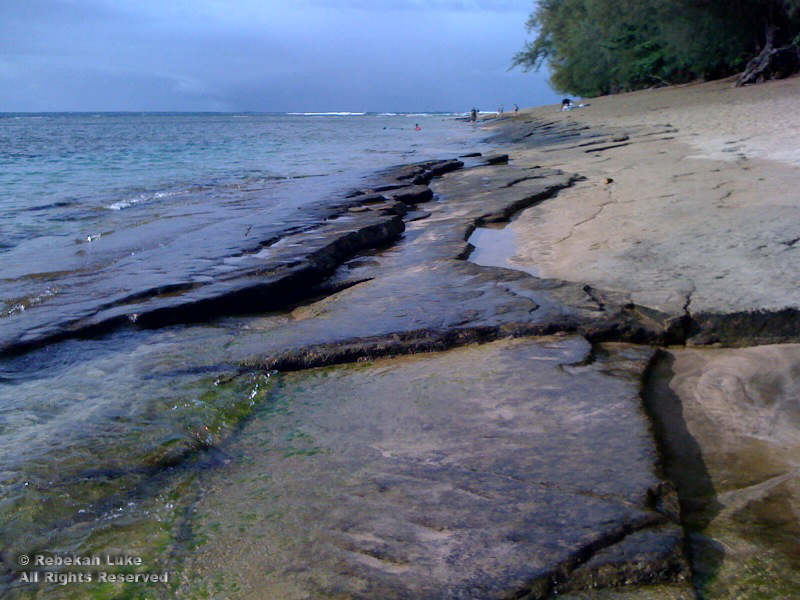
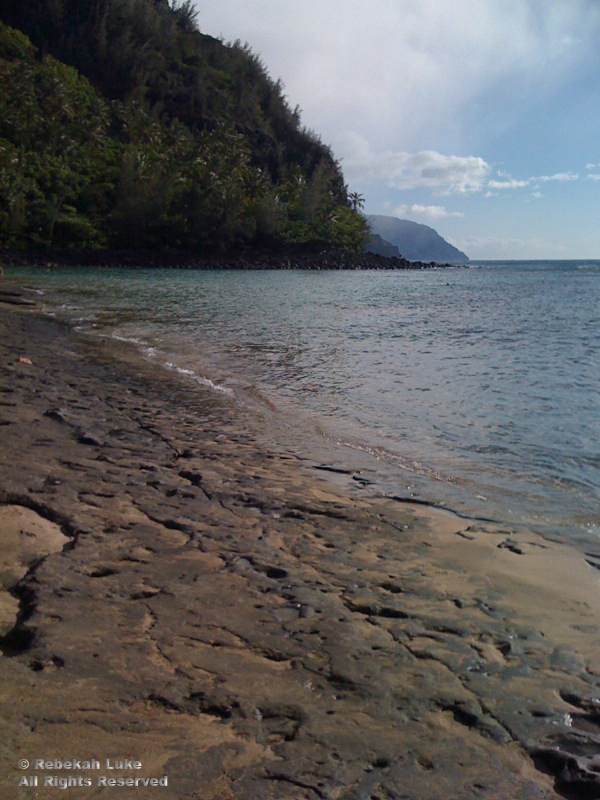
Kee Beach

Northwest Kauai from Kee Beach

Alekoko (Menehune Fishpond)

Waimea Canyon. I see their faces now.

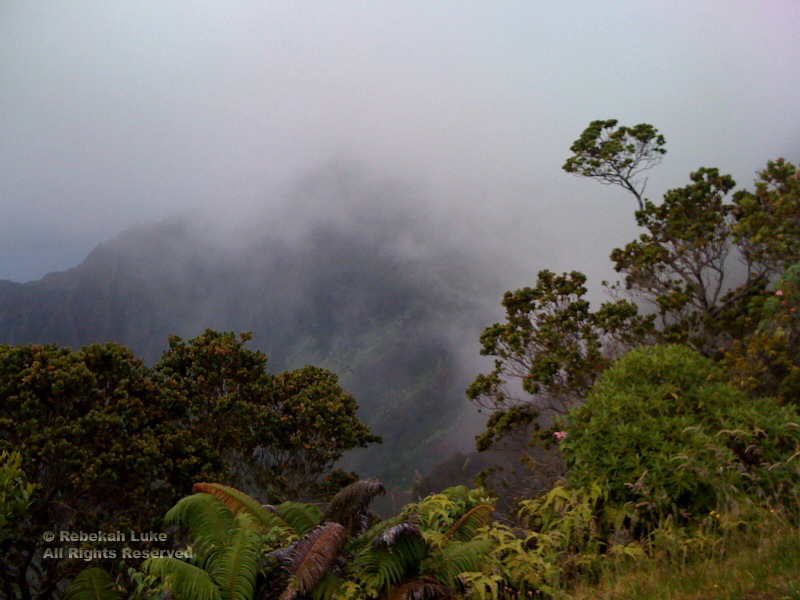
In the clouds. When we arrived at the ma uka lookout to Kalalau Valley, we looked out to a sea of white, waiting patiently until the clouds lifted to reveal the valley and the surf far below (see top photo)

Copyright 2010 Rebekah Luke


The panax hedge

10 06 2010

I must tell you. I must document it here. The panax hedge I mentioned in my last post. Not that I will ever forget it.

If you live on Oahu and you need your hedge trimmed, chances are it is either of mock orange or panax. Previous owners Linda and Gary planted ours. Once, when the studio had a budget for landscape maintenance and I mentioned a hedge, the tree trimmer really did ask over the phone, mock orange or panax?

Company’s coming in fewer than a couple of weeks. That’s incentive to take care of  some things long overdue. Sort of like expecting a visit from one’s mother. The punch list included trimming the mature hedge on two sides of the lot. To be considerate of our two neighbors’ and our own health, it was time.

Memorial Day weekend seemed a good block of time for this chore. I got out the ladder and the loppers and started the job. DH wanted to know exactly how high the cut hedge would be. So I trimmed a sample. Then it worked out that whoever was atop the ladder (the two of us took turns) could sight a line and cut away.

We like the hedge because it is so “island.” We prefer it to a fence or a wall. It grows—boy, does it grow. All one has to do is stick a cutting into the ground. It offers wonderful privacy and, if you let it grow as big as ours, condos for birds. When it’s hot and humid, you can give it a squirt with the garden hose, and the evaporation from the thick mass of green leaves cools the air.

What happens when the panax gets too tall? In high winds, the whipping branches/logs could be damaging. They block the flow of the trade winds, sunlight for the rest of the garden, and in our case, the views of the mountains, ocean, and sky. Yep, pretty tall.

Trimming back the panax remedied all of that. Plus, Alice Brown gets to sunbathe on the deck longer. That dog: she just knows how to recharge.

We’re happy to finish the project! It was hard work, not without incident. I am recovering from a mean bump on the head from one of the logs. Gave me a goose egg, I think they call it, and a black eye, my first. No pictures, please.

My neighbor Kim was very kind and told me about arnica and Dermablend, about which my naturopath and equestrian friends concurred would help. Just in case, I went to the ER for a CT scan, and the docs say my brain’s good. Reiki helps too.

After loading, hauling, and unloading a few truckloads of green waste to the dump today, we are promising to keep the hedge maintained. Oh, yes, we made that promise before to no avail, but I’m sure we will be more conscientious in the future.

Copyright 2010 Rebekah Luke


Changing it up and the alumni art show

6 06 2010

Before releasing students for the holiday break from Art Center College of Design in Pasadena, where I received intense training in photography, the head administrator sat us down for a little chat.

He advised putting the camera away and treating ourselves to viewing and experiencing other forms of art for inspiration and stimulation.

The program was such that one’s creative juices were pretty much dried up by the end of the term. Five studio courses, 10 concurrent assignments due in two weeks at any given time, photo lab work until 10 pm six nights a week, and frank critiques. If one attended fresh out of high school with no college academics, then those classes were mandatory at night in addition.

Why, you might wonder, did I pick this school, in my 30s even. Because I admired several of its alumni who mentored me when I worked alongside them at the magazine. They were professional photographers at the top of their game, and I came to realize their training influenced the way they were, not just as photographers but as people.

To write blog posts, I like to examine any ongoing themes in my life. I wonder, is now a time for reorganizing? Remembering the art school advice to change it up, today I’m taking stock and reporting the other art forms I’ve experience in the past month or so.

A trip to the lighting showroom. I’m conscious of light: the amount of light, its direction, its quality. Lighting was not my strong suit in art school in that lighting a scene or set with artificial light was challenging. I did learn enough to recognize lighting differences, though I couldn’t always execute them, and I learned the lingo. I know what I like and don’t like about light, and I can tell you why. When I learned to paint, I learned more about the logic of light.

This month, after living a long time dissatisfied with a certain light bulb and dated fixture where I live, I am ecstatic that DH agreed to let the professionals fix the lighting deficiencies and non-design in our home. A trip to the lighting store and a very pleasant consultation with the designer Adir resulted in a solution that is a compromise between husband, wife, and pocketbook, but everyone is happy so far. It’s fun to look at an array of light fixtures, design catalogs, and photo books of interior design.

Moonlight Mele on the Lawn concert. Saturday night’s program of performing arts at the Bishop Museum featured the Tau Dance Theater, Kaukahi, John Cruz, Halau Mohala Ilima, Samadhi Hawaii aerial silk trapeze, and Ledward Kaapana. Each performed first-class numbers. Three of the groups were new to me, impressive and enjoyable. With summer here there are lots of concerts to choose from. Besides taking in the music, I noticed things like the visual form of the dance, costuming, lighting (again), sound, logistical set-up, and audience reaction.

Alumni art show. This isn’t the first year of an alumni art show at my high school, but it is the first time I’m exhibiting there. It’s open just a few hours during the alumni kick-off event this coming week and a couple of hours during the luau itself. I am planning to work the show, taking a look at other alumni artists’ artwork. Today I delivered the new still lifes, all at special Punahou alumni reduced prices. If  seeing the show June 10 or 12 interests you (the event represents about 30 artists), please contact me, and I will get back to you with information.

Going to Kauai. Plans to entertain visiting relatives include a trip to Kauai. It’s a brief two-day, one-night whirlwind tour of the island, and we’ll all be tourists. It has been so long since us local folks were last there. Hey, it’s summertime! You have to go somewhere!

Garden maintenance. Might sound boring and too much like work, but this is a type of meditation for me. Since pruning the hedge, I’m thrilled to see the ocean and the sky from the studio. The shorter hedge is in better scale for our lot and the street, there’s more air and light for both us and the neighbors, and more sunshine for the vegetable garden. In the renewed view plane ma uka (toward the mountains) I now see the fruit trees in the landscape beyond as well as two lava rock faces in the mountains.

Loving a parade or two. Kamehameha Day is observed this Saturday, June 12, from 9:30 a.m. to 1 p.m. with the annual floral parade, but I heard the route is changed from previous years. It will start on Ala Moana near Fort DeRussy and go in the ewa direction, turn right at Punchbowl street, then left on King street to Iolani Palace. This parade is the best opportunity to see the pau (pronounced pahh-oo) riders, women on horseback representing the various islands of Hawaii with their colorful skirts and elaborate floral lei. DH and I will put in some community service with Koolauloa Hawaiian Civic Club in the hot dogs-and-hamburgers booth on the palace grounds. The following day, June 13, I’d love to take in the Pan-Pacific evening parade, from 5 to 7 p.m. as it processes through Waikiki down Kalakaua avenue.

It’s a good time to change it up. I’ll see you!

Copyright 2010 Rebekah Luke