Spring cleaning for summer

10 06 2011

It’s a little late for me to be spring cleaning. I mean, really late. But Chalida and her family are in town, and on Saturday they are coming here for several days to take care of the animals while DH and I take a scouting trip to North Kohala to plan a family reunion there for 2012.

Chalida, the daughter of my good friend Linda, lives and teaches in San Francisco. She, her hubby, also an educator, and two children ages 3 and 3 months are an adventurous family. A bicycle family. I think they may not even own a car and manage quite well, thank you, on two wheelers. They love to travel.

After a couple of nights at the Hilton Hawaiian Village that has a pool and lots of visitor diversions, they’ll drive here over the mountain. I’m happy to return the hospitality. Chalida and her sister Lisa picked me up (Lisa drove) from SFO and put me up one whirlwind weekend when I flew over to surprise Linda for her big birthday party. (Note: A great way to avoid jet lag, HNL to SFO. Take the red-eye flight on Friday night, party on Saturday, fly home Sunday, arrive for dinner.)

Mugshot, literally. From left, Chalida, me, and Lisa. A souvenir, with patina from the dishwasher, from Linda's birthday. We're modeling lipstick for Lisa's upcoming wedding.

The last time Chalida was here was for my and DH’s wedding, and she was just a tot. It will be great for her son to meet Miss Marvelous, I’m thinking.

Today I am still in the process of converting the studio to a guest suite for four. As you can imagine, all of you who have been here, it is a monumental task. It will be a transformation! I decided to do this for myself as much as for our friends.

Why did I wait so long? I won’t try to make excuses. Just trying to “talk” it out here to uncover some reasons and then promise not to do it again. Sort of like the promise I made when I said I would never move again. Because it’s so hard.

First, I’m part Chinese. What I consider messiness and clutter is just the Chinese way, at least from my parents’ generation, and I found this to be true when I visited Chinese homes in China. What a revelation! It’s a cultural carry-over. Like, it’s in our genes!

Next, I’m an artist/writer/producer, and there are ideas on the back of envelops, leftovers from an earlier project that got buried when I started the next one, all of that paper that I want to read some day. Even DH, who has looked down his nose at my things, my precious things like my beloved mug in the photo, finally admitted, “It’s hard.” We both crave the Zen look. (But do you know that in Japan people have separate “store houses”? I saw on TV.) In reality, our style is Eclectic.

Anyway, my intention is to toss, toss, toss. I believe when Nature appears with its disasters It spares those who have cleaned house. So I’m working on it. For a time I allowed www.flylady.com to be my coach. She says rearranged clutter is still clutter. (If you have CHAOS, Can’t Have Anybody Over Syndrome, you may want FlyLady to help you, but a word of warning, she sends you a lot of emails.) So I know the drill. I just have to put it into action. By tomorrow. I better get busy!

Copyright 2011 Rebekah Luke


MAMo tee designs by Erin Malie

23 05 2011

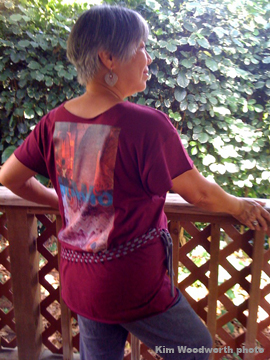
I love my new top, cut and embellished by Erin Malie! She and her mom Charlotte had a busy booth at yesterday’s Native Hawaiian arts market at the Bishop Museum. Erin Malie redesigns crew neck T-shirts with a pair of scissors, weaving, and tying. I promised in my last post about the Maoli Arts Month event to show photos of my purchase.

Sleeve and bottom hems and original crew neck binding removed while printed design is left intact

V neck and diagonal placement of the basket weave feature make this more flattering than the original crew neck T

Each garment is custom made for her customer. I admired her designs at last year’s market but didn’t get one: peek-a-boo backs and sides, off-the-shoulder looks, lattice fronts, spaghetti straps, tank tops, sexy, youthful, or demure.

“Thank you” to DH for urging me to order one this time. First I bought the shirt, that turned out to be the last one available in the color and size I wanted. Lucky me!

There was a photo sample book, but the designer’s approach with me was to ask what kind of clothes I liked to wear. I also explained what kind of clothes I didn’t want to wear. Mine was the first V neck and slanted torso she made.

I asked DH and Kim to make some photos so I could show you, and I picked these two. Thank you for the fun photo shoot. Erin Malie, thank you, I love my top and I wish you every success!

Copyright 2011 Rebekah Luke


Foods my ancestors ate

20 05 2011

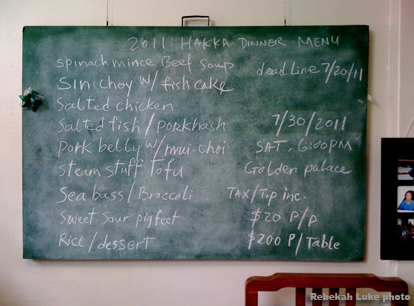
Hakka menu

The theory of eating the foods my ancestors ate for good health came to mind when I saw two board menus recently: a Hakka dinner menu planned by the Tsung Tsin Association in Honolulu, and the day’s local specials at the Heeia Pier General Store and Deli on Oahu.

They reminded me of a model for sustainability presented at the “Chefs & Farmers Facing Future” forum I attended last month: create tighter communities and make friends with your neighbors.

At lunch with Cousin Millie (see my 5/15/2011 post) she asked if we would be interested in joining the Tsung Tsin Association, an international club that practices and preserves the (Chinese) Hakka culture.
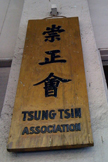
We have Hakka genes. Hakka people descend from the Han people and migrated at various times for various reasons from northern China to the south and beyond. Hakka people are still migrating. They are nomadic.

Cousin Audrey Helen and I decided we would go to the Sunday meeting in Chinatown (Millie couldn’t make it) to check it out—for Millie—and report back. What do they do? I asked. Millie said she was told they eat and learn about Hakka culture (in that order). I chuckled.

Everyone the world around agrees eating has priority. There it was on Sunday—a Hakka Dinner Menu posted in the clubhouse. There are no Hakka restaurants on Oahu, but the association found a restaurant in Chinatown that would cook the special menu for them. I thought of my friend Linda.

I met Linda in the Sunset magazine food test kitchens in the Seventies. I left the magazine after a couple of years, and she enjoyed a long career as food editor. When she retired in 2005 Linda planned a trip to China to research Hakka cuisine. It was an eating tour with all the arrangements made, right down to the chef of most meals, by Linda. She needed two more travelers to make up her party of 10 for a group rate, so DH and I did not have to think twice to accept the invitation. All we had to do was pay and show up in Beijing on the appointed day.

There are some basics to Hakka cuisine, but we also found that food took on added flavors from whichever region Hakka people lived.

Both Linda and I will have food books out in 2012—hers the product of her Hakka cuisine research, and mine a reprint of Everyone, Eat Slowly that has recipes and anecdotes of my family. The Tsung Tsin Association members might want copies, I’m guessing.

So that’s the Chinese side.

The other side is part Native Hawaiian. What’s native on the menu below is the “kalua pig,” “guava,” “kalo” and  “o‘io.” And it wasn’t lost on me! These foods are not the traditional plate lunch fare. How refreshing to see what the new chefs like Mark Noguchi are coming up with.
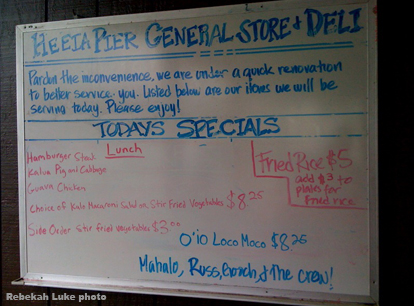
Looks good to me

The eatery that served up local-style food at the end of He‘eia pier, has reopened under new ownership/management, much to my delight. It had been closed for months since the previous owners retired. It is one of the very few ocean-front restaurants on the long coast between Kailua and Haleiwa. DH and I used to bicycle there from the studio for breakfast and watch the fishing boats come and go, or stop there on the drive back from town. Its scenic value is popular with artists.

From this menu, though the other diners recommended the guava chicken, I tried the fried rice. It’s a sautéed mixture of onion, green onion, carrot, egg, bacon, Spam—all diced finely—rice, and (I think) a little oyster sauce.
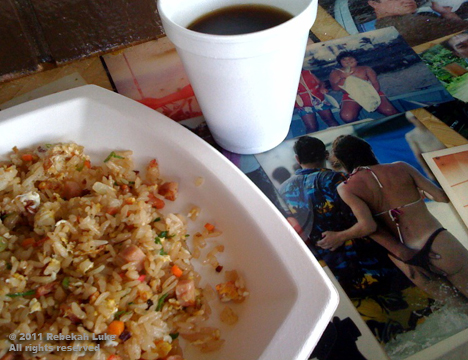
Island fried-rice breakfast at the counter decorated with snapshots. Wow!

You can sit at the picnic tables or the small counter and listen to the folks talk story, or meander down the dock and watch the people fish for their own food. A man offered me some dried aku he made to go with my fried rice.
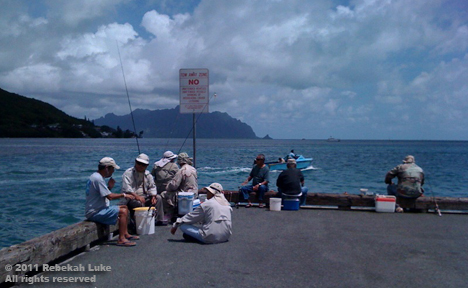
He‘eia pier

All this seems to fit in nicely with the message received from the “Chefs & Farmers Facing Future” food forum, organized by shegrowsfood.com and Leeward Community College, whose food service students wanted to give back to the industry that gives so much to them. The event brought together farmers, fishers, aquaculturists, ranchers, chefs, and media reps to explore promoting and using locally produced food for sustainability in our island communities.

The meeting started with the sobering fact that there is only about a 10-days’ supply of food here with most of it arriving by ship or plane.

What I took away from the meeting was the notion that to sustain we should form tighter communities and make new friends with our neighbors within them.

As the Hakka association that takes care of its clan. (My grandmother took care of her own family of 15 and neighbor bachelors by growing vegetables in her victory garden.)

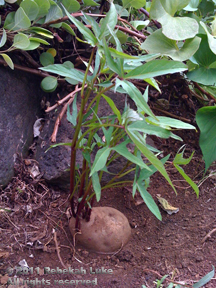
Or the young creative chefs serving dishes with local ingredients, or the man who gave his fish to me, or my own developing garden that sometimes produces enough to share with the neighbors. It’s a great life.

Sweet potato in my garden

Copyright 2011 Rebekah Luke


Musical conducting from my dan tien

19 04 2011

Thanks for visiting again! I’ve been away from the studio a bit, doing some cool stuff. It’s never too late to learn something new!

As my Facebook friends already know, I went to a choral conductors workshop one weekend and a food forum with farmers and chefs the next.

Back in the studio I’m preparing for a visit from the Easter bunny, a group art show, a trip to Kohala to scout for a family reunion in 2012, and summer drawing classes for the neighborhood kids. Today’s story is …

CONDUCTING FROM MY DAN TIEN

A last-minute private plea to attend a choral conductors workshop appeared in my e-mailbox, saying only five conductors and four singers had signed up.

What a shame, because a delightful gentleman named Rodney Eichenberger was in Honolulu to show and teach how a choir director’s posture and hand movements produced a corresponding sound from a group of singers. A conductor’s conductor, the professor was now in his 80s; and who knows when he would come to the Islands again. Would I consider attending?

With 30 dollars I registered as a singer for two days (Conductors need singers!), with meals included. To me, this was a good deal, to learn from the best! I enjoy choral singing: school choirs, church choir, pit chorus, Honolulu Chorale, lunchtime choir, glee club, neighborhood Christmas carolers. If the opportunity presents itself and it feels right in my heart, I’m there.

Before teaching us his bag of tricks, Rod Eichenberger shared his rules for conductors:

No talking. Except to identify the title of the piece, line or measure. The time spent talking is put to better use singing.

No playing of individual voice parts. Just start right in and sing the piece start-to-finish two times. This encourages sight-reading, he said. For those singers who have personal issues with the music, they will resolve the issue by the end of the second time through. We had just one exception to this rule when the accompanist pointed out that the melody line was not being sung correctly.

Conduct from your energy power center, your dan tien, not any higher or lower. Dan tien is a Chinese tai chi term referring to the area of your body about the size of your fist, below your navel and toward the curve of your back. Described another way, when conducting keep your hand movements directly in front of you, about waist level and below while standing perfectly straight.

*Trust the singers. They are here to sing and will deliver.

Each conductor took a turn at conducting a new piece. Then Rod would explain and show how to make it better. A turn of the wrist here. A tiny pinch with the fingers there. He found something to improve in each conductor’s style. In a second rehearsal each conductor could review a challenging passage with the singers, and Professor Eichenberger would suggest further changes.

The workshop results were so remarkable, our teacher had all of us giggling! So easy, so much better, and so much fun! In the end, I recall, say, eight conductors each with just a few minutes of instruction, eight new pieces music, and three dozen singers learned remarkably simple and logical choral technique. With an amazing piano accompanist who was reading the music the first day for the first time herself, we performed a concert at 8 p.m. on the second day. We were good! I feel so lucky to be a part of this group experience.

Copyright 2011 Rebekah Luke


Eye on the ball

23 03 2011

Photographer Me Ra Koh on TV’s The Nate Berkus Show on Monday had a tip for people who shoot digital pictures. I think that includes just about all of us! Her specialty is photographing children.

You know how, every time we take a picture, the tendency is to stop to look and see what kind of image we got? Her advice is to resist the temptation and to just keep shooting. The reason is, when we are photographing, we are using our creative right brains. When we stop to analyze, we are switching to our left brains. Not to mention the images we might miss when we pause.

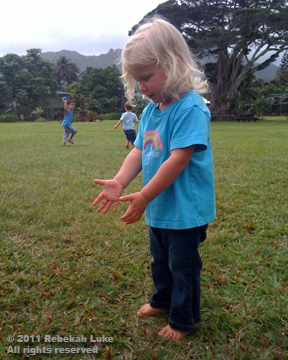
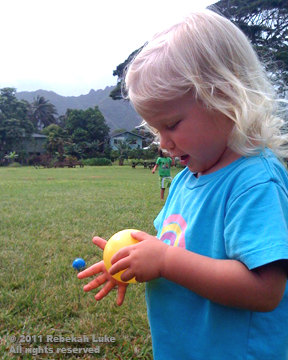
This morning I accompanied Miss Marvelous to her family-child interaction program and recorded her being so very pleased about catching the yellow ball her Papa threw. Luckily, there was no voice saying, “Lemme see!”

Copyright 2011 Rebekah Luke


My new favorite book about healing

6 03 2011

Hi Everyone,

Oprah did the interview in 2008, but only today did I finish reading the book from cover to cover.

My Stroke of Insight by Jill Bolte Taylor is my new favorite that I want to share. It is a wonderful gift for healing and answers many questions I had about universal life force energy. The author suggests how we can radiate peace and healing onto the world.

Dr. Jill is a brain scientist, a neuroanatomist, who observed herself having a stroke in 1996. Because of her academic study of the brain, she knew what was happening to her. And she made a conscious decision to recover so that she could educate others. In 2006, ten years since her left hemisphere was wounded, she finished her book, providing a valuable resource for families and caregivers.

I recall her appearance on Oprah’s show, and later caught more of her talk on  Oprah’s website. (Just click on the link.) I recall thinking, “Gosh, I wish this information was available to me when my dad had his strokes.” The medical community was not forthcoming in our hour of need. Where was the compassion? Or perhaps I didn’t know what questions to ask nor where to go for help.

And perhaps only now would the rest of what Dr. Jill reveals make sense to me. In other words, any earlier I would not be ready for it.

Two weeks ago the WCC Tai Chi Club hosted a workshop series, and my tai chi sister Karen had a big part in planning and coordinating the hospitality for participants who included about 20 out-of-towners.  Although her husband just had a stroke a few days before, Karen was determined to show up and follow through with the plans. I decided to present her with My Stroke of Insight. “She can re-gift it,” I thought, if she had already read it. Karen is a librarian, so I was hoping she would appreciate it in any case.

The bookstore at the mall had two copies in stock, and I bought both: one for Karen and one for me. I thank Karen for her situation that reminded me to seek the book!

The first adjective that comes to mind as you follow Dr. Jill’s experience is “fascinating.” In itself, the detailed account is useful in the event that we (I) or another loved one should find ourselves in a similar situation in the future. Further, Dr. Jill explains how the left brain (hemisphere) works and how the right brain works. With only the right half of her brain working, she experienced what it feels like to be One with the universe.

She encourages us to acknowledge the workings of the left brain and to practice using the right brain that will cause us to live in the present, rather than the past or future. She explains how every emotion is paired with a physiological response (physical body posture) that takes only 90 seconds to run its course, after which we can decide to come back to the present. Which leads to healing, peace, and . . . well, you’ll just have to read the book! Dr. Jill tells it best. Thank you, Dr. Jill!

Oh, and I just read on Dr. Jill’s website that there’s a movie planned!

Related information: On the Thank You page of Rebekah’s Studio I list links to Jill Bolte Taylor’s information, as well as that of Devon White who teaches “how to be at your best” by adjusting your physical body—something that Taylor writes about. Eckhardt Tolle’s A New Earth also addresses being present.

Copyright 2011 Rebekah Luke


Go kiss Uncle and Aunty

20 02 2011

Friday I went to a funeral and cried. Not for the deceased Barbara, an artist friend who I wish I’d seen more of in the retirement home where she lived, but for life. I was hoping I would see Nancy, and I did.

Nancy was Barbara’s neighbor and my late father’s late cousin’s widow. Although I hadn’t seen Nancy since both our men died about seven years ago, I recognized her sitting two rows in front of me by her tall Chinese stature and her impeccable attire from head to toe.

As the service ended, I went to say hello, knew that she would have a welcoming smile. “Rebekah!” she said. In a couple of sentences she brought me up to date on her in-laws. “It’s sad,” she said. “We’re all leaving.”

Then, another voice behind me said hello. It was Rita. Rita, Barbara, and I were Arts members of the National League of American Pen Women in Honolulu. I had not seen Rita for a long time either. As I browsed Barbara’s prints and paintings on display, Rita followed and chatted about a lot of things, as is her way, and offered me Kleenex while I was still trying to process my grief.

When I paused, remembering to be in the present, and decided to really listen, I found that she was telling me I should teach art to children. That it was so important. I allowed that I had thought about it, that others suggested the idea too, even before I left my last full-time job a while back. That I might start with the neighborhood kids who live down the road from the studio.

Satisfied that she had finally “reached” me, Rita proceeded to suggest exactly how to go about it—tools, supplies, age group, language, jokes to tell—and said she would send me her teaching materials. Rita still teaches in another part of the island, and, of course, teaching art was one of Barbara’s careers. “Okay … thanks!” I said, and gave her my mailing address.

Fifteen minutes later I met some of my “big” cousins (Mom’s side) for lunch. I brought some old black-and-white photos from the Fifties so they could identify the people in them. Looking at the pictures of us as small kids and teenagers set off plans for the next family reunion in 2012.

I am a member of the third generation in Hawaii, and today there are three subsequent generations of this family.

The first relative I told about plans for a reunion was 13-year-old Jai, who found me on Facebook and asked me to be his friend. Jai is the adopted son of one of my first cousins. Jai and I chatted online last night—I have never met him in person—and he wanted to know how many relatives there were, how many cousins he had and was there anyone his age.

I wrote I didn’t know the total number because there are a lot of babies now, and that’s why we needed to have a reunion. I wrote I would look up the information and let him know this coming week. Promise.

Copyright 2011 Rebekah Luke