The Hawaiian petitions protesting annexation

23 02 2011

In 1897 more than 38,000 Hawaiian nationals (the total population was 40,000) signed petitions, that were delivered to and acknowledged in Washington, D.C., protesting annexation by the United States. A hundred years later in 1997 Noenoe K. Silva, a Hawaiian, educated present-day Native Hawaiians when she found the documents in the U.S. Archives and brought them back to the Islands.

I was reminded of this last night over dinner with two woman warrior friends, Karen and Pat, who told me of the demonstration this past Monday at the statue of President William McKinley in Honolulu, where he is holding a so-called “Treaty of Annexation.” The point was, there is no annexation treaty.

Karen and Pat also alerted me to a controversial bill, relating to government, in the current Hawaii State legislature that is already set to be heard in the Ways and Means committee on Friday, Feb. 25. Hawaiian sovereignty activists, take note.

You may head on over to http://kalahuihawaii.wordpress.com for my Feb. 23 accounts and links to details of each. One is “Kue petition revisited” and the other is “Akaka bill: now what.” Noenoe Silva’s article is most sobering. http://libweb.hawaii.edu/digicoll/annexation/pet-intro.html

Copyright 2011 Rebekah Luke


Go kiss Uncle and Aunty

20 02 2011

Friday I went to a funeral and cried. Not for the deceased Barbara, an artist friend who I wish I’d seen more of in the retirement home where she lived, but for life. I was hoping I would see Nancy, and I did.

Nancy was Barbara’s neighbor and my late father’s late cousin’s widow. Although I hadn’t seen Nancy since both our men died about seven years ago, I recognized her sitting two rows in front of me by her tall Chinese stature and her impeccable attire from head to toe.

As the service ended, I went to say hello, knew that she would have a welcoming smile. “Rebekah!” she said. In a couple of sentences she brought me up to date on her in-laws. “It’s sad,” she said. “We’re all leaving.”

Then, another voice behind me said hello. It was Rita. Rita, Barbara, and I were Arts members of the National League of American Pen Women in Honolulu. I had not seen Rita for a long time either. As I browsed Barbara’s prints and paintings on display, Rita followed and chatted about a lot of things, as is her way, and offered me Kleenex while I was still trying to process my grief.

When I paused, remembering to be in the present, and decided to really listen, I found that she was telling me I should teach art to children. That it was so important. I allowed that I had thought about it, that others suggested the idea too, even before I left my last full-time job a while back. That I might start with the neighborhood kids who live down the road from the studio.

Satisfied that she had finally “reached” me, Rita proceeded to suggest exactly how to go about it—tools, supplies, age group, language, jokes to tell—and said she would send me her teaching materials. Rita still teaches in another part of the island, and, of course, teaching art was one of Barbara’s careers. “Okay … thanks!” I said, and gave her my mailing address.

Fifteen minutes later I met some of my “big” cousins (Mom’s side) for lunch. I brought some old black-and-white photos from the Fifties so they could identify the people in them. Looking at the pictures of us as small kids and teenagers set off plans for the next family reunion in 2012.

I am a member of the third generation in Hawaii, and today there are three subsequent generations of this family.

The first relative I told about plans for a reunion was 13-year-old Jai, who found me on Facebook and asked me to be his friend. Jai is the adopted son of one of my first cousins. Jai and I chatted online last night—I have never met him in person—and he wanted to know how many relatives there were, how many cousins he had and was there anyone his age.

I wrote I didn’t know the total number because there are a lot of babies now, and that’s why we needed to have a reunion. I wrote I would look up the information and let him know this coming week. Promise.

Copyright 2011 Rebekah Luke


Be mine

14 02 2011

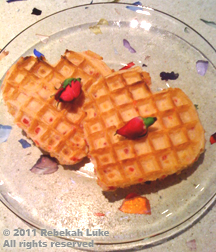
All my love. Happy Valentine's Day! xoxoxo


How does my garden grow?

10 02 2011

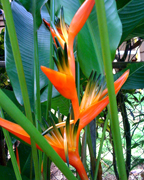
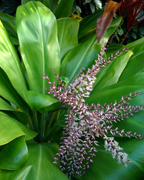
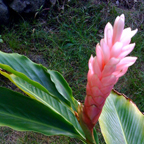
Heliconia

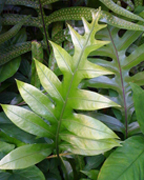
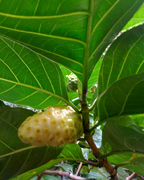
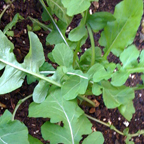
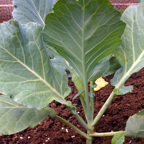
Very well, thank you! I snapped these photos today.

Lauae

Noni

Ti


We’re blessed with sunshine and rain year ’round. Flowers, herbs, vegetables, fruit and foliage.

Basil

Arugula

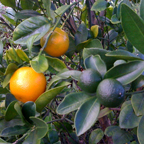
Calamansi

Collard

Pink Ginger

Kokio saintjohnianus

Kou

Kupukupu

Naio

Naio Papa

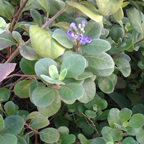
Pohinahina

Red Ginger

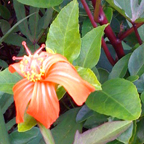
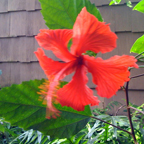
Red Hibiscus

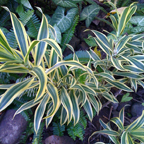
Song of India

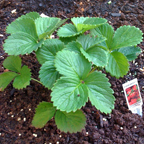
Strawberry

Sweet potato

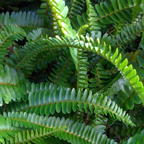
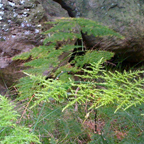
Maidenhair


Calamansi marmalade

8 02 2011

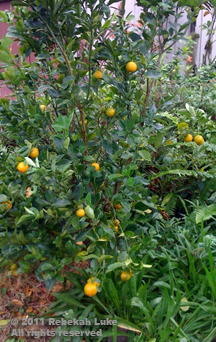
Calamansi tree with ripe fruit

Calamansi tree
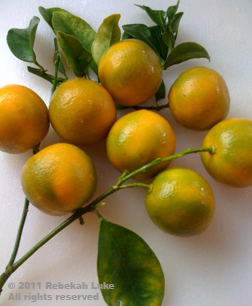
flowering and bearing both.
Let’s make marmalade!

My father’s former caregivers grow a calamansi tree outside their back porch in Kahuku, Oahu, and they use the juice of this fruit in their Filipino cooking to season meats, fish, and noodles.

I was so happy to learn about it, I planted a tree of our own several years ago in the garden where it gets full sun and good drainage. Growing food is so satisfying!

The botanical name is Citrofortunella microcarpa, sort of a cross between a kumquat and a mandarin orange, and it is native to the Philippines, according to my reading. The average diameter is slightly bigger than a quarter dollar. The flesh is tart, and the skin is sweet and thin.

Calamansi is believed to be a hybrid of a kumquat and a mandarin orange.

You can use it in cocktails in place of lime or lemon, and as the acid in a vinaigrette dressing. Yet, there are only so many cocktails one can drink and only so many salads one can dress.

When our tree starts bearing and the fruit begins to ripen, I make calamansi marmalade in the microwave, one small batch at a time.

I like marmalade with a lot of bitter peel, and I can’t always find it in the market. Calamansi preserves has the right amount of that flavor for me. It’s wonderful on toasted English muffins or on pancakes.

Here is my easy recipe, basically one part fruit to one part sugar. How sad that sugar is bad for our health. Calamansi marmalade is so delicious!

1 cup sugar + 1 cup calamansi

CALAMANSI MARMALADE

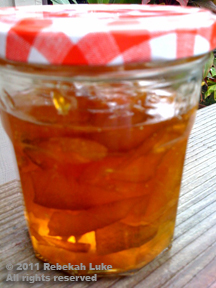
Have ready a clean glass jelly jar and lid. Either run them through the dishwasher or under hottest tap water and allow to drip dry. Wash and scrub 1 cup of whole ripe calamansi fruit with orange skin. Cut each fruit into fourths and remove seeds with the tip of the knife. Combine with 1 cup granulated sugar in a 4-quart glass measuring cup or similar microwave-safe container. Cover loosely with plastic wrap to catch splatters, leaving a vent so it won’t boil over into a mess. Place container in a larger dish to collect any syrup that does boil over. Cook in the microwave on full power for 7 to 10 minutes, stirring half way through to blend, until the calamansi appears cooked and shriveled, and until the mixture thickens but is still liquid. The mixture will be very hot. Using hot pads, carefully pour into the jelly jar. Put on the lid securely and refrigerate. As the marmalade cools, it will further thicken and gel into jelly and cause the lid to seal tightly. Keep stored in the refrigerator. Makes 1 cup.

Beautiful homemade marmalade!

Copyright 2011 Rebekah Luke


Punahou Carnival 2011

31 01 2011

This Friday and Saturday, Feb. 4 and 5. All the fun is bounded by Punahou Street and Wilder Avenue in Honolulu, from 11 a.m to 11 p.m., and I’ll be there. If you’re visiting, this is a great travel tip!

The big tent and the thrill rides are up, and they’re getting ready for the Punahou Carnival again. I’m here to plug my alma mater, with notes on my contribution and my favorites. It’s a humongous fundraiser put on by the junior class to raise scholarships. First-timers wonder how they do it. I’ll tell you how.

The school ropes in all the parents of the junior class and alumni to donate their time, labor, talent, and supply goods so that everything spent at the Carnival is profit for students.

The Carnival is such a bonding experience, you remember it for life and return every year to support it. There’s fun for all ages.

Banyan in the Park, an original oil on canvas by yours truly, for purchase at the Punahou Carnival Art Gallery. 16″ x 20″.

My contribution

For the past several years I’ve placed my paintings in the Art Gallery—50% of sales goes to the school, and put my time in at the Hawaiian Plate “booth.” I also help serve up the meal (5 to 8 p.m. Saturday).

Last year my graduating class was the second oldest still working the Carnival. We report to Dole Cafeteria and don aprons and hats to plate the meal of Hawaiian food. For anyone not of school age who isn’t interested in the midway carnival rides, it’s a nice place to relax because there is air-conditioning, there is continuous live music, and there are real bathrooms.

We used to prep and cook the food, and in years before that we worked the famous malasadas booth with Mr. Bowers until we were banned for making non-regulation sizes and shapes ;-). And frankly, I don’t remember what we did prior.

My favorites

Usually I carpool with DH and his daughter, also an alumna. We each arm ourselves with an empty shopping bag and an umbrella. We go to a secret parking place if the lots on campus are full. Tip: take the bus if you can or prepare to park and walk from neighboring streets.

These are some of our favorites:

  • Silent auction—Items vary from year to year, and sometimes we’re lucky. We scope this out first.
  • Art gallery—Always like to see what other island artists are doing; it just makes me want to paint more, though. A great collection.
  • Plant booth—I’ve donated bromeliads and small avocado trees. For my garden I’ve bought herbs, red and pink ginger, native Hawaiian species, water plants, and turf grass. They will hold your purchase for you to retrieve later, if you wish.
  • Malasadas—Of course, with a hot cup of coffee at night.
  • Jams and jellies—E.g., red pepper jelly and mango chutney. I think it sells out in the first hour on Friday 😦
  • Books—At the end you can fill up a bag and get it all for something really cheap.
  • White elephant—Quick survey. You never know what you might find.
  • Food—Whatever your heart’s desire, a separate booth for each. Gyros, corn on the cob, fruit smoothies, fried noodles, pizza, teriburgers, veggie stuff, Hawaiian food, chicken, Portuguese bean soup, ice cream, saimin and meat sticks … oh la la.
  • Produce—A crew goes to the Big Island to pick. I do my next week’s fruit and veggie shopping here.
  • Games—The kiddie games are a world apart. It’s fun to watch the little ones. I think it’s time to take Miss Marvelous there. There are games for older students and teens too. My Facebook friend Yo and her husband are parent chairs of the prizes this year.
  • Will call—You can check your loot here until time to go home.

So c’mon to the Punahou Carnival, alumni or not. Spend your money. It’s for a good cause!

Copyright 2011 Rebekah Luke


Working on a diptych

28 01 2011

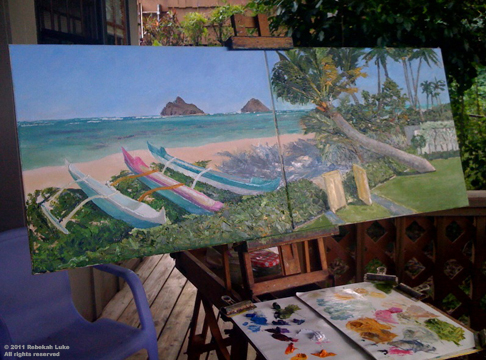
Off and on since Thanksgiving I’ve been working on finishing a diptych—an image on two panels, each of which can stand alone. I paint with oil on canvas. After I finish the painting, I’ll wait a long time—several months—for it to dry, apply a coat of varnish, and put the panels in two frames, most likely of koa.

This style is “impressionistic representationalism.” The viewer is able to recognize the scene, in this case, classic Lanikai Beach on Oahu with the Mokulua islets offshore. The paint edges are soft and approximate rather than hard and exact.

I like to paint images of where you might have been and want to remember, or of places where you’d rather be. This diptych began en plein air on location. Thanks to my hanai relatives Karl and Julie for their hospitality on site.

METHOD.  I started by loosely applying very thinned-out oil paint wash, using two or three tints, to the canvases with a 1.5″ brush, in a random pattern, leaving no white showing. I’m trying to leave  about 5 to 8% of this under painting showing to give the finished work a jeweled look.

While waiting for the wash to dry, I did an ink sketch of the scene, including the shadows, in my small notebook.  I made more than one sketch, experimenting with different compositions. Hand drawing a sketch reinforces the scene in my memory with similar results as taking written notes at a lecture.

I also set up my palette, generally arranging the colors following the color wheel order. Then I was ready to block in the scene on the canvas, using a brush and paint and referring to my ink drawing. I was careful to sight the objects to make sure my proportions were correct.  Yes, I actually stretched out my arm and measured with my thumb or a brush handle!

I mixed the “local” colors (middle tones) on my palette, as well as a dark and a light of the color. I painted analogously. That means, to darken a color I mixed in the next neighboring (on the color wheel) cool color for a shade. To lighten a color, I added a little of the next neighboring (on the color wheel)  warm color before adding white.

As a general example, take the local color red. For a dark red that one would see in the form shadow of, say, a tomato, I would mix in alizarin crimson. For a light red, I would add a little orange to the red before adding a little white. In teaching this technique, my teacher the late Gloria Foss called it the “Tomato Theory.”

Gloria taught that painting analogously was prettier than simply adding black or white, or the complement color to darken.

I love the idea of being able to call on your neighbors to help out instead of going  across the island!

When I finally got paint on canvas, I first put in the local colors that had the lightest values—usually a tint of white, and the darkest values. These were the off-white outrigger canoes and the dark coconut palm fronds. I put the lightest and darkest values in first that let me know all the values in between were relative to those two extremes.

As I painted I held up some paint on my palette knife against the object, like the sky and the ocean, to check that I had the hue and value (lightness or darkness) correct. I learned these last two tips from the late painter Peter Hayward.

I painted all over the canvas at once, by hue, considering both panels at the same time, so that the painting would become a tapestry of color. There are color repeats throughout.

In the end, much of the artwork is about the light. What direction is the light coming from in the painting? In plein air landscape painting, the sun moves constantly. What is the logic of light? That is, what does the light do when it hits a certain form? When it reflects?

Copyright 2011 Rebekah Luke

Related post: https://rebekahstudio.wordpress.com/2010/12/01/its-rock-star-snowing-on-lanikai-beach/