Images of the farm fair

9 07 2011

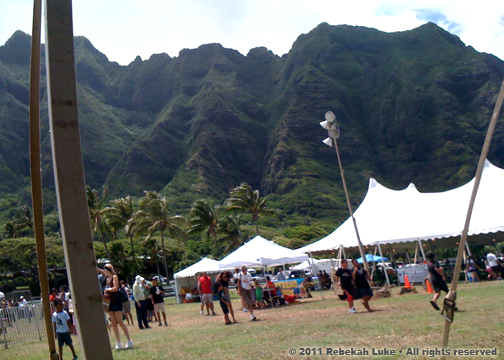
Posting my favorite farm fair photos from the 2011 Hawaii State Fair and 4-H Livestock Show at Kualoa Ranch today. We all like the fair because we get to see the farm animals. And I think the windward Oahu ranch is a great place to stage it, don’t you?

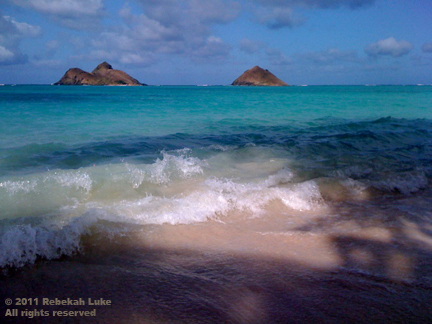
Kualoa Ranch provided the venue for the weekend fair. Not bad, eh?

“Made in Hawaii” and “buy local” seemed to characterize the food choices in both the farmers market and the food booths, including Kualoa Ranch All Natural Grass-fed beef, Kahuku corn, and OnoPops.

Check out all the local Hawaiian flavors of this frozen treat. I had "surinam cherry clove." The list includes "mango lime habanero," "watermelon hibiscus," "pickled green mango" and "starfruit lemongrass."

I love Kahuku corn!

These are my photos of the animals:

Our friend Oliver and a miniature horse named Buttercup

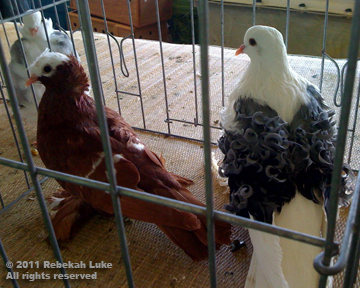
Some of the several kinds of fancy pigeons

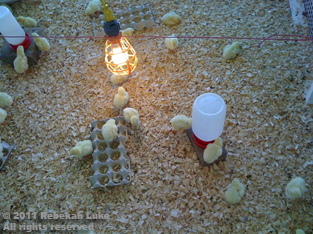
Newly born chicks

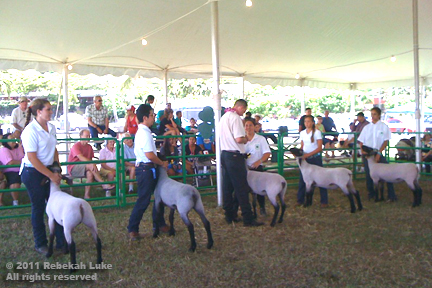
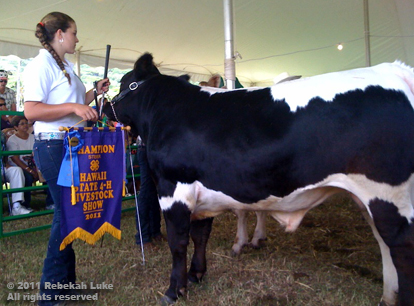
The out-of-town judge from Texas gives pointers to these 4-H'ers exhibiting their lambs. The champion is the one on the left and in the photo below.

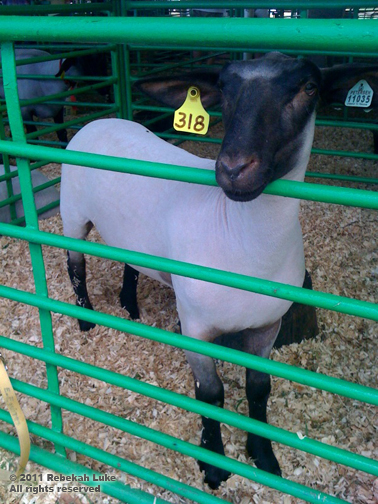
"Slick" is the name of this champion market lamb, exhibited by Sydney Porter, 15, and bred by Paul and Vera Eguires.

Here's Sydney, again, exhibiting "Major," the champion market steer.

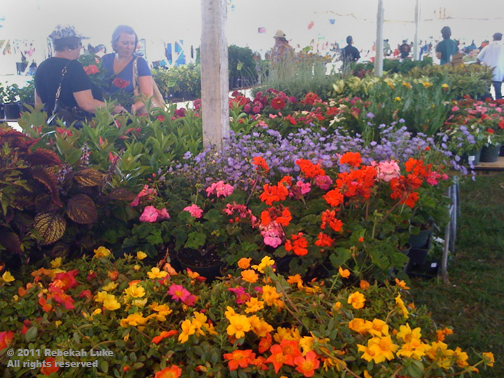
Besides eating the food and viewing the animals, there was a tent full of plants for sale.

Flowers and bedding plants galore

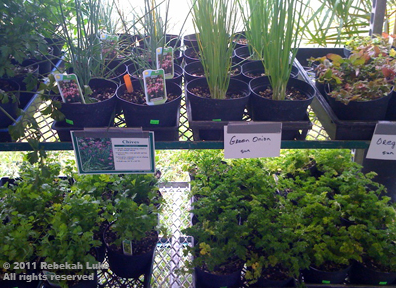
Fresh herbs for our recipes

Among the educational exhibits & demonstrations, I learned about aquaponics (e.g., raising tilapia and organic vegetables in one closed system)—something I’d like to invest in at the studio—from Olomana Gardens, and DH picked up some fresh garlic herb butter from Naked Cow Dairy.

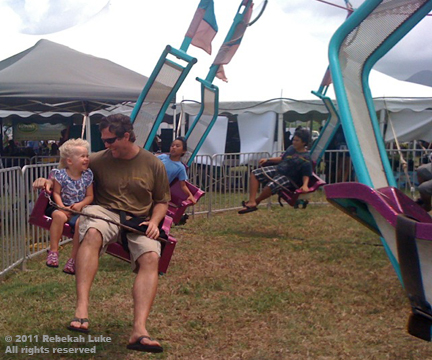
For the small kiddies there were the ubiquitous inflatable bouncies, horseback rides, and a couple of carnival rides. Before we left, Miss Marvelous and her dad had to spend their tickets one one last ride.

So much fun on the whirly ride! Wheeee!

The farm fair continues tomorrow, Sunday, from 9 a.m. to 5 p.m. Admission. I’m not sure if any large animals will be there tomorrow, as the auction takes place this evening. I hope the fair comes here again next year.

Copyright 2011 Rebekah Luke


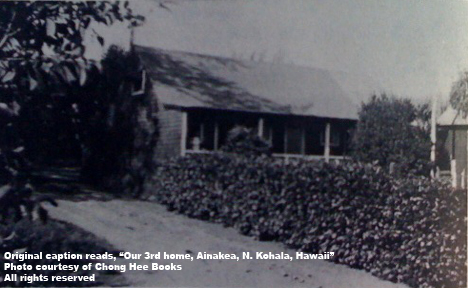
My grandfather Chong’s house

19 06 2011

My mother's birthplace

Fathers Day 2011

My trip to North Kohala last Monday, Tuesday, and Wednesday with my cousin Nathan, cousin Ann, and DH to scout places and activities for a family reunion in 2012 included some sleuthing, at least in our minds!

I do apologize for keeping you in suspense by my last post. 😉

Our main quest was to determine whether or not the house our mothers, aunties, and uncles were born in (between c. 1905 to 1925)—in the ahupuaa (land division) of Ainakea—was still standing. One would think a simple phone call could give the answer, but I had gotten conflicting reports in recent years, and even last week! With my investigative reporter’s background, I had to fly inter-island and see for myself. DH and my cousins would corroborate the findings.

Wouldn’t it be wonderful if the house was still there? I imagined our other cousins could see firsthand during our reunion where their (grand)parents lived. We could walk the aina (the land) where our ancestors played and grew up before they moved to Honolulu in 1925 for higher education. I belong to the third generation, and the sixth generation has begun to show up. What an opportunity this could be.

My grandfather Chong How Kong, also known as Ah Nee, worked as the overseer for the estate of Dr. Benjamin Davis Bond (1853-1930), a physician, and his wife Emma Renton Bond (1866-1951). It’s located in the ahupuaa of Iole. Iole is next to Ainakea. Dr. Bond’s father, the very Father Elias Bond (1813-1896) was responsible for my grandparents’ emigration from China.

Today, there is a new land owner (New Moon Foundation) and the “Bond Historic District,” a 56-acre federally registered historic district, within its boundaries. The towns of Hawi and Kapaau and other tiny communities on the northern tip of Hawaii island to the end of the road are characterized by country living, attractive small-business establishments, and a tightly knit, caring community.

Now, about those conflicting reports. From time to time over the years various family members would revisit the old homestead and be welcomed on the property by whoever lived there. I was there in 1990 with DH and cousins Elly and Jim, and in 2003 with my friends Linda and Terry. Ann went with her husband (now late) cousin Anson a few years later. We each took the obligatory photo of us standing in front of the house.
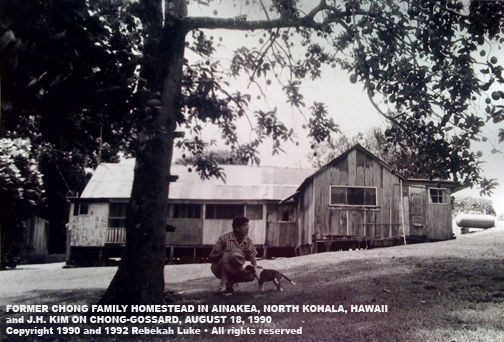
In 1990, the front porch is enclosed and the kitchen wing Ah Nee built is still attached. That's my cousin Jim with a friend in the shade of the avocado tree.
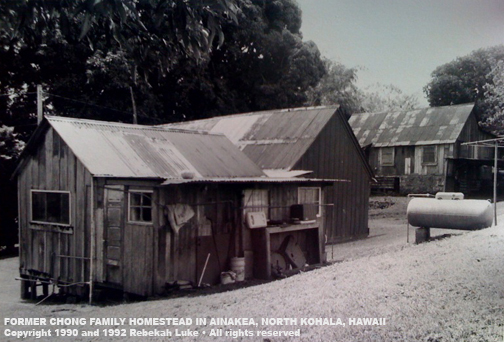
View of the kitchen in 1990. During our family's time in the 1920s, bachelors lived in the house in the rear. My grandmother cooked for them as well as for her own family of 15 children.
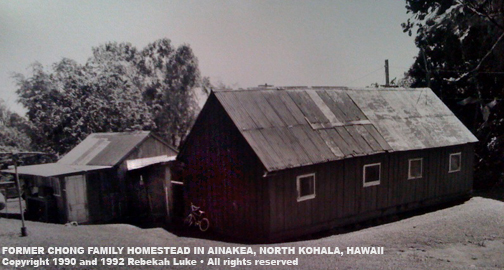
View from the back of the house in 1990
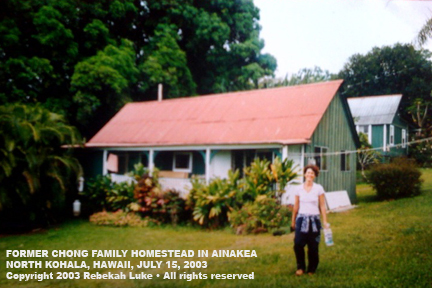
Brenda greets us in 2003. The kitchen has been removed, and the house renovated. The porch is open, there are new windows on the side, and the cottage in the back is spruced up. At this time it is occupied by the Kohala Family Homeschooling Learning Center.
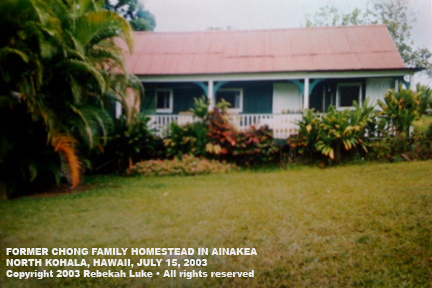
Front view with open porch
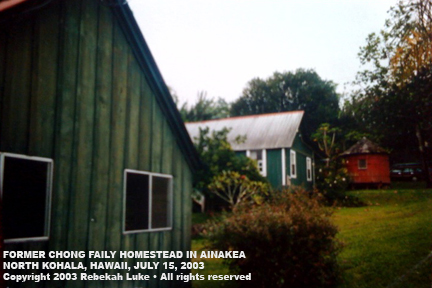
This 2003 photo shows new windows and paint.

After the magnitude-6.7 and 6.0 earthquakes hit Hawaii on October 15, 2006, I was curious how the house survived, if at all. By phone from Oahu I reached a woman who told me rather authoritatively that the house was still standing, but that it was tagged for demolition because of earthquake damage. Okay, that’s it, I thought.

A few times after that, cousins vacationing on the Big Island would call me for directions to the place. “Not sure if the house is still there,” I’d tell them, “but here’s how to find the site. Let me know what you find.” And I’d describe the wooden gate between two ironwood trees that opened onto the grassy driveway. Later they would say how they couldn’t find it. “Well, it’s a small house, and it’s some distance in from the highway,” I’d say.

Last year when I contacted New Moon Foundation to ask about the house and any educational programs it advertised on its website (research for the family reunion), the office had no idea what house I was referring to. That puzzled me.

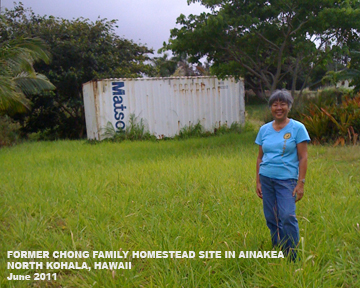
Continuing in my search, my Facebook friend Anna, a widow of a Bond descendant, introduced me to her son Boyd, who lives in Kapaau and knows a lot of North Kohala history. He said over the phone when I called to make an appointment to meet him that the house was still there. Oh, yay! When we met in person just a few days ago, he reported, “No, sorry, it’s not.” Indeed when we drove by, finally, we saw from the highway that it was gone. 😦  In its place: a Matson container.

On the adjacent lot are some homes, with a bumpy road parallel to the property line. We drove up the road for a better look at the lot from the side and turned around half way when it got rougher. A dog started barking, and the neighbor emerged. “Go talk to her,” DH urged.

I explained why we were there, how sad the houses were torn down (there was more than one). Her name was Mrs. Castillo.  She said, “Oh, they weren’t torn down. They were moved away on a truck.” Imagine my surprise! She said the property was then graded and a new road was put in. “Before or after the earthquake?” I asked. “Before,” she replied. Hmmm …

Staff at New Moon Foundation was gone for the afternoon, so we planned to ask the next morning. Back at the Kohala Village Inn, while I continued to reflect on this news, I decided to look up the satellite map from Google.

I found the aerial view of the neighbor’s house, and I also saw our family house we were looking for. I was sure of it. I got excited! I thought, the house was moved all right, but just to a spot farther in on same lot. Now I really had to return to the spot to find out for certain.

The next morning at the Iole office I explained our quest. “I’m imagining our parents as kids playing with the Bond kids, and there must have been a short cut between the two places,” I said to the admin staff. They pulled up the Google map, the same map, and mentioned it was the place of the Meditation Hale (house).

They’ll take us there!  Of our entire scouting trip, that was the most joyous moment for me. Through the fruit orchards, down the gulch into the forest, and up a private trail. As we walked into Ainakea, it was plainly evident that our grandparents’ house was not there after all. That darned Google map is old!

Between the Meditation Hall in the rear of the property and the highway we found a rock terrace and a pair of orange trees remaining. Back in the studio I’m comparing the photos from different eras, wishing I would have thought to bring them on the trip in the first place.
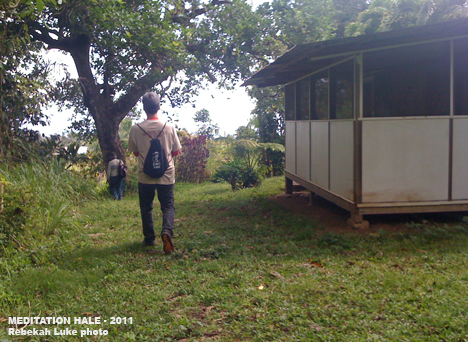
DH and cousin Nate walk quietly past the Meditation Hale at Ainakea.
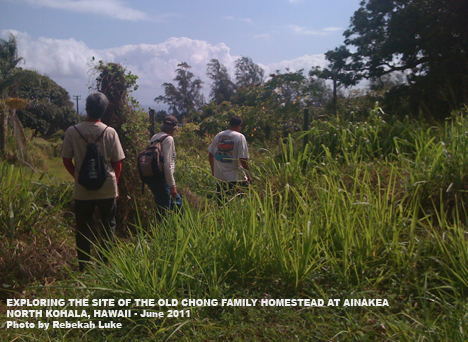
Looking toward the highway from the back of the property, you can see the ironwood trees where the old gate was.

Why do we care so much after all this time. Well, there’s just something about finding one’s roots, and my cousins will like to come here.

There’s still a missing piece to the puzzle. Where is the house? You know, we were so happy to walk on the land, we never asked New Moon Foundation the question.
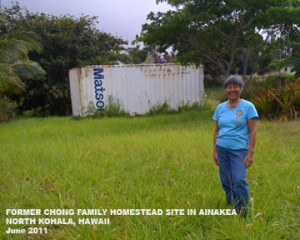
The Matson container and me

Copyright 2011 Rebekah Luke


Oh my goodness, look at Lanikai beach

31 05 2011

Classic Lanikai view

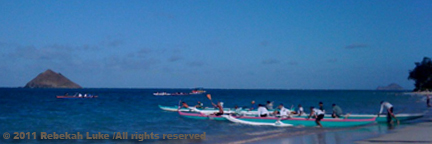
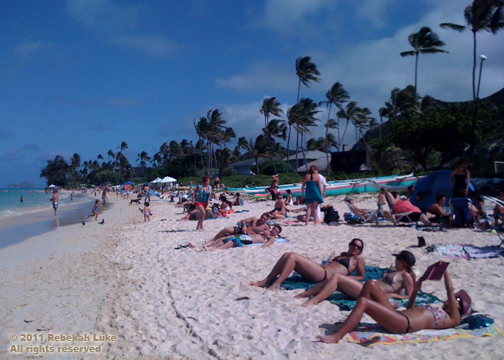
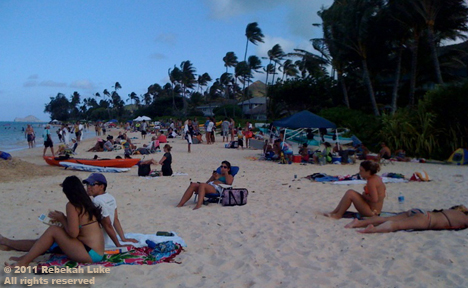
Aloha! This weekend our family spent some time at a beach house in Lanikai, Oahu. The idea of going there to relax this 3-day Memorial Day holiday was not an original one, as you can see. Never in my life have I seen this beach as crowded. On a normal day it is pretty secluded, tucked away around the corner from Kailua town, with outrigger canoes going out for practice in the early morning and late afternoon, a handful of sunbathers, and maybe a wedding shoot. But not yesterday. Take a look at all the activity!

Afternoon paddlers

Memorial Day 2011 at Lanikai

Escaping for some solitude on the sea

Beach sentinels

Please throw it again

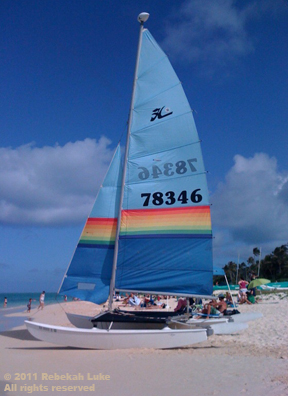
Colorful Hobie

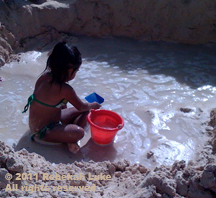
One of several "bathtubs"

One of several rafts

Para-something

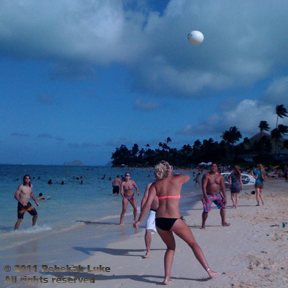
Volleyball

Looks like Waikiki beach

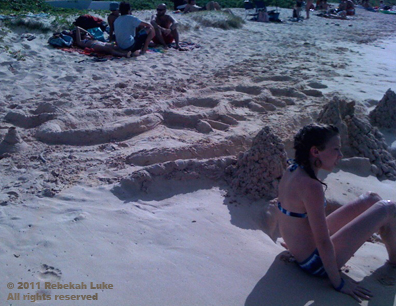
Sand caterpillar

Copyright 2011 Rebekah Luke


Native artists at the Bishop Museum

22 05 2011

The enjoyment for today consisted of going to the Bishop Museum to show my oil paintings alongside other Native Hawaiian artists at the art mart that is part of the MAMo (Maoli Arts Month) Festival in Hawaii. It happens every May.

The Museum booked DH, who is a volunteer docent, to guide a group from a philosopher’s conference on a 1-1/2 hour tour of Hawaiian Hall, making it doubly worthwhile for the two of us.

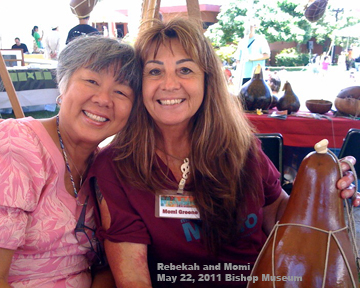
Ten minutes before show time, we arrived to find our spot next to my artist friend Momi Greene who came from Hawaii island with her decorated ipu (native gourd containers).

Me and my friend Momi Greene. Momi grows a native Hawaiian gourd and decorates them with carving and natural dyes she makes herself in the style that was done traditionally on the island of Niihau.

Years of art fence and craft fair experience paid off as we arrived ten minutes before show time, i.e. late. I saw some dark clouds as we drove over the mountain, and yes, we set up in the rain.

The paintings were fine; oil doesn’t like water. I just shake and blot them dry. DH staked the easels into the ground, and I attached extra ties, a good thing because gusty trade winds blew down from the valley throughout the day.

My brother-in-law Jon, in town from Oregon, came by to meet Momi in person because until today they had only been Facebook friends.

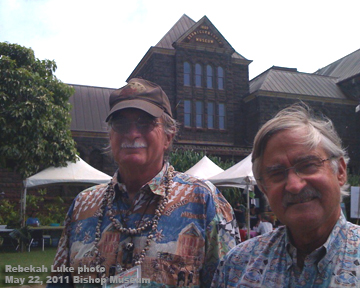
DH and Jon with the Bishop Museum's main building in the background

I loved the continuous live Hawaiian entertainment all day long.

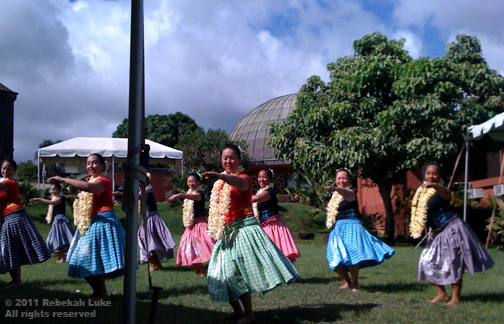
Hula dancers wear long yellow plumeria lei

DH and I made some purchases:

I bought—with cash from trading my no-longer-wanted gold and silver items—some things from other artists, including a nifty re-designed T-shirt. I always try to buy from other artists where I am selling. The designer, using scissors, cuts away parts of the original garment, slits holes in the knit, weaves in contrasting colors or ties the fabric in creative ways to make a one-of-a-kind top that is truly styling and all the rage at the Native Hawaiian art mart. I plan to post a photo of me modeling it soon!

Yesterday in a gust of wind one of Momi’s ipu broke. It looked like it could be glued, but she said she’ll stitch it back together, making the stitching part of the design and giving the ipu new life and a story. When I relayed that to DH, he immediately told Momi of our plans to take a trip to her island and that he wanted to buy the ipu after she stitched it. That piece would be really special and would she kapu (reserve) it for him, we’d pick it up next month.

She said, “Okay, do you want to see it first?” DH can be impulsive at times, but he’s a good buyer and appreciates fine Native Hawaiian-made artwork.

What I realized and appreciated the most at the end of the day was how much the art by Native Hawaiians has improved, including the marketing of it. If you are in Honolulu next May, please plan on attending some of the activities of Maoli Arts Month.

Copyright 2011 Rebekah Luke


Foods my ancestors ate

20 05 2011

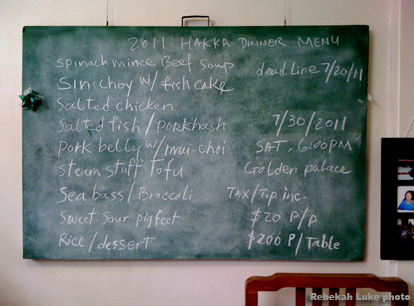
Hakka menu

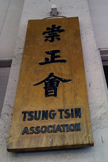
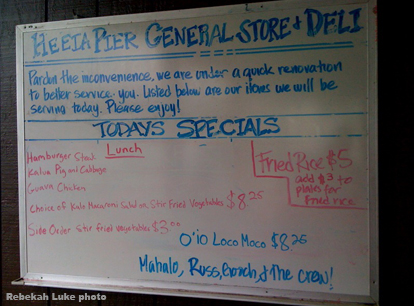
The theory of eating the foods my ancestors ate for good health came to mind when I saw two board menus recently: a Hakka dinner menu planned by the Tsung Tsin Association in Honolulu, and the day’s local specials at the Heeia Pier General Store and Deli on Oahu.

They reminded me of a model for sustainability presented at the “Chefs & Farmers Facing Future” forum I attended last month: create tighter communities and make friends with your neighbors.

At lunch with Cousin Millie (see my 5/15/2011 post) she asked if we would be interested in joining the Tsung Tsin Association, an international club that practices and preserves the (Chinese) Hakka culture.

We have Hakka genes. Hakka people descend from the Han people and migrated at various times for various reasons from northern China to the south and beyond. Hakka people are still migrating. They are nomadic.

Cousin Audrey Helen and I decided we would go to the Sunday meeting in Chinatown (Millie couldn’t make it) to check it out—for Millie—and report back. What do they do? I asked. Millie said she was told they eat and learn about Hakka culture (in that order). I chuckled.

Everyone the world around agrees eating has priority. There it was on Sunday—a Hakka Dinner Menu posted in the clubhouse. There are no Hakka restaurants on Oahu, but the association found a restaurant in Chinatown that would cook the special menu for them. I thought of my friend Linda.

I met Linda in the Sunset magazine food test kitchens in the Seventies. I left the magazine after a couple of years, and she enjoyed a long career as food editor. When she retired in 2005 Linda planned a trip to China to research Hakka cuisine. It was an eating tour with all the arrangements made, right down to the chef of most meals, by Linda. She needed two more travelers to make up her party of 10 for a group rate, so DH and I did not have to think twice to accept the invitation. All we had to do was pay and show up in Beijing on the appointed day.

There are some basics to Hakka cuisine, but we also found that food took on added flavors from whichever region Hakka people lived.

Both Linda and I will have food books out in 2012—hers the product of her Hakka cuisine research, and mine a reprint of Everyone, Eat Slowly that has recipes and anecdotes of my family. The Tsung Tsin Association members might want copies, I’m guessing.

So that’s the Chinese side.

The other side is part Native Hawaiian. What’s native on the menu below is the “kalua pig,” “guava,” “kalo” and  “o‘io.” And it wasn’t lost on me! These foods are not the traditional plate lunch fare. How refreshing to see what the new chefs like Mark Noguchi are coming up with.

Looks good to me

The eatery that served up local-style food at the end of He‘eia pier, has reopened under new ownership/management, much to my delight. It had been closed for months since the previous owners retired. It is one of the very few ocean-front restaurants on the long coast between Kailua and Haleiwa. DH and I used to bicycle there from the studio for breakfast and watch the fishing boats come and go, or stop there on the drive back from town. Its scenic value is popular with artists.

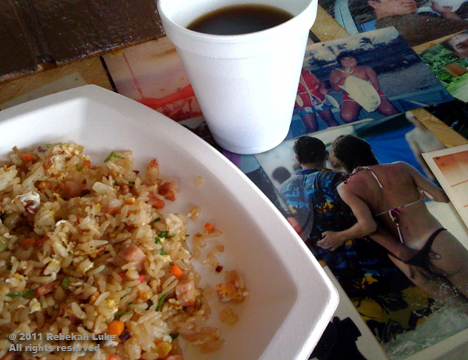
From this menu, though the other diners recommended the guava chicken, I tried the fried rice. It’s a sautéed mixture of onion, green onion, carrot, egg, bacon, Spam—all diced finely—rice, and (I think) a little oyster sauce.

Island fried-rice breakfast at the counter decorated with snapshots. Wow!

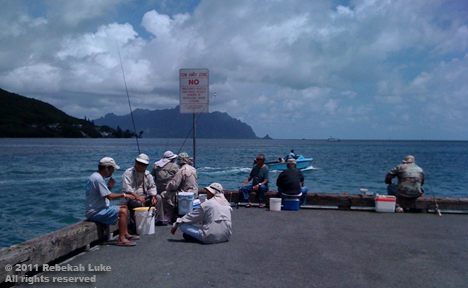
You can sit at the picnic tables or the small counter and listen to the folks talk story, or meander down the dock and watch the people fish for their own food. A man offered me some dried aku he made to go with my fried rice.

He‘eia pier

All this seems to fit in nicely with the message received from the “Chefs & Farmers Facing Future” food forum, organized by shegrowsfood.com and Leeward Community College, whose food service students wanted to give back to the industry that gives so much to them. The event brought together farmers, fishers, aquaculturists, ranchers, chefs, and media reps to explore promoting and using locally produced food for sustainability in our island communities.

The meeting started with the sobering fact that there is only about a 10-days’ supply of food here with most of it arriving by ship or plane.

What I took away from the meeting was the notion that to sustain we should form tighter communities and make new friends with our neighbors within them.

As the Hakka association that takes care of its clan. (My grandmother took care of her own family of 15 and neighbor bachelors by growing vegetables in her victory garden.)

Or the young creative chefs serving dishes with local ingredients, or the man who gave his fish to me, or my own developing garden that sometimes produces enough to share with the neighbors. It’s a great life.

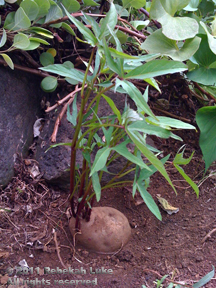
Sweet potato in my garden

Copyright 2011 Rebekah Luke


Lanikai diptych

11 04 2011

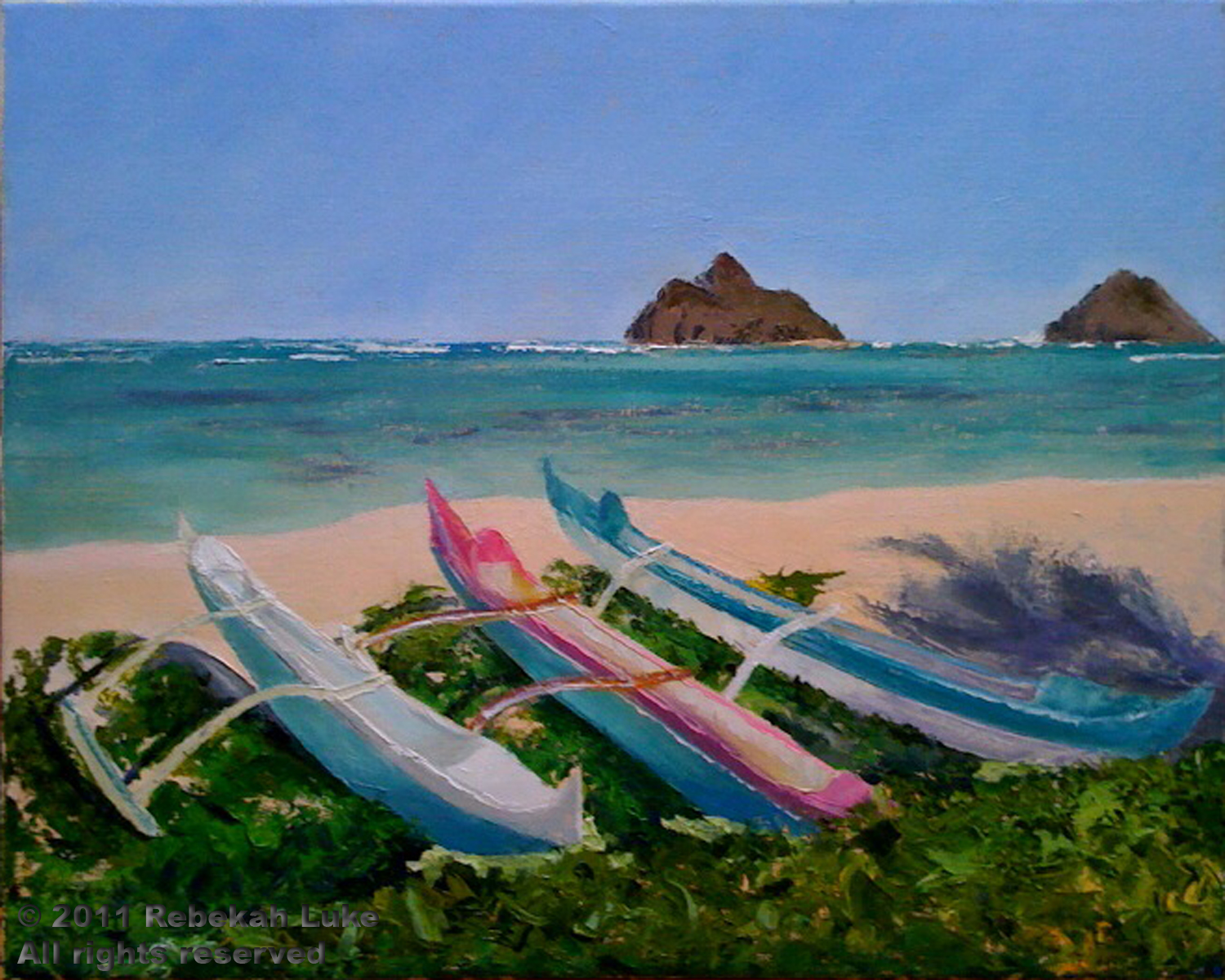
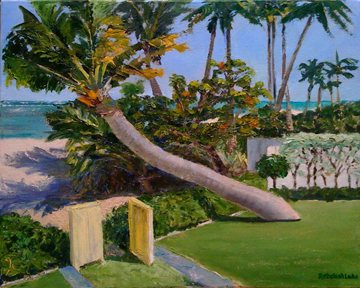
This is my finished painting of Lanikai Beach on Oahu. Oil on canvas. Each panel measures 20″ wide x 16″ high prior to framing. Beach goers are familiar with the iconic outrigger canoes, twin islands, and shady palms. This is the scene from Karl-and-Julie’s. I can’t wait for them to see it. © 2011 Rebekah Luke / All rights reserved
Wa'a Kolu, Moku Lua

Julie's Coconut Tree


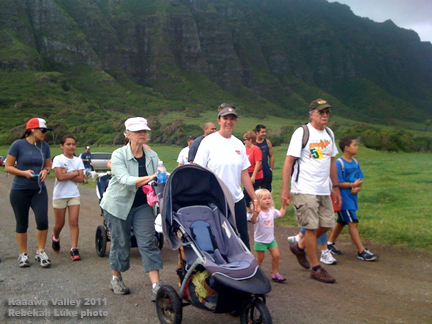
Family time: Kaaawa Valley 5K Fun Run/Walk

9 04 2011

The 2nd Annual Ocean Warrior 5K Family Fun Run/Walk sponsored by Kaaawa Elementary School and hosted by Kualoa Ranch was held this morning in Kaaawa Valley.

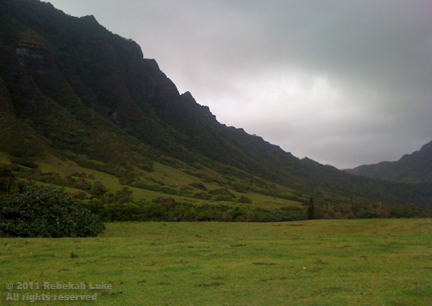
Kaaawa Valley slopes

The starting line

It's the second annual for Miss Marvelous, her Tutu, Mom and Papa

Turn marshals

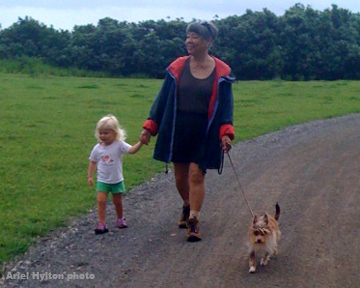
Miss Marvelous, me, and Alice Brown

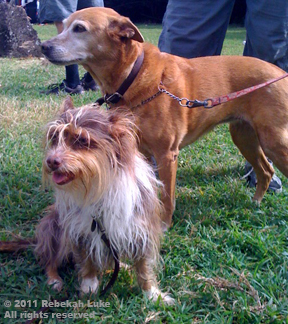
Alice Brown & Pua—the dogs enjoyed the walk, sights & smells

Copyright 2011 Rebekah Luke