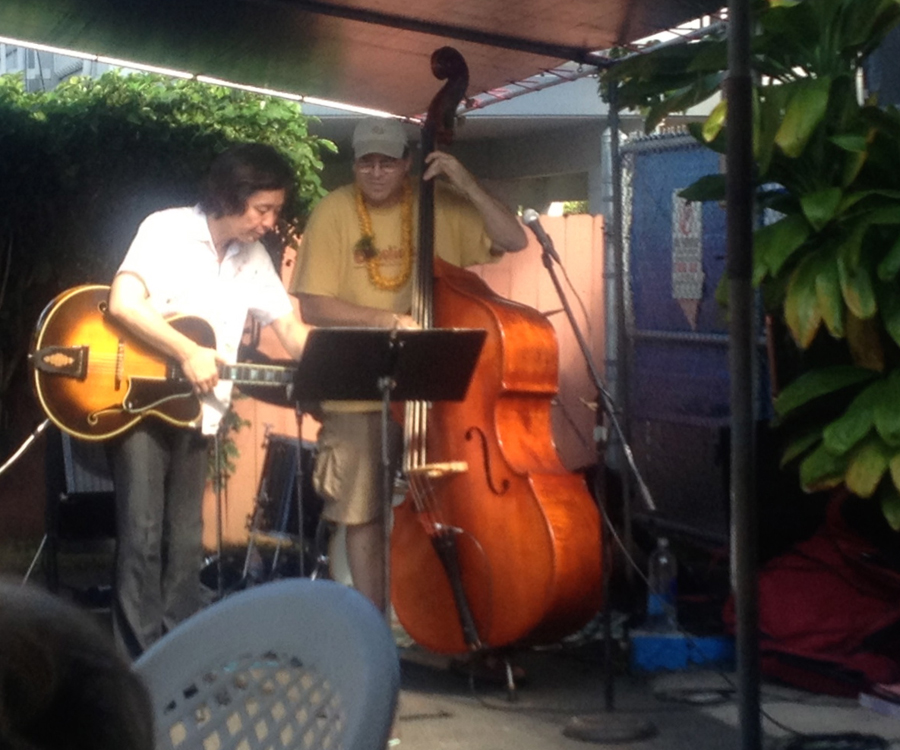
In my back yard it’s swingy and jazzy

1 07 2013
Jazz guitarist and bass player Robert, who is the proprietor of Uncle Bobo's BBQ restaurant in Kaaawa

Jazz guitarist and bass player Robert, who is the proprietor of Uncle Bobo’s restaurant in Kaaawa. (Rebekah Luke photo)

Sometimes it takes an effort by someone in the community to remind us how very privileged we are to live and work in Kaaawa. And to remind us there are attractions right in front of us in our own back yard.

This past Sunday afternoon it was by Robert and Keiko of Uncle Bobo’s Smoked BBQ restaurant, who organized a 19-piece big band as well as a jazz guitarist from Japan to play for  residents and guests for free.

What a show! The review from Sunway and Joerg, the professional musicians and music producer in my party, was that this big band could fill any room with an appreciative audience. No doubt our town would welcome that kind of event at least quarterly, and it would be good business for Uncle Bobo’s.
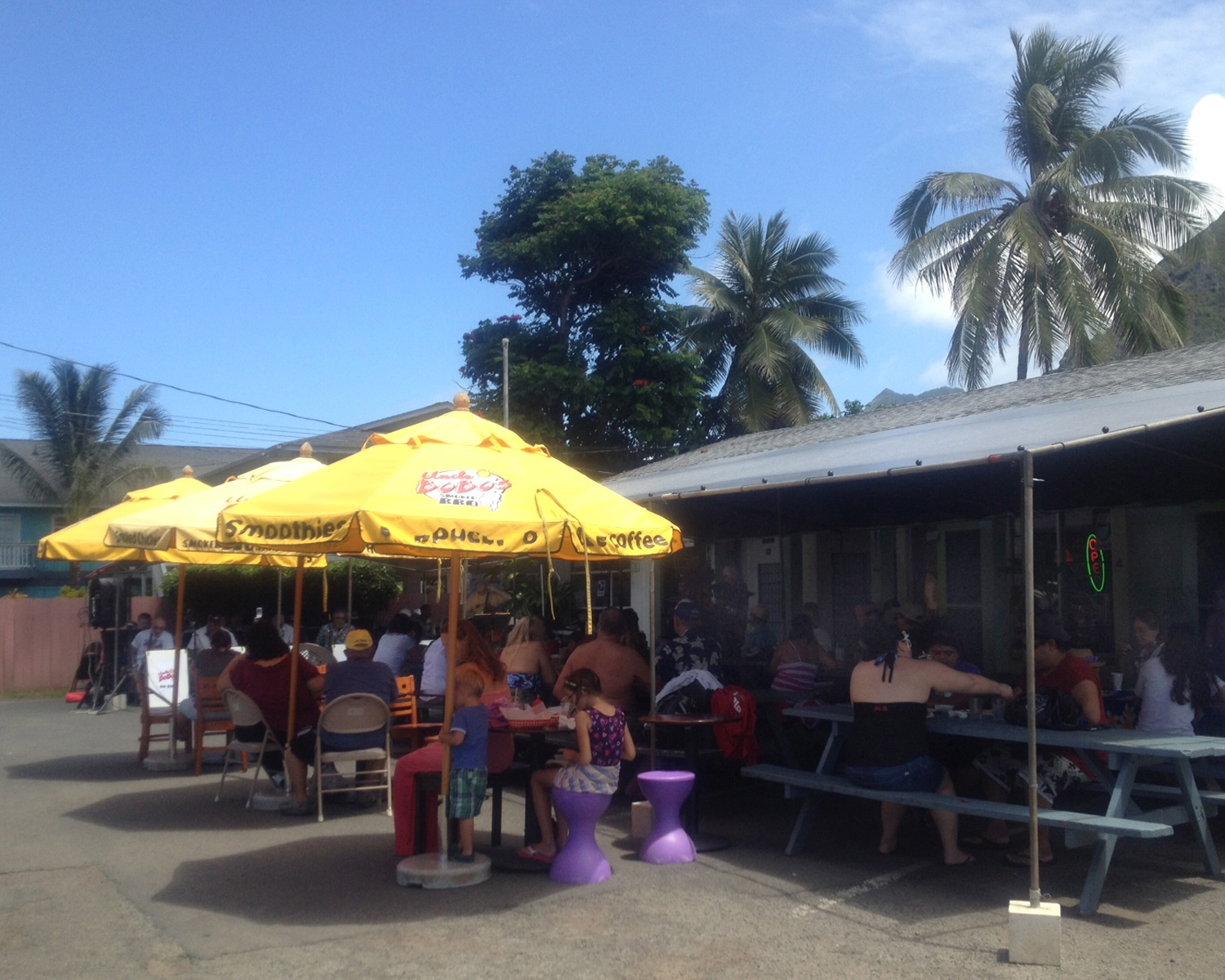
BBQ al fresco and big band sounds at Uncle Bobo's

Smoked BBQ al fresco and big band sounds at Uncle Bobo’s. (Rebekah Luke photo)

I live in the middle of the Pacific in a comparatively rural (not urban) neighborhood on the windward side of Oahu island. It’s a 20- to 25-minute car ride to the nearest supermarket, and 45-55 minutes to reach Honolulu or Kailua in the middle of the day. Most everyone who lives in Kaaawa has a long commute to somewhere several times a week.

It’s “far,” by island standards.  But we love it because it’s what we call country. Kaaawa’s stunning mountain and ocean scenery and proximity to the base camp of TV shows or movies shot in Hawaii make it a favorite choice for location managers of the movie industry.
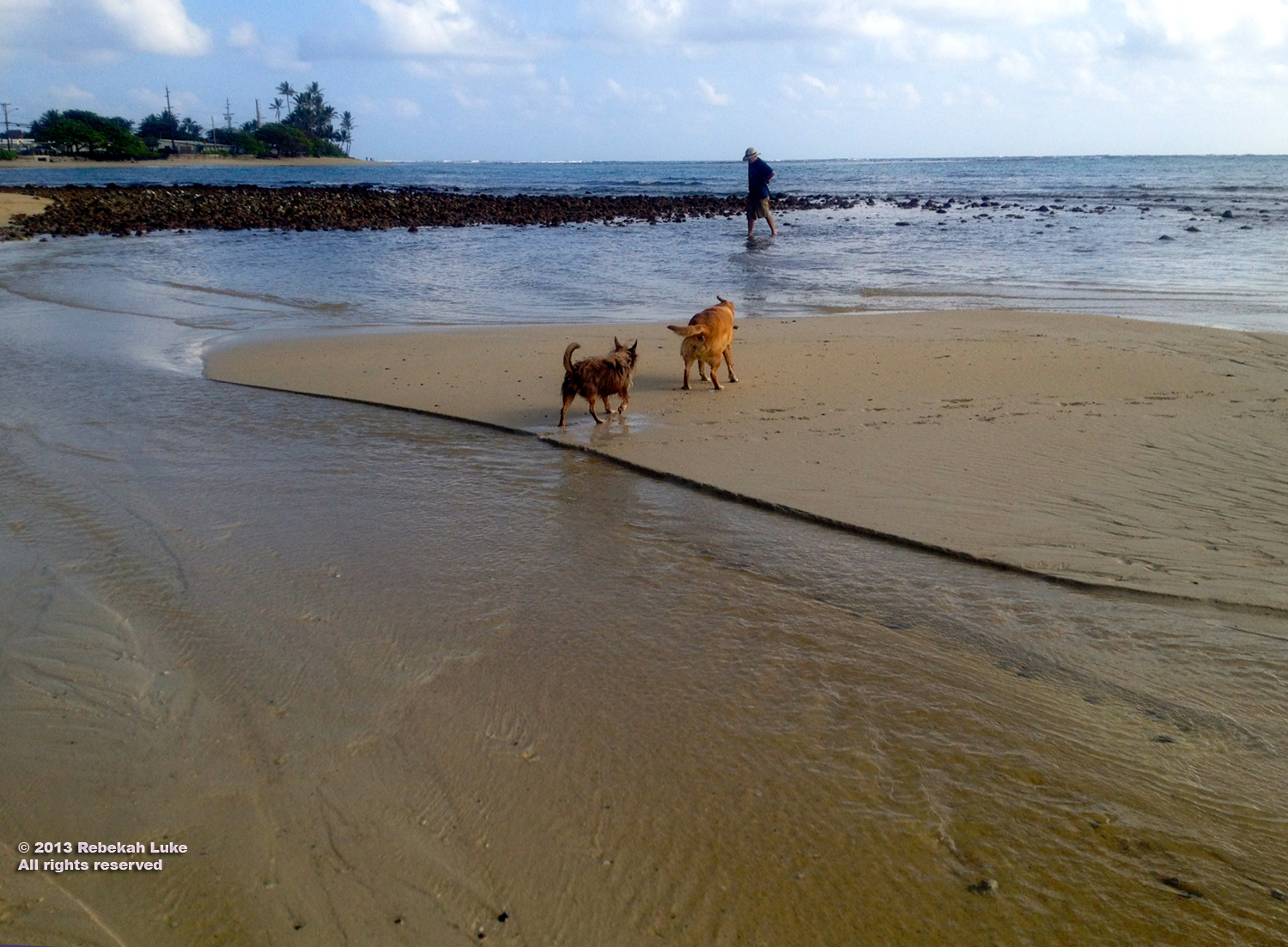
Low tide at Kaaawa

Low tide at Kaaawa

We like the quality of life. Kids play outside, they walk or bicycle to school, roosters crow, dogs bark, folks fish and grow food, and we play music on the back porch. You can walk along an empty beach or on the back roads, and everyone you pass will say hello. It’s mostly local families, not visitors, who use the park and beaches on the weekends.

For services, our town has a public school, a post office, a gas station, a 7-Eleven, a fire station, an EMS station, beach parks with restrooms, and Uncle Bobo’s—a diner that’s had the longest run in all of my nearly 30 years here.

Above all we are thankful for the gift of community.

Yesterday it was happening. People came from all over. Uncle Bobo’s put up tents for shade, and the kitchen was hopping with non-stop orders. There were music stands with Uncle Bobo’s logo on it, big band style. We listened to long sets while munching on brisket or pork ribs or Kualoa Ranch beef burgers with avocado. Tent campers packed Swanzy Beach Park across the street, more so than most weekends, but amazingly people managed to find parking, and there was plenty of toilet paper in the women’s restroom at the park for the crowd.

We watched the world go by on Kamehameha Highway. I saw a limo pull up and a parade of old Fifties cars. Motorcycle clubs too. My neighbor and friend Andrea tirelessly circulated a petition to “keep the country country.” I bet she collected a lot of signatures. I met Lisa, all grown up now, who lived in our house as a girl; she introduced herself to me. Nora who played piano for our glee club for a while said “hi” and that she was playing piano in the band earlier. Wow, they sounded great! Thank you, Uncle Bobo’s!

Pretty soon it was time for my cousins and friends to walk back to the studio, and Sue regretted not bringing her camera, because she wanted to capture the majesty of the mountains—the ones that are right in my back yard.
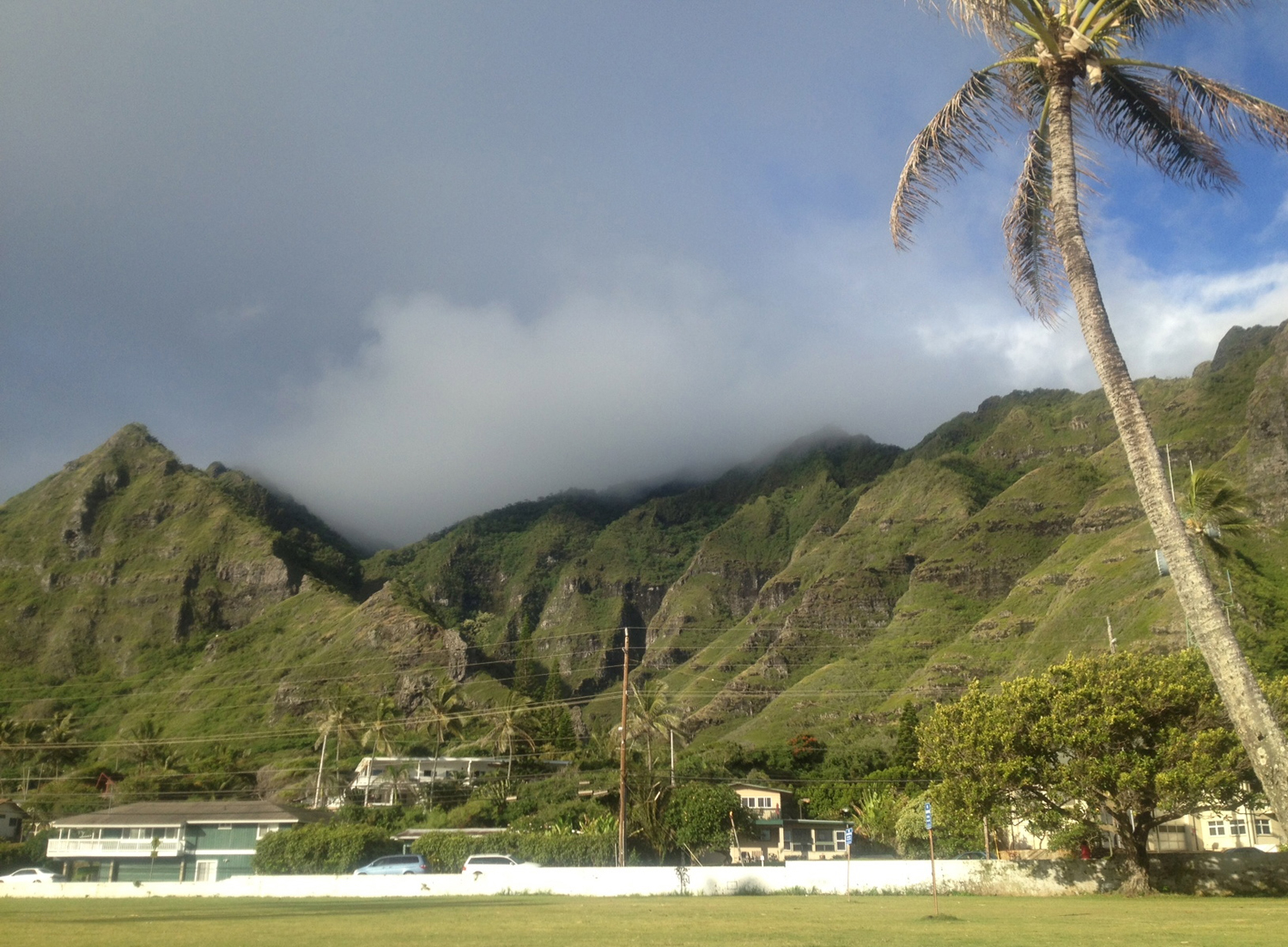
The view of Makaua Valley and mountains at Kaaawa from Swanzy Beach Park

The view of Makaua Valley and mountains at Kaaawa from Swanzy Beach Park. (Rebekah Luke photo)

Copyright 2013 Rebekah Luke


Analogous tomatoes and ice cream

16 03 2013

Here, showing off their “Analogous Tomatoes” at this morning’s art show, are my 8- and 10-year old pupils from the neighborhood. Bright and early at 8 a.m. they came with their families, friends, and refreshments to share what they did for the past six Saturday mornings at the studio. Everyone pronounced it a success. There were requests for another round of classes.

Youth art March 2013

Of course, the boy on the left is not holding a tomato. It is a balloon, that is a type of ball or sphere and his 3-D choice for the BCCC (ball, cube, cylinder, cone) lesson.

The tomatoes are analogous because to model their form they are painted with colors that are analogous on the color wheel. I teach the “Tomato Theory” so called by my late fine art teacher and oil painter Gloria Foss.

To warm and lighten a bright red tomato, we use red-orange and just a little bit of white. To darken the red, we move in the opposite direction on the color wheel to a red-violet. This method makes the object appear most vibrant and is preferable to darkening a hue by adding black or the complementary color.

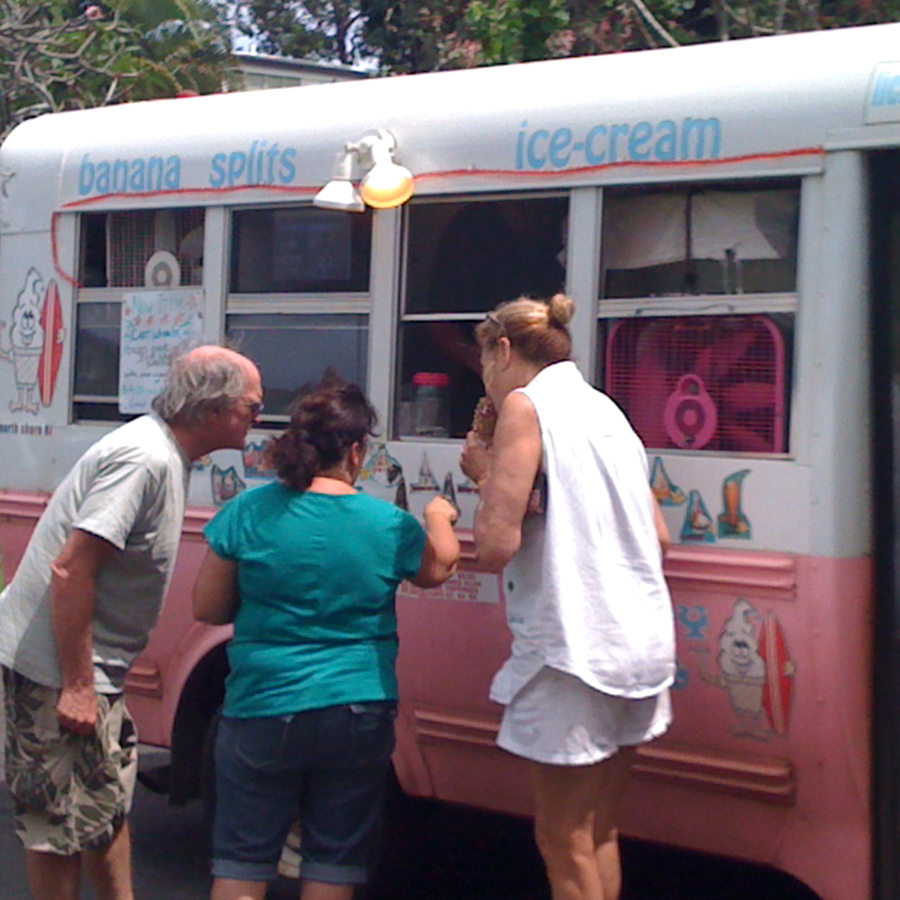
ice cream truck

Ice cream break

The ice cream truck came later in the day during my Painting I class for adults, just in time for lunch. Dessert first!

Copyright 2013 Rebekah Luke


Kudos and thanks to my foodie friends Linda and Lori

4 03 2013

Two women I am lucky to have as friends each reached a milestone in their lives and careers in the past few days, and today’s post honors them. Both happen to be foodies. Both have Hakka “blood,” as do I.

Author Linda Lau Anusasananan’s The Hakka Cookbook received the Best Chinese Cuisine Cookbook in the World for 2012 award at the Gourmand World Cookbook Awards ceremony in Paris. It’s a crowning achievement following a full career as a food editor at Sunset magazine, where we met, and many years researching around the world the “cuisine” (if you can call it that) of her ancestral Hakka roots.

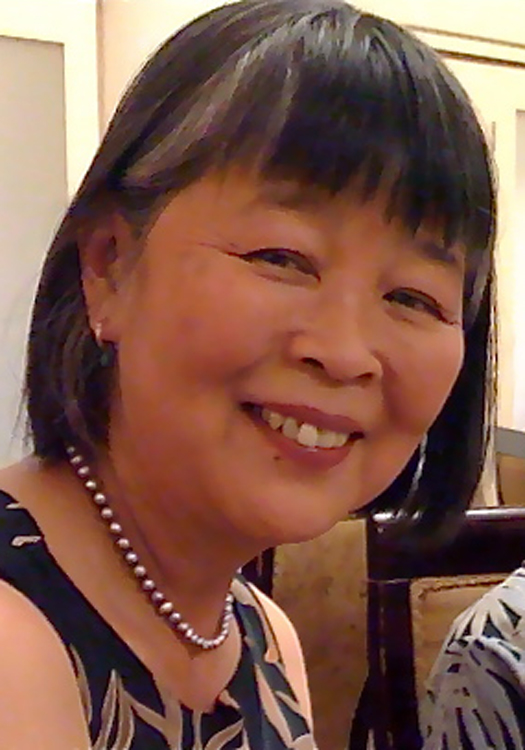
Linda Lau Anusasananan

Linda Lau Anusasananan

Hakka Chinese people descend from Han people who emigrated and still emigrate from their original land for a variety of reasons. Where they ended up in the world—in China it was mostly in the south in an area known as Meixian—they were not the first, therefore were known as “guest people” who did not get the best land. They were farmers, and their food was humble and of peasants. The book’s subtitle “Soul Food from Around the World” announces the good eats the reader can learn to make from the recipes Linda tested and fine tuned for the home cook. I guarantee they will work for you.

This is what Hakka families everywhere have looked for. The recipes show how regional cuisine influences basic Hakka food. Linda’s work fills a cultural need as well as explains what “Hakka” is with added stories and historical notes. Ultimately, it is a universal story about food, families everywhere, and how the world has gotten smaller.

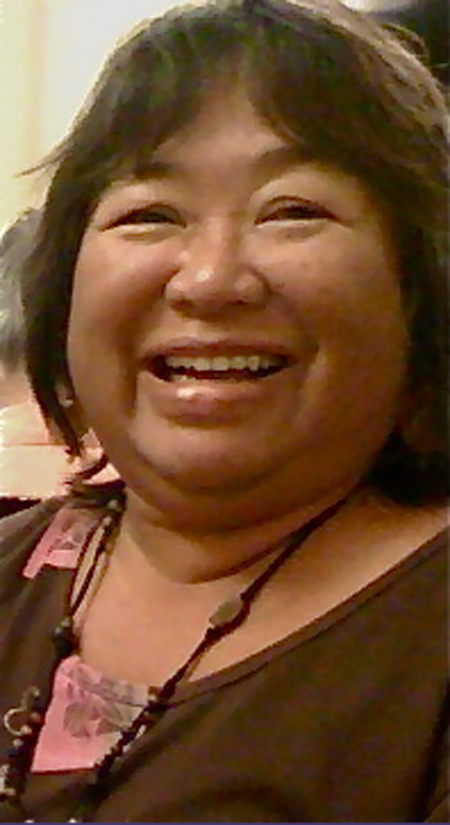
Lori A. Wong

Lori A. Wong

When I left the magazine test kitchens in Menlo Park, California, those many years ago, Linda became the person I would call when I had a question about food science. Then I met Lori on my island.

This week Lori A. Wong, with her mother Marian, closed Byron’s Drive-In, the last remaining of their 17 or 18—it’s easy to lose count—restaurants on Oahu, ending 58 years of feeding islanders. Old-timers will remember Leon’s tavern, Andy’s Drive-In in Kailua, Orson’s Restaurant, Orson’s Bourbon House, Wong’s Okazu-ya, The Chowder House, Byron II, Andrew’s, Coral Reef, The Chinese Chuckwagon, Fishmonger’s Wife, Oinks, Big Ed’s, Andy’s Ebb Tide, The Little Red Hen, Henny Penny Chicken, Orson’s Chowderette, and The Seafood Emporium.

The landlord is planning to redevelop the land near Honolulu airport where you could get a good meal before boarding your plane. On Feb. 28 it was bye-bye Byron’s Drive-In. The rummage sale starts tomorrow, March 5, through Friday in the parking lot. Everything must go.

Now that you know of the Wong Family restaurant empire, and as you read the list above, most started by Lori’s father Andy Y. Y. Wong who died in 1985, and others by Lori and her mom, you are probably thinking, “They owned that restaurant, too?!”

Yup, and Lori’s first thought is that they had a really good run and that the restaurant business is pau (finished, over).

I became acquainted with Lori through our mutual Reiki teacher and friend Alice Anne Parker. Both Lori and Alice Anne certified me as a Reiki Master. Lori is a healer and was working with hospice patients. Over time I figured out Lori was a foodie. She’s taught in the Food Service department at Kapiolani Community College and now teaches cooking to middle school students at Punahou during the summer. She free lances as a food and beverage consultant.

She loves to try new restaurants with friends—as does Linda (the more dishes foodies can taste and disect, the better; lucky for me), but she rarely mentioned her family’s restaurant empire. But now that it seems to have ended, the word’s out. Bob Sigall wrote a nice column in the Honolulu Star-Advertiser.

Both Linda and Lori deserve a crown and a long rest, but I doubt they will rest on their laurels. These are my friends for a lifetime.

Copyright 2013 Rebekah Luke


Wake up to a Dutch Baby

1 01 2013
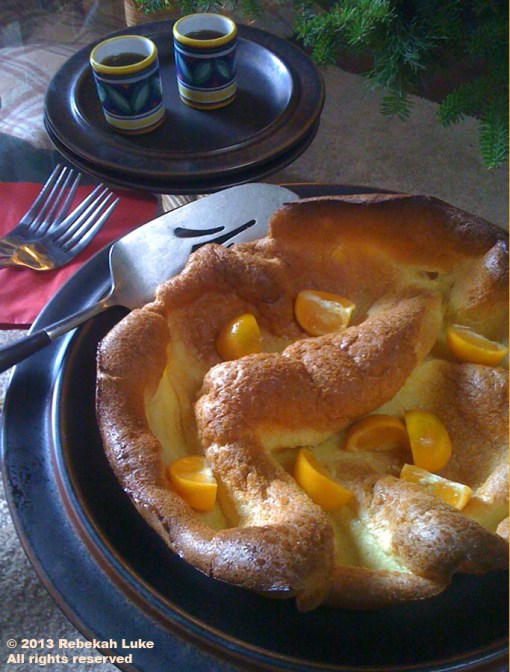
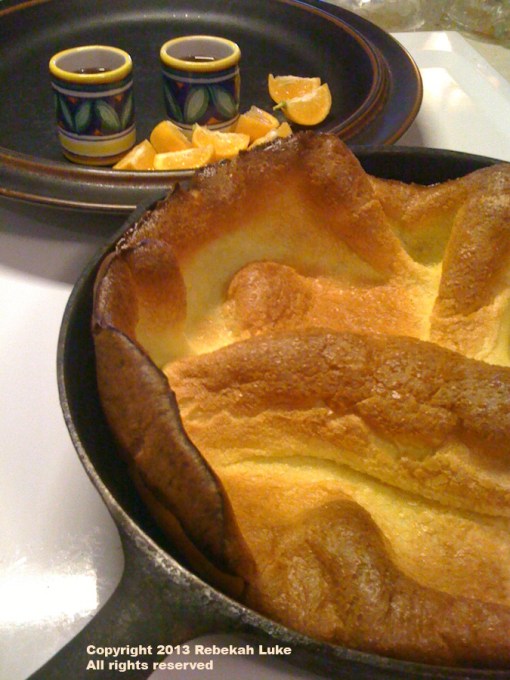
New Year's Day breakfast: Instead of finishing the Dutch Baby with powdered sugar and lemon, I chose maple syrup and fresh calamansi wedges.

New Year’s Day breakfast: Instead of finishing the Dutch Baby with lemon and a dusting of powdered sugar, I chose fresh calamansi wedges to squeeze and maple syrup.

I awoke to a rainy morning and decided to surprise the rest of the family with a Dutch Baby German Pancake for our first breakfast of the New Year. While they were asleep it baked and rose in a large cast iron frying pan. When Miss Marvelous’s mom was a youngster and lived with us, the call of “Dutch Baby!” would roust her out of bed. She liked to watch through the oven door window how it rose into an interesting shape. Not only fun to watch, but fun to eat, too!

The recipe is traditional and most likely public knowledge. I see variations of it from time to time. The one I use always works. I think I got it from an old friend, reporter Bob Jones, who got it from Carl A. Lindquist (I like to give credit where credit’s due). The only thing I changed this morning were the toppings. See top photo.

DUTCH BABY GERMAN PANCAKE
Preheat oven to 450 degrees Fahrenheit.
In a large bowl beat 3 eggs until blended.
Measure 1/2 cup flour. Sift, measure 1/2 cup again (discard any excess), sift again with 1/2 teaspoon salt.
Add flour to eggs in 4 additions, beating after each addition until smooth.
Add 1/2 cup milk in 2 additions.
Lightly beat in 2 tablespoons melted butter.
Generously butter bottom and sides of a 9- or 10-inch unheated cast iron frying pan.
Pour batter into pan.
Bake at 450 degrees Fahrenheit for 20 minutes.
Reduce heat to 350 degrees and bake 10 minutes more. Slip onto a serving plate.
Dust with powdered sugar. Serve with lemon or lime wedges.

Out of the oven, the pancake has pulled away from the pan. Just loosen the sides with a knife and slip onto a serving plate.

Out of the oven, the pancake has pulled away from the pan. Just loosen the sides with a knife and slip onto a serving plate.

Copyright 2013 Rebekah Luke


Shop at home: my picks for holiday giving

13 12 2012

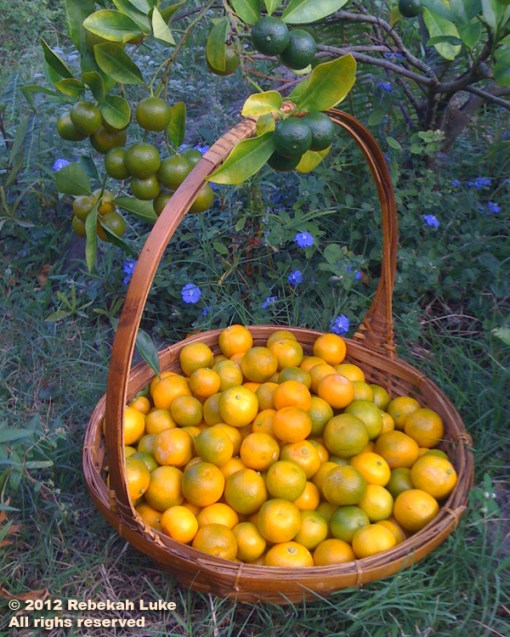
“Shop at home” is the mantra heard around the studio these days.  When I looked in the garden, the calamansi tree spoke, “Pick me!”

calamansi crop 2012

So I picked about eight pounds of the orange-colored citrus and left more to ripen.

Calamansi harvest 2012 copy

Here’s what happened next. Want some?

Homemade calamansi marmalade and calamansi ice cream topping. Want some?

My homemade calamansi marmalade and calamansi ice cream topping.

Copyright 2012 Rebekah Luke


Two of everything. The twins turn 1.

7 10 2012

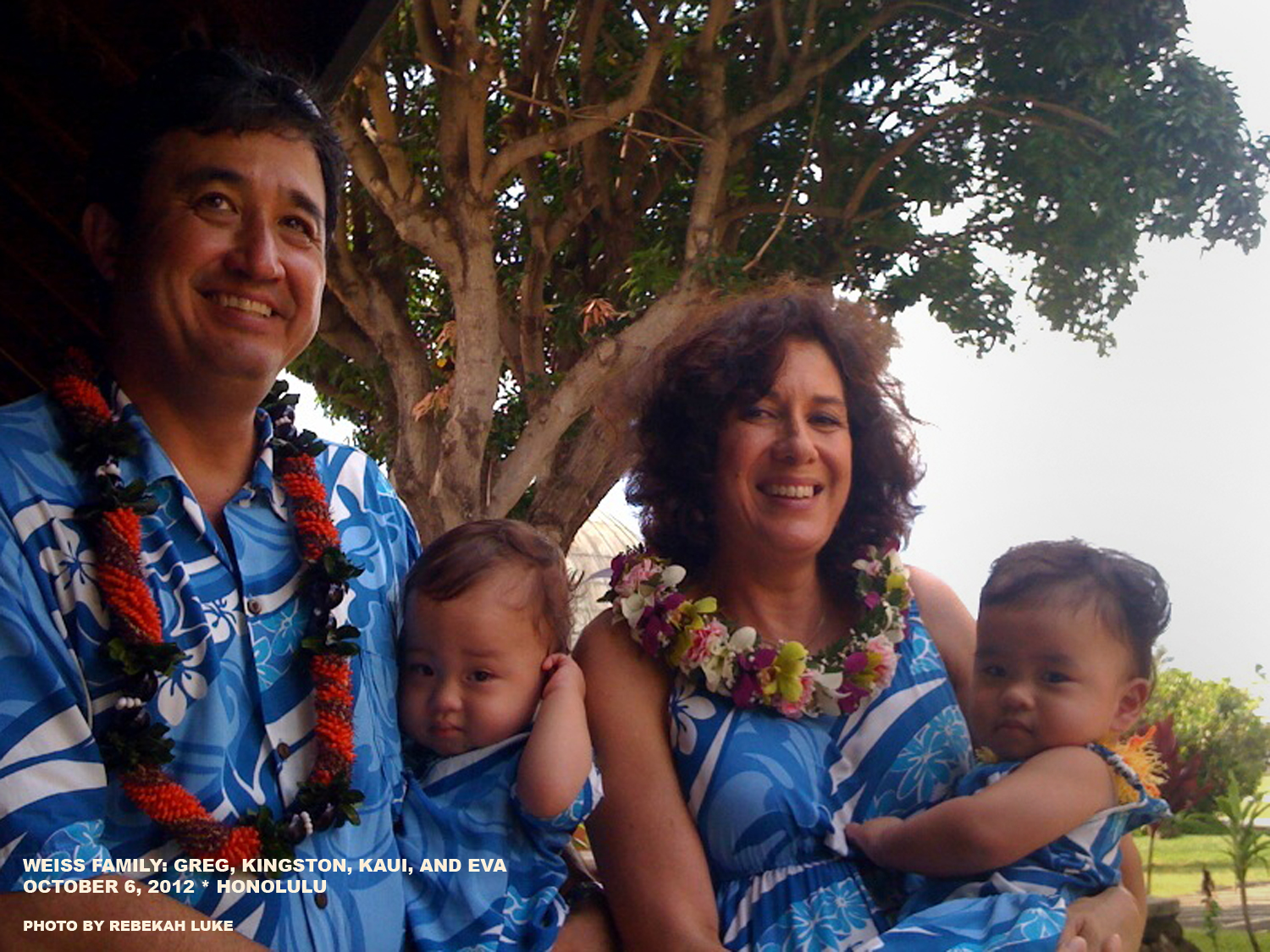
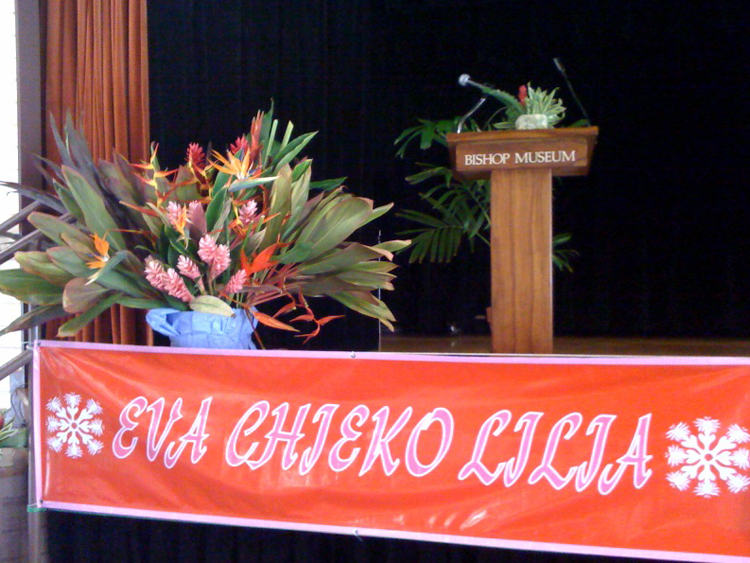
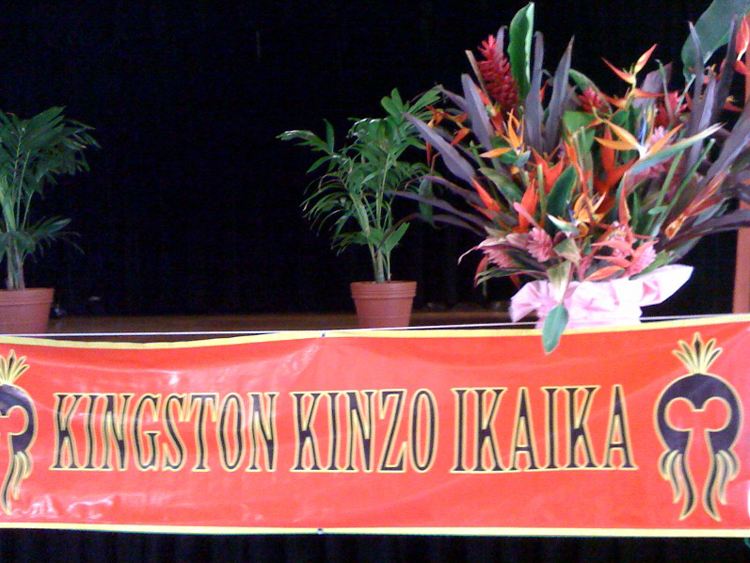
A milestone among our circle of friends was the Weiss twins turning one. Kingston and Eva were born prematurely a year ago Saturday to Greg and Kaui Weiss. So, the celebration of their important 1st birthday was a Baby Luau at the Bishop Museum in Honolulu!

Beautiful, happy family — Greg, Kingston, Kaui and Eva Weiss

With a big extended family and neighborhood helpers like me, the kuleana (jobs) were divided among many to take care of things like setting up, decorating, entertainment, guest book table, gifts, food and beverage.

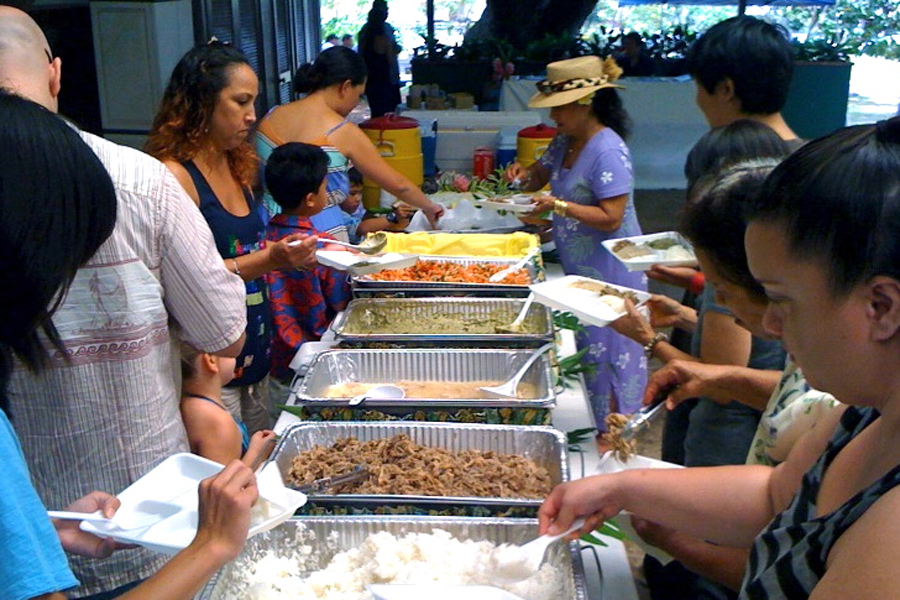
The Hawaiian food buffet included kalua pig, chicken long rice, opihi, squid luau, lomi lomi salmon, sweet potato, haupia, and pineapple. While waiting for the buffet line to open, guests could feast on raw fish, edamame, crispy fried salmon, and pipikaula.

Aunty DeeDee and Aunty Nona provided the flowers to decorate. Uncle Peter was the emcee. Cousin Leiohu greeted guests at the reception table. Gigi sang Hawaiian songs, and Piʻi danced hula. Special vouchers could be swapped for admission to the museum attractions for the day; that interested the kids as well as the adults.

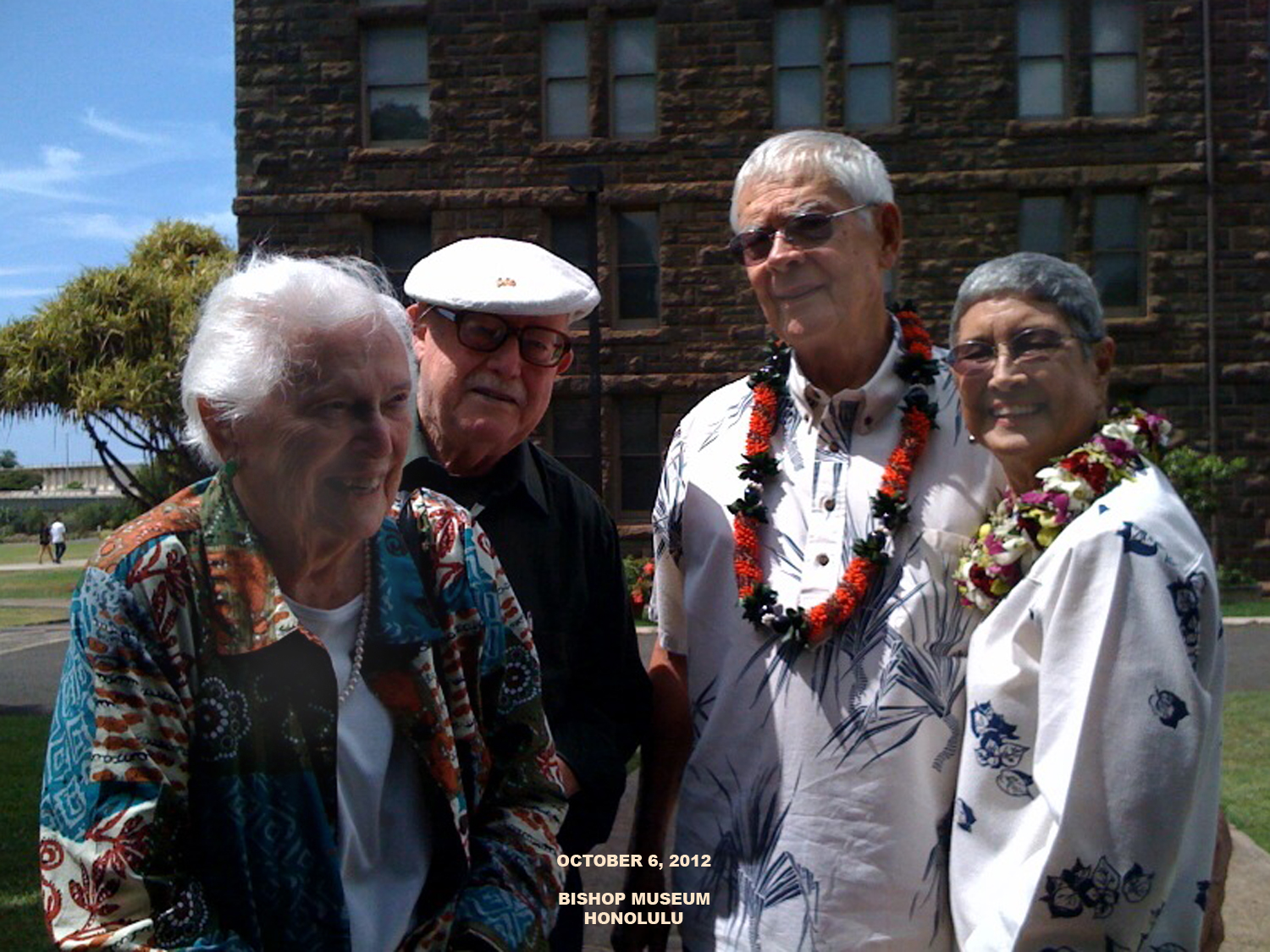
Among the many family and friends who came from near and far was this foursome: the babies’ grandaunt Bobbie (from left), John, and maternal grandparents Creighton and Cathy. The Museumʻs Hawaiian Hall is in the background.

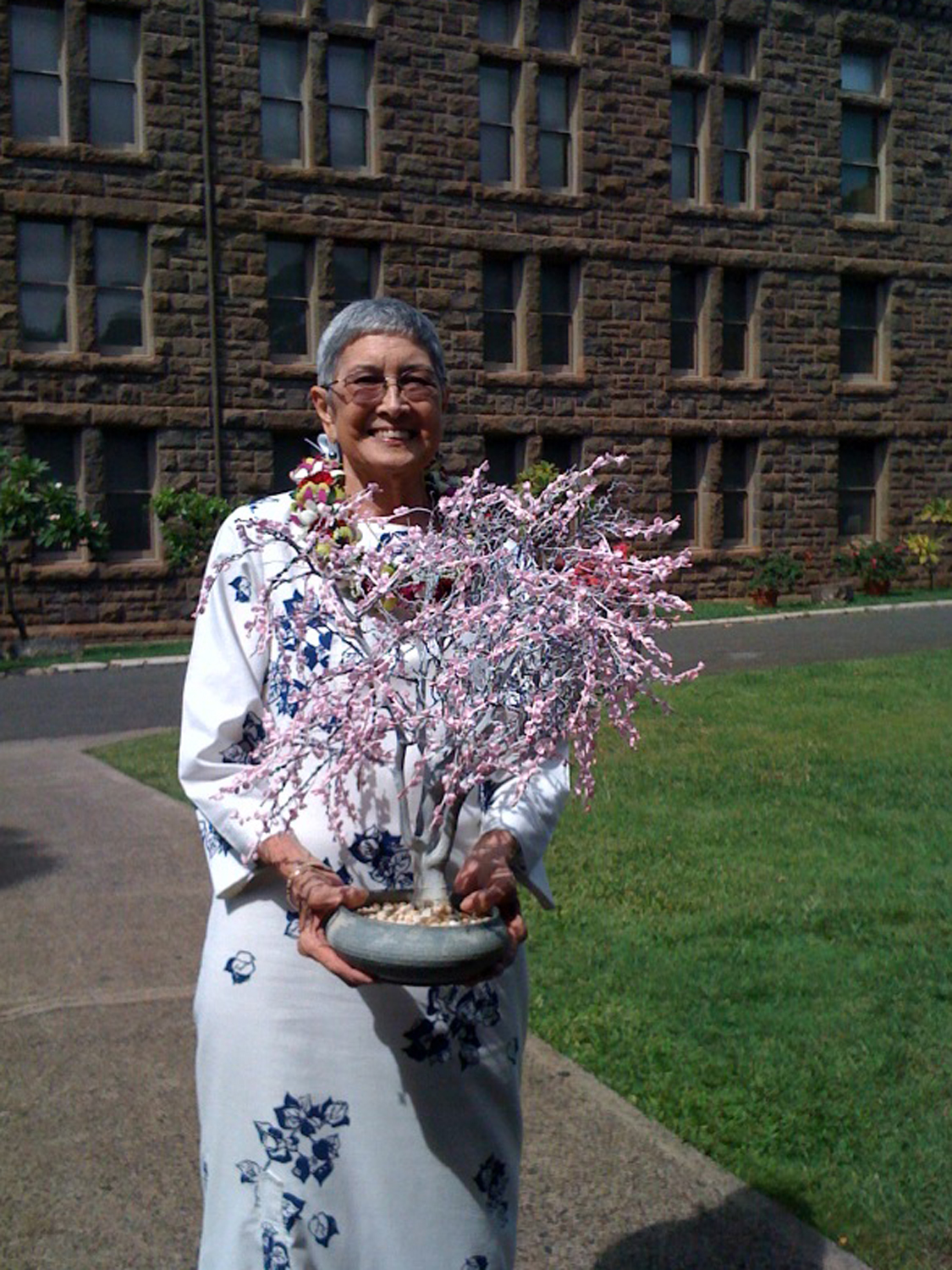
Tutu Cathy with the pink tree she made for the guestbook table.

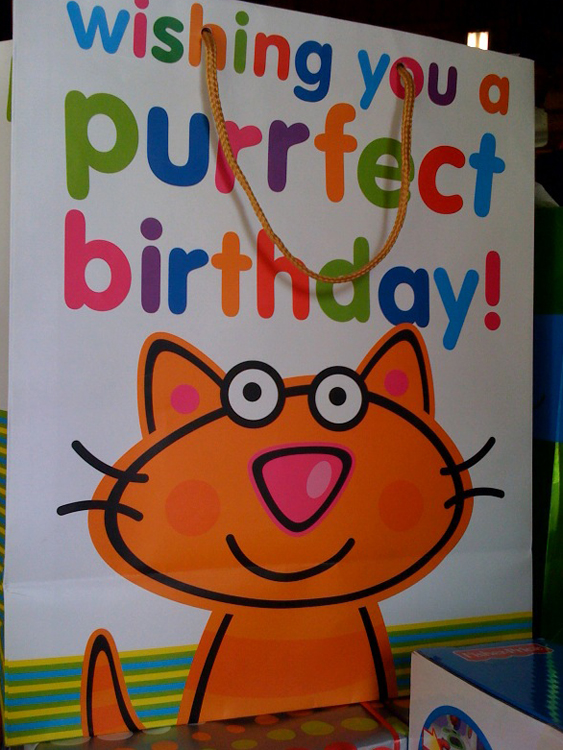
The gift bag was the cutest!


Ink in our blood

2 10 2012

Once a news writer, always a news writer.

Both my friend and colleague Linda Lau Anusasananan and I are retired from working 9-5 for news and magazine publishers, but we still write regularly. Both of us post blogs—more than one each, still freelance, and we both just published books in the last two months. It was a coincidence that we both wrote independently about our families for future generations.

We follow our passions. Linda is a veteran food writer from Sunset, where I met her in the early Seventies in the editorial test kitchens. She enjoyed a long career at the magazine. The license plate on her car says “FOODIE.”

I, on the other hand, started writing the daily news at the Honolulu Advertiser. I moved to Sunset where I swapped my position at the Hawaii field office for six months for one at the Menlo Park headquarters. That is where I learned to write recipes and develop my appreciation and sense of taste for food. Later I wrote news and information about the community colleges of the University of Hawaii. I don’t have vanity plates.

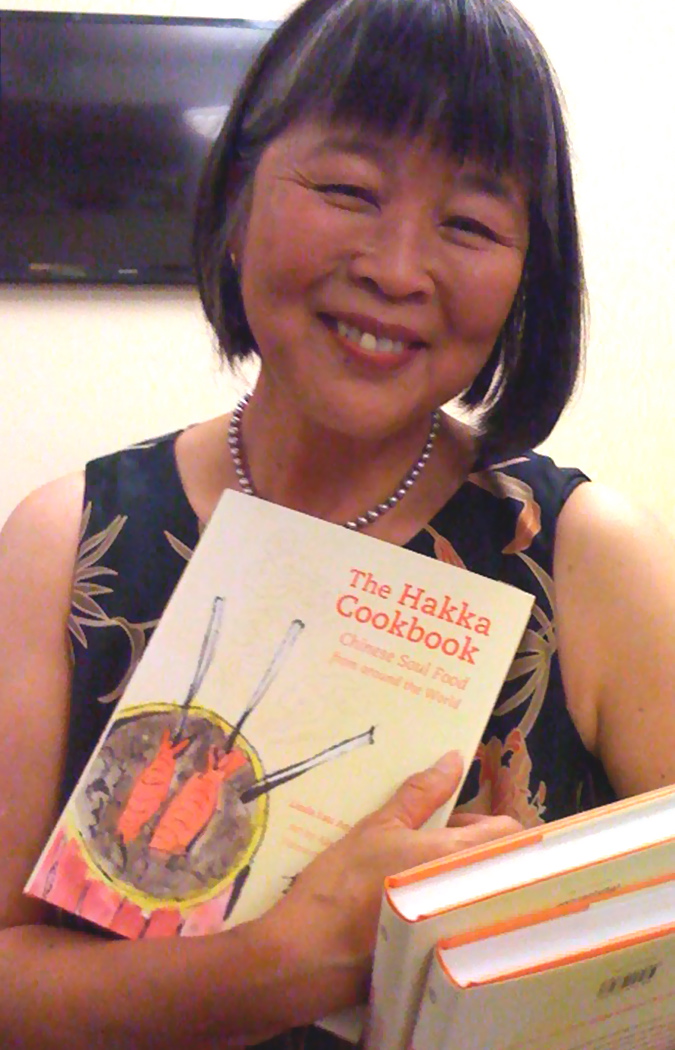
Linda, my foodie friend

On Sunday Linda flew from California to share her The Hakka Cookbook: Chinese Soul Food from around the World (University of California Press, 2012) with the Chinese Hakka community in Honolulu. It was the day after the official book launch at the Asian Art Museum in San Francisco. It’s the start of her book tour.

The Tsung Tsin Association’s Autumn Banquet was an opportunity to provide recipes and cultural information to an ethnic population that craves the food tastes of their childhood. There is no restaurant here that I know of that specializes in Hakka food, but now, someone could open one with Linda’s recipes (hint!).

As Linda wrote in her dedication, “Most of all, this is for Hakkas throughout the world, so they can honor and preserve their roots with the foods of their ancestors.”

Interestingly, both of us wrote about our “hometown villages” in China, recounting the 2005 trip Linda made to do her research. DH and I joined Linda’s family and, as I’ve mentioned before, enjoyed all the eating.

In The Chong Family in a New Millennium, authored by my cousin James H. Kim On Chong-Gossard and edited by Rebekah Luke (Chong Hee Books, 2012), I included the article “A Visit to Our Ancestral Homeland.” This little book is the sequel to Chong-Gossard’s The Chong Family History that chronicles my maternal grandparents’ story from the orphanage in Chong Lok, China, to 1992. Our 2012 book includes genealogy charts, full-color photos of nearly everyone of six generations, unique insights by the author and essays and anecdotes about family from several other cousins.

The sure-to-be-a-success recipes in The Hakka Cookbook are interwoven with stories about the recipes, the people who shared them, and Linda’s personal journey to learn about her Chinese roots. To me, I view it as the story of everyone who’s ancestors immigrated. Lucky for Hakka people, Linda’s book documents the experience for future generations. It’s a wonderful read.

As I write this, it’s dawn before everyone else is awake, even the dogs and the baby Sofia, and Linda is sitting across the table with her laptop too. We write because we believe it’s important that our children understand where we came from. The ink is in our blood, but rather than write for the government (i.e., public relations), we write what we like.

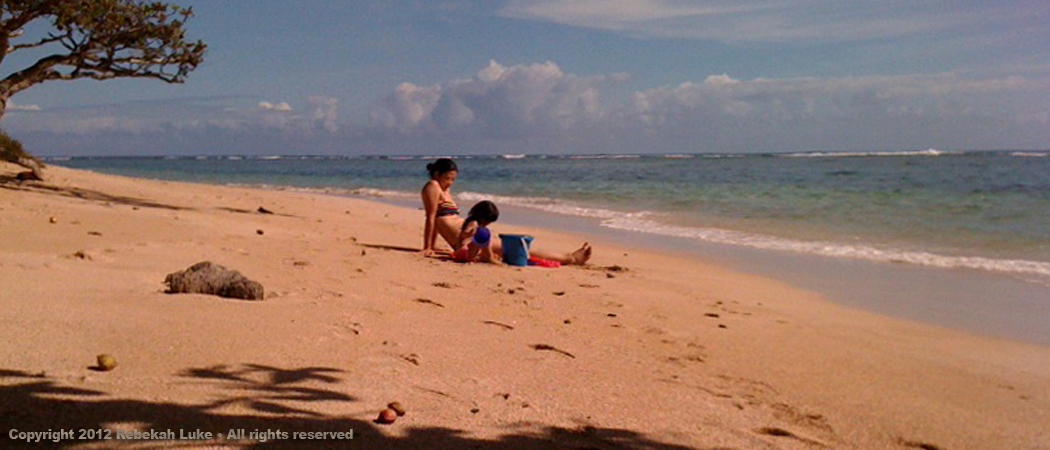
Future generations: Linda’s daughter Lisa and granddaughter Sofia are visiting from California too. Here they are at Kaaawa Beach yesterday.

http://jadesauce.com/blog

http://thehakkacookbook.com

https://rebekahstudio.wordpress.com

http://rebekahstravels.wordpress.com

http://chongfamily.wordpress.com

Copyright 2012 Rebekah Luke