This is Waipao (part 2)

25 09 2011

Hau cordage in the making. Hawaiians scrape to clean hau fiber by hand.

HAU KAULA (CORDAGE) WORKSHOP WITH KEN CHING

The foundation of native Hawaiian culture consists of the ability to fill three needs: containers to carry things like water and food, flaked stone for cutting, and cordage to fasten. These were necessary to build a Polynesian voyaging canoe that reached the Hawaiian Islands.

With that important bit of information, Ken Ching on Saturday showed a group of us the native Hawaiian way of making cordage from the bark of the hau tree (Hibiscus tiliaceus L.).

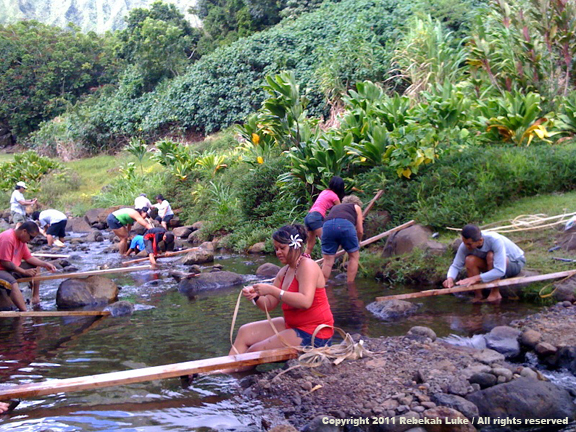
We gathered at Waipao, the site of Papahana Kuaola, on the banks of Haʻikū Stream on Oʻahu. The Papahana Kuaola organization is all about involving the community in environmental restoration and economic sustainability, while integrating native Hawaiian knowledge. Its activities center on cultural and natural history. It’s wonderful, pono (right), and maika‘i (good)!

Making cordage by hand is a way to learn about olden attitudes of living, said Ken. When one went for a walk, for example, it was to look for materials that were useful and could be appreciated.

Here is my photo record of the day. You can pretend you were there, or perhaps you would like to learn more about Papahana Kuaola from its website and visit there yourself.

I came away with a little feeling of what it was like to live in olden times. I thought, maybe this is how it used to be and can still be if we live with Hawaiian values, learn from our kūpuna, and be thankful and kind to each other. I was happy for the people who are restoring the ʻāina (land) of Waipao.

First are some images of this place, the ʻili (small land section) of Waipao in the ahupuaʻa (land division from the uplands to the sea) of Heʻeia, Oʻahu.

Hāʻikū Stream at Waipao

Terraces and pohaku (stones) near the stream
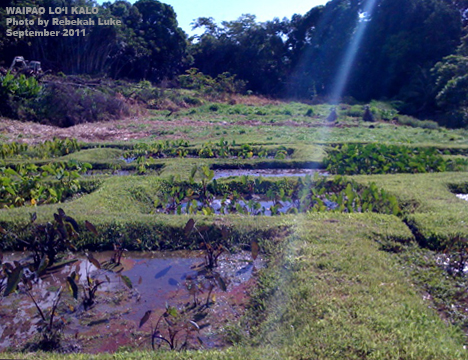
Loʻi kalo (taro gardens) in different growth stages. Notice more land being cleared in the distance. Lunch included a delicious stew made with foods grown at Waipao.

The band of green across the equator of the photo is the hau thicket from where we gathered the raw material.
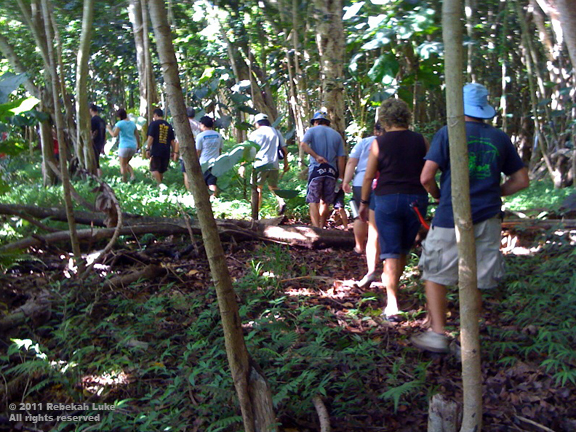
Into the forest we went to cut hau ʻili kea (young branches with light-colored bark).
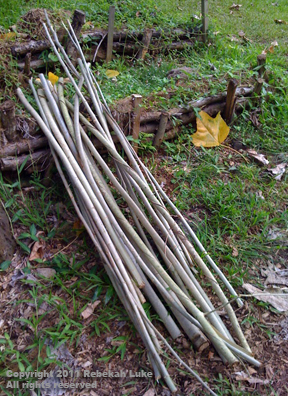
Freshly sawn hau branches waiting to be stripped of their bark
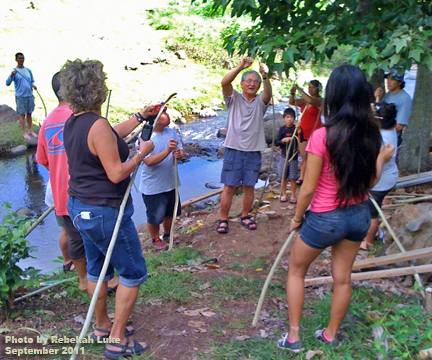
Our kumu Ken Ching demonstrates the right way and the less desirable way to pa‘e (strip) hau bark.
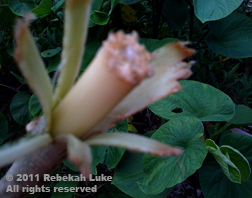
Peel away both the outer and inner bark by pulling down and "close to" the branch (as opposed to "away from") and from the top down, our kumu said. Discard the inner branch. (The leaves in the background are ʻawa (Piper methysticum), not hau.)
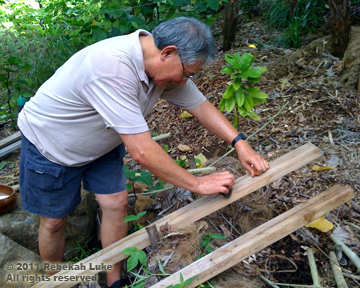
Kahi the wale (scrape the slimey goo away). Ken sets the bark on a 2 x 4 and scapes it using long strokes from top to bottom, pressing hard. Fresh water, such as from a stream or city faucet, will result in a brown fiber. To preserve the whiteness of the fiber, use salt water to soften and wash away the wale (looks like mucus).
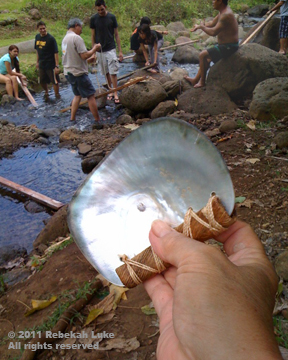
Shell scraper to comb out the wale (slime goo) of the bark.

L to R: Improperly stripped hau bark; mid-way stage of scraping; still slimy and not white enough, i.e., there are more brown areas left to scrape out.

Back indoors and after some lunch Ken showed us how to grade the fiber and twist it into cordage.
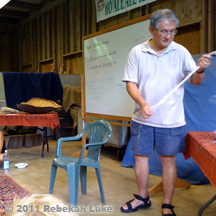
Ken Ching with a bundle cleaned hau fiber ready for twisting into cordage.
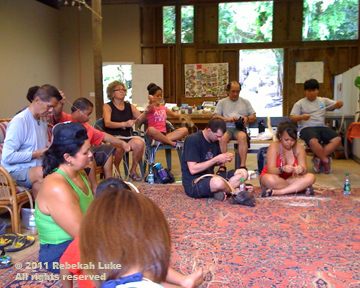
Separating the fiber and preparing to twist into cordage. Clue: You roll the fiber between your palm and your thigh with one hand, and twist with the other. It takes some practice.

Kaʻalua na kaʻakolu: Our kumu Ken made this beautiful hau cordage. He made more like it for the double-hulled sailing canoe Hawaiʻiki. It was an honor to learn from a master.
Copyright 2011 Rebekah Luke


This is Waipao (part 1)

24 09 2011

Hāʻikū Stream at Waipao

I went to Waipao today. So fulfilling. Waipao is an ‘ili (small land section) of  the ahupua‘a (land division extending from the uplands to the sea) of He‘eia on the island of O‘ahu. A Hawaiian cultural educational organization named Papahana Kuaola offered a workshop in how to make cordage from the bark of a hau tree (Hibiscus tiliaceus L.). An old friend, Ken Keola Ching, was the kumu (teacher). DH, my friend Piʻi and I had not seen Ken since our days together in Hale Kū‘ai Cooperative, so that was another reason to go.

The band of green across the middle of the photo is the hau thicket from where we gathered the raw material. Beyond are the Koʻolau Mountains.

Our kumu Ken Ching demonstrates the right way and the less desirable way to pa‘e (strip) hau bark.

In my next post I’ll show more photos of the ‘āina (land) where Papahana Kuaola is working on environmental restoration and sustainability while integrating traditional Hawaiian knowledge.

You’ll see the fun we had learning how to make hau kaula. It was a lot of work and gave us a greater appreciation of the culture and the days of old.

It was a first for me—turning hau plant fiber into cordage. Reflecting on the day’s activity, I can say, I made it myself!

Copyright 2011 Rebekah Luke


Four wild pigs

22 09 2011

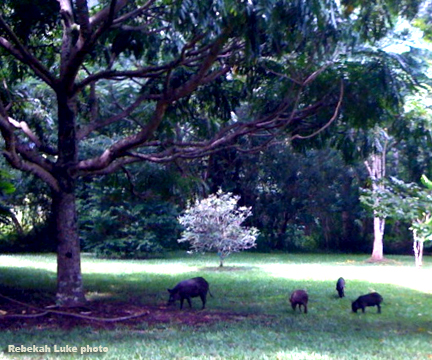
Never know what’s in store for me when I go into the landscape to make a painting. This morning these wild pigs enjoyed the area at Luluku as much as I did.

Copyright 2011 Rebekah Luke


Feel better by looking toward the stars

9 08 2011

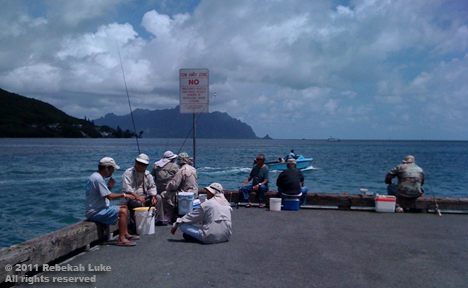
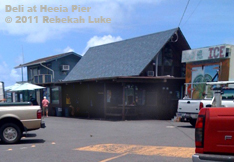
You'll likely be pleasantly surprised at the food from this hut at the end of Heeia Pier.


Sometimes life makes me grouchy. Other times it feels like the stars are aligned. Today my lucky stars aligned.

My frequent route from the studio takes me to Kaneohe for water exercise at Pohai Nani’s heated pool.

Last month I was sidelined with a physical pain that I can only be sure is a characteristic of aging, as neither my physician, naturopath, physical therapist nor radiologist can pinpoint anything else.

Just because something shows up in a test doesn’t mean it’s the cause of pain, they concurred.

My trainer Malia (I call her my trainer, but her correct title is exercise specialist) at Pohai Nani said, “It could be anything.” She suggested a visit to the doctor. A couple days later, my cousin in his 80s assured me, after I mentioned my problem, “You know, this is just the beginning.”

This “problem” made me grouchy. All I felt like doing was … well, I didn’t feel like doing much of anything.

With the various therapies and time, including Reiki on myself, I’m improving, feeling finer. Hallelujah! Still, though, as the saying goes, there are some good days and some bad days.

This morning Malia said she was outfitting her bicycle and planned to add some cycling to her exercise routine. She was also in a competition to lose some weight. On an impulse I said I’d join her.

Bicycling on the tandem is something I can do with DH. We used to do that a lot when he raced, even taking our bicycle on neighbor-island and continental trips. We were our thinnest then.

Malia’s goal is to shed 30 pounds. Mine is to reduce by 20. That’s a total of 50 pounds between us, all by Thanksgiving Day.

I reloaded the free Lose It! ap to my iPhone to show I was serious. All I do is program my goal, enter what I eat and my daily activity, and it automatically calculates the remaining calories I may have. I think I have a good chance of meeting my goal because I’ve already started to change my diet after reading the book Anticancer. Please see my previous post.

After the pool and some errands, I swung by Heeia Pier for lunch and scored a good parking place, step one. The place has become popular with the breakfast/lunch crowd, and sometimes I have to park on the far side of the boat ramp. Looking at the menu board and considering food choices and my lack of cash — pay day for me is tomorrow, and I robbed my parking meter fund of quarters today — I picked “stir-fried veggies” for $3 and an honest cup of coffee for 50 cents.

Chef Mark Noguchi, formerly of the restaurant Town in Honolulu, is a hard worker. He prepares food fresh and from scratch, so usually there’s a wait. Darn it, I wasn’t quick enough to put in my order ahead of five firefighters (firefighters — that in itself is complimentary of the good grinds at Heeia Pier), and when it became my turn, the word was “no more.”

Gooch — that’s his nickname — must have seen my face fall. Or I must have looked hungry. He said the vegetables didn’t look good enough to serve, so he’d just pulled the item from the menu. “What kind of vegetables do you want?” he asked. “Anything. If they’re fresh,” I said.

Returning from the reefer he said he’d make me some. Before the firefighters got their plates, Gooch brought me a light and tasty medley of eggplant, turnip, onion all from JAWS (Just Add Water, a CSA community-supported agriculture group) in Waimanalo, and watercress from his relative’s farm.

Watercress stir fried with eggplant, turnip, and onion

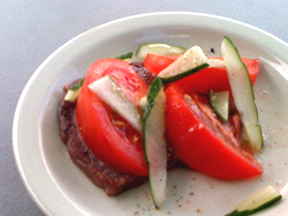
Half way into it he brought out—on the house—another dish on a real ceramic plate, not a disposable plate: a slice of pan-fried pa‘i‘ai (hand-pounded taro from Daniel Anthony and Anuenue Punua of Mana Ai), topped with a fresh salad of chilled local tomato and cucumber, very very lightly dressed in a barely sweet sesame vinaigrette,  and sprinkled with a little pepper and sea salt.

Taro tomato cucumber salad

Can you believe it?!  Now that’s classy. Not just the food, but the customer service too!

Committed to serving organic and/or locally grown food as much as possible, Chef Noguchi sometimes goes into the field to harvest the ingredients personally.

If you go to Heeia Pier and he’s not busy, ask if there is anything else not on the regular menu that’s being served up that day. You never know!

I think if you caught a fish out there from the pier, he might cook it for you too (if you cleaned it first ;-)), just like it used to be local style.

So healthy. So delicious. So unprocessed. Thank you for bringing beautiful food to the windward side. Thanks to the local farmers (we can patronize the farm bureau-sponsored farmers markets). And thanks to all who support local farmers by buying organic or locally grown fruits, vegetables and meats.

The stars align, but I suspect intention helps.

Copyright 2011 Rebekah Luke


Clouds lifting over Lanihuli

5 08 2011

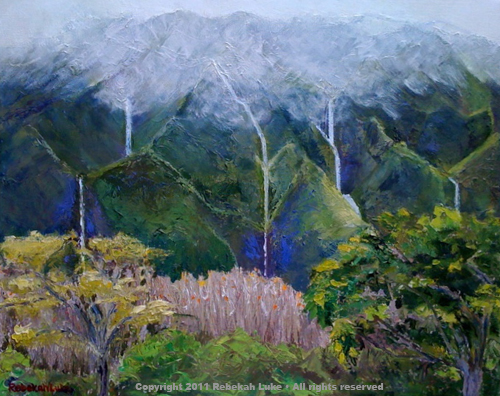
I wonder if it is true that in olden times the waterfalls of windward Oahu ran all the time. Olden times meaning before water was diverted to the Ewa plain for sugar cane and land development. At the present intersection of Kahekili and Likelike highways, while waiting at a red light, a rain storm typical of our wet season had just stopped and the clouds lifted to reveal a spectacular scene of the Koolau mountains. I was on my way to Hoomaluhia Botanical Garden at Luluku and made up my mind to hold the vision in my memory so I could paint it. For in just a few quarters of an hour the sun came out again and the waterfalls disappeared.

"Clouds Lifting Over Lanihuli" 16" x 20" Oil on Canvas (unfinished)

UPDATE, September 11, 2011: As you will see in my 9/11/2011 post, I have made some changes to this painting, and I think you may like the finished work better. Thanks for visiting Rebekah’s Studio.

Copyright 2011 Rebekah Luke


All pau & ready for market

8 06 2011

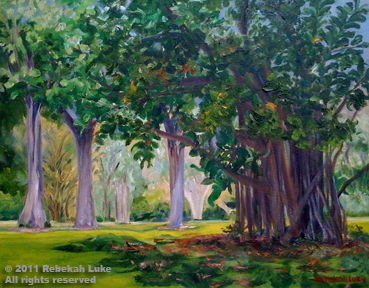
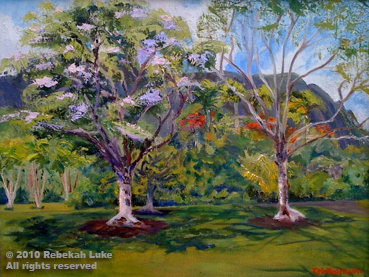
Pau means finished. I finished two more of my landscape paintings. More trees. Patrons tell me they like the way I paint them. “Banyan Shade” needs a final varnishing as soon as it’s bone dry. “Welcome Spring” is framed, wired, and ready to leave the studio.

Banyan Shade, 16" x 20" Oil on Canvas

Welcome Spring, 14" x 18" Oil on Canvas

Please click on the PAINTINGS menu tab for other available art work. Thanks for visiting!

Copyright 2011 Rebekah Luke


Foods my ancestors ate

20 05 2011

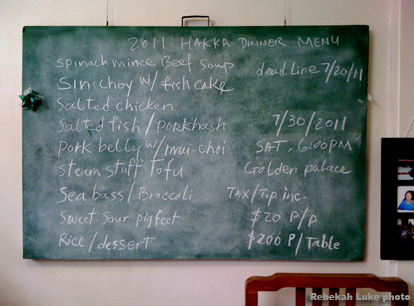
Hakka menu

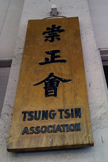
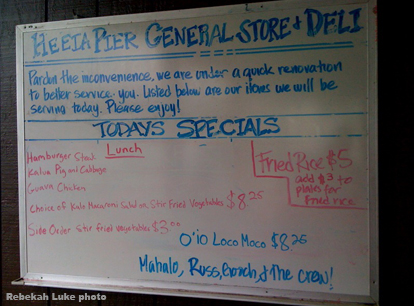
The theory of eating the foods my ancestors ate for good health came to mind when I saw two board menus recently: a Hakka dinner menu planned by the Tsung Tsin Association in Honolulu, and the day’s local specials at the Heeia Pier General Store and Deli on Oahu.

They reminded me of a model for sustainability presented at the “Chefs & Farmers Facing Future” forum I attended last month: create tighter communities and make friends with your neighbors.

At lunch with Cousin Millie (see my 5/15/2011 post) she asked if we would be interested in joining the Tsung Tsin Association, an international club that practices and preserves the (Chinese) Hakka culture.

We have Hakka genes. Hakka people descend from the Han people and migrated at various times for various reasons from northern China to the south and beyond. Hakka people are still migrating. They are nomadic.

Cousin Audrey Helen and I decided we would go to the Sunday meeting in Chinatown (Millie couldn’t make it) to check it out—for Millie—and report back. What do they do? I asked. Millie said she was told they eat and learn about Hakka culture (in that order). I chuckled.

Everyone the world around agrees eating has priority. There it was on Sunday—a Hakka Dinner Menu posted in the clubhouse. There are no Hakka restaurants on Oahu, but the association found a restaurant in Chinatown that would cook the special menu for them. I thought of my friend Linda.

I met Linda in the Sunset magazine food test kitchens in the Seventies. I left the magazine after a couple of years, and she enjoyed a long career as food editor. When she retired in 2005 Linda planned a trip to China to research Hakka cuisine. It was an eating tour with all the arrangements made, right down to the chef of most meals, by Linda. She needed two more travelers to make up her party of 10 for a group rate, so DH and I did not have to think twice to accept the invitation. All we had to do was pay and show up in Beijing on the appointed day.

There are some basics to Hakka cuisine, but we also found that food took on added flavors from whichever region Hakka people lived.

Both Linda and I will have food books out in 2012—hers the product of her Hakka cuisine research, and mine a reprint of Everyone, Eat Slowly that has recipes and anecdotes of my family. The Tsung Tsin Association members might want copies, I’m guessing.

So that’s the Chinese side.

The other side is part Native Hawaiian. What’s native on the menu below is the “kalua pig,” “guava,” “kalo” and  “o‘io.” And it wasn’t lost on me! These foods are not the traditional plate lunch fare. How refreshing to see what the new chefs like Mark Noguchi are coming up with.

Looks good to me

The eatery that served up local-style food at the end of He‘eia pier, has reopened under new ownership/management, much to my delight. It had been closed for months since the previous owners retired. It is one of the very few ocean-front restaurants on the long coast between Kailua and Haleiwa. DH and I used to bicycle there from the studio for breakfast and watch the fishing boats come and go, or stop there on the drive back from town. Its scenic value is popular with artists.

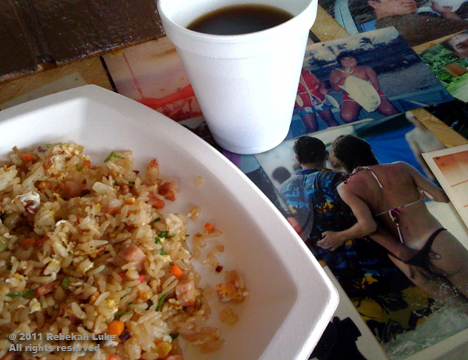
From this menu, though the other diners recommended the guava chicken, I tried the fried rice. It’s a sautéed mixture of onion, green onion, carrot, egg, bacon, Spam—all diced finely—rice, and (I think) a little oyster sauce.

Island fried-rice breakfast at the counter decorated with snapshots. Wow!

You can sit at the picnic tables or the small counter and listen to the folks talk story, or meander down the dock and watch the people fish for their own food. A man offered me some dried aku he made to go with my fried rice.

He‘eia pier

All this seems to fit in nicely with the message received from the “Chefs & Farmers Facing Future” food forum, organized by shegrowsfood.com and Leeward Community College, whose food service students wanted to give back to the industry that gives so much to them. The event brought together farmers, fishers, aquaculturists, ranchers, chefs, and media reps to explore promoting and using locally produced food for sustainability in our island communities.

The meeting started with the sobering fact that there is only about a 10-days’ supply of food here with most of it arriving by ship or plane.

What I took away from the meeting was the notion that to sustain we should form tighter communities and make new friends with our neighbors within them.

As the Hakka association that takes care of its clan. (My grandmother took care of her own family of 15 and neighbor bachelors by growing vegetables in her victory garden.)

Or the young creative chefs serving dishes with local ingredients, or the man who gave his fish to me, or my own developing garden that sometimes produces enough to share with the neighbors. It’s a great life.

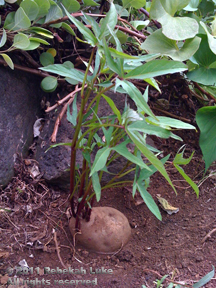
Sweet potato in my garden

Copyright 2011 Rebekah Luke