From national park to national park

28 09 2009

Watching Ken Burns’s “The National Parks: America’s Best Idea” on PBS last night reminded me of two great trips we took in 2004 across parts of the continental U.S. where some of the parks are located.
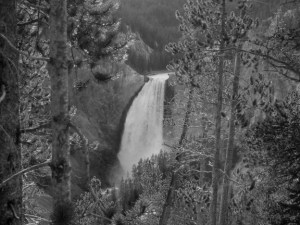
Lower Falls at Yellowstone

Lower Falls at Yellowstone

This excellent PBS-TV program about the national parks continues every night this week through Friday, 8 to 10 p.m. HST, and repeats at 10 p.m.  I highly recommend watching/taping it.

That year, 2004, we decided to meet and enjoy some of our family on Moku Honu (North America, Hawaiian for Turtle Island as Native Americans call it)—an idea inspired by the fact that my father, my hanai (adopted) father, and darling husband’s mother and father all passed over in 2003.

I used the internet and telephone to make all the travel arrangements myself.

The first trip was in May. We had a date with DH’s brother and sister on Memorial Day to spread their father Walter’s ashes at Mount Nittany on the Penn State campus per his request. We started to entertain the idea of driving ‘cross  country, but which route?

We also wanted to call on uncles and aunts and their families who DH seldom saw and who I had never met. Walter had two brothers, Uncle Lee in Texas and Uncle Ron in Virginia. Let’s go visit!

We got out the road atlas. I plotted the towns and thought of who else we could call on between Texas and Pennsylvania. I thought of Cousin Eddy in Memphis, Tennessee, of my mom’s side of the family, and my brother-in-law Paul in his new house in North Carolina.

Upon further examination of the map, I could see that we could plan a route and visit a couple of national parks and other visitor attractions too. We agreed we would drive short distances, maybe four or five hours at a time, not all day, then stop and stay no more than three days at each place. We didn’t want to wear out our welcome.

Here is the route and the itinerary, in case you’ll be in the vicinity and want some ideas:

Fly from Honolulu to Dallas. Visit Uncle Lee and family in Plano and Tyler, Texas.

Pick up a rental car in Tyler, drive to Hot Springs National Park in Arkansas, then to Memphis. Turn in the car.

Tour Memphis with expert tour guide Cousin Eddy. (I have to mention the famous Memphis barbecue, Graceland, Sun Studio, Stax Museum, National Civil Rights Museum, Beale Street (rockabilly music by the Dempskys), soul food, Memphis in May festival, plus a drive to Ripley, Mississippi, to visit Eddy’s aunt and eat pie!)

In Memphis, buy a lot of music CDs. Go pick up the next rental car. (Would we mind driving a van that needs to be delivered to Philadelphia for the same rate? As long as it has a CD player, no problem!)

Listening to our music, drive the length of Tennessee to Nashville, attend the Grand Ol’ Oprey.

Enjoy the Great Smoky Mountains National Park from Gatlinburg, TN, and over the border to Cherokee, North Carolina. Drive slow along the very scenic Blueridge Parkway from Cherokee to Blowing Rock, NC. Stay at Chetola Lodge for the Celtic Music Festival.

Turn right (east) to visit Paul and family in Summerfield, NC,  head up to Virginia to visit Uncle Ron and Aunt Marge, and then on to Sister Penny’s in Collegeville, PA.

At the end of week no. 3, after spreading Walter’s ashes, we were in the Nittany Valley in the exact center of Pennsylvania. We located DH’s grandmother’s old farmhouse of his childhood, and we ran into his other cousins, all still farmers, of a family who has remained in the area since their ancestors arrived from the old country. This trip to the Nittany Valley was the first time DH, his brother and his sister traveled together as adults. I’m sure they will always remember it.

The second road trip was in September. We enjoyed the May experience of driving so much that we decided to meet the Luke relatives before meeting up with two of the Sinclair sisters on their annual pilgrimage to Yellowstone National Park.
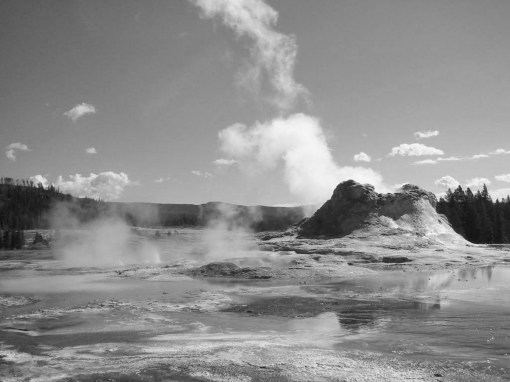
Steamy landscape at Yellowstone

Steamy landscape at Yellowstone

I wanted to visit Aunty Julia, my father’s last surviving sister who lived with her daughter Loris’s family in Stockton, California. We started in San Francisco and met Cousin Laureen and family. Together we drove to Stockton to see Julia and Loris. Another cousin Lorene, not to be confused with Laureen, and her husband drove from Sacramento bringing dim sum for lunch. Throughout the afternoon Loris’s several kids stopped in with their kids, and we had a really nice reunion.

Loris has a sister, Bee, who lives in South Fork, Colorado. So next morning we flew from Oakland to Albuquerque and drove to Santa Fe, New Mexico. (In Santa Fe I can recommend El Paradero B&B, El Farol restaurant, and the Georgia O’Keeffe museum and café.) From there we went to Mesa Verde National Park, then to Durango where we rode the narrow gauge railroad to Silverton and back. We continued to South Fork (of the Rio Grande) to visit Bee and her husband.
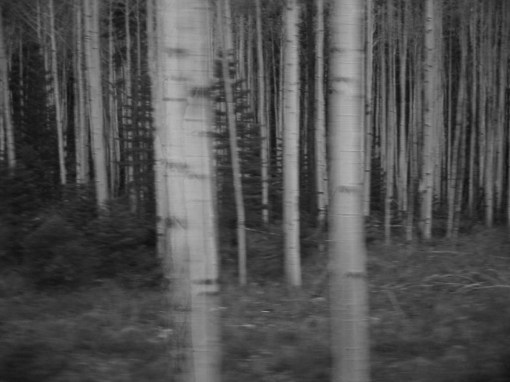
Birch and evergreen

Aspens and conifers

To get to Yellowstone National Park, we drove the highway that runs along the top of the Colorado Rocky Mountains from south to north. We had dinner with Bee’s son Bret in Steamboat Springs. Next morning we entered Wyoming. There’s a lot of Wyoming before you get to the park’s north entrance. Ruth and Kathy came in from Idaho.

We thoroughly enjoyed our rendezvous, the beauty of the park, its geological features, and all the wildlife.
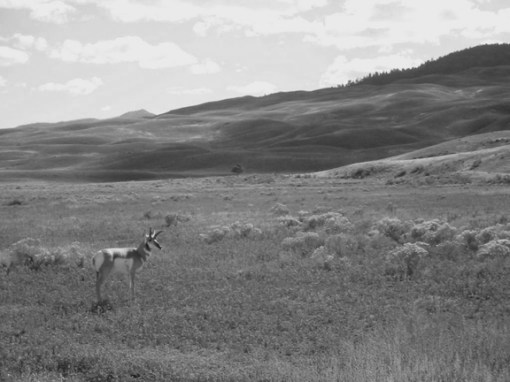
Pronghorn antelope

Pronghorn antelope

As it is adjacent to Yellowstone, we also visited Grand Teton National Park in Jackson, WY.

Thus ends my post of our 2004 tour of the national parks by way of some quality time with our families.

Some reflections:

When I was in the third grade at Schofield Post Elementary School, our lessons included listening to the Standard School Broadcast radio program about the national parks, featuring a different one each week. That’s how I first learned about these places that were wisely set aside for our benefit and enjoyment. I imagine the Ken Burns films will provide additional education today.

Why did we wait until our parents died to call on our uncles, aunts, and cousins? Because our parents didn’t want to. Now I think, that’s silly. Lee, Ron and Julia have since left the earthy plane as well. I am so glad we visited them in 2004. Now for both DH and myself, our generation is the oldest in our respective families. Gratefully, we still have our cousins, siblings, daughter, nieces and nephews.

Three weeks is long enough to be away from home; three and a half weeks is too long.

When time and finances permit, we ought to do a trip like this again—family and the national parks. Perhaps sooner than later.

Copyright 2009 Rebekah Luke


Hokusai at the Honolulu Academy of Arts

24 09 2009
Honolulu Academy of Arts

Honolulu Academy of Arts

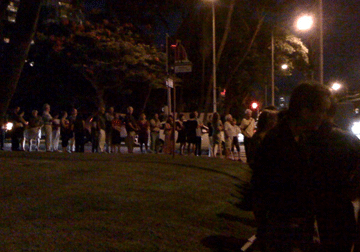
It felt like all of Honolulu came to see the 36-plus views of Mount Fuji at the Honolulu Academy of Arts last night. More than 900 people stood in line to enter the opening of “Hokusai’s Summit: Thirty-six Views of Mount Fuji” at our city’s art museum.

I skipped my tai chi class to meet my friend Becky at the corner of Victoria and Beretania, and at 7 o’clock the line extended around the block. Neither of us had eaten dinner, but it was so crowded that we opted to bypass the refreshments and headed for the gallery.

Hokusai-exhibit-line

This special exhibition that will extend for several months from now and into 2010 offers the opportunity to study the work of Japanese artist Katsushika Hokusai (1760-1849), who lived during the Edo period when a new art called ukiyo-e emerged. It is believed that he made 30,000 works of art and published more than 270 books. His life was dedicated to drawing.

The Honolulu Academy of Arts is known for its fine Asian collection, within which there are more than 10,000 Japanese woodblock prints. The collection includes a rare complete set of the famous Thirty-six Views of Mount Fuji series by Hokusai. This is what the Academy of Arts has put on public display.

The exhibit is rounded out by items about the woodblock printing process, about Hokusai’s stylistic development, of Mount Fuji by the artist Hiroshige, and of Mount Fuji by other painters. Reading the “Visitors’ Guide” handout and the labels next to each piece of art when I have more time will give me a working knowledge of the subject for sure.

What impressed me last night was how woodblock printing lends itself to simplicity and a limited color ink palette, something I can try in my own work. Hokusai was so skilled in drawing, he could incorporate the detail of human activity that I found delightful and often amusing. And, of course, it was fun to see all the different treatments of Mount Fuji.

I also was very impressed by the turnout! In the crowd I bumped into my high school journalism teacher, former work associates, other artists and writers, my cousin, “the ants” (like ants at a picnic), and many whose faces I’ve seen around town but couldn’t place because of the different venue. When Becky and I were tired of rubbing shoulders, literally, we decided it was refreshment time: sake-tasting, fruity punch, cubed cheddar, cubed pepper jack, lavosh, and sweet gingery senbei crackers. Becky, who is a member of the Academy of Arts, said there are three or four major exhibitions a year and that the openings are popular events. You can say that again. Long live the arts!

Copyright 2009 Rebekah Luke


Sweet memories and coming home, part 1

7 09 2009

On Friday I had a date with my friend Vinnie. At long last I would see him perform Aldyth Morris’s one-person play Damien, a story about the Flemish priest, Father Damien de Veuster, who unselfishly spent his life ministering to the lepers isolated at Kalaupapa on the Hawaiian island of Molokai. Father Damien will be canonized on October 11, 2009, in Rome.

I first met Vinnie at Maui Community College when I worked in university relations. He is one of those colleagues/friends who you see every five years or so, and with whom you can just pick up where you left off. Vinnie has performed Damien more than 60-70 times since 2000—on Maui, in the United States and at the Edinburgh Fringe Festival in Europe. I emailed him I finally would be in the audience. “Stay afterward so I can see you,” he wrote back.

With opening-season football games townside signaling bad traffic, I decided to get to the church in Mililani by going the opposite way along the North Shore of Oahu and down the middle of the island. The distance is longer, but the traffic moves, and I enjoy the scenery along the two-lane Kamehameha highway versus the freeway. The route I like goes through Wahiawa, the town I lived in until I was 13. When we pass the Kukaniloko Birthstone State Monument, I know I am almost there.

Kukaniloko by Rebekah Luke

Rain hides the Waianae Mountains behind the Kukaniloko Birth Stones among the tall trees. The birthing ground of Hawaiian royalty was established in the 12th century, according to Fornander.

Kamehameha Highway runs for just three blocks through the town. I have a habit of reciting the neighborhood places I remember. Some are still there, others are long gone and replaced by fast food joints and nondescript development. Wahiawa served Wheeler Air Force Base and Schofield Barracks on the other side of the singing bridge, and the pineapple industry. The lively little main street had everything.

Annie Uwi’s (18 cents for Love’s Bread), the tofu factory, Doctor De Harne’s, Bank of Hawaii, Pang’s grocery (2-cent deposit refunds for soda bottles), Island Bazaar (drygoods and gifts), Chow Ching’s (gon lo mein, char siu and roast pork on Sunday), Duke’s Clothing, Happy Fountain (high swivel stools, orange freezes, curly saimin with fresh green onions, and the best grilled hot dogs), Elite Market, the stationery store, the barber shop, the taxi stand, Top Hat Bar, Service Motors, the shoe store, the jeweler, the variety store, Benny’s photo studio, Judy’s Florist (big cattleya orchid corsages).

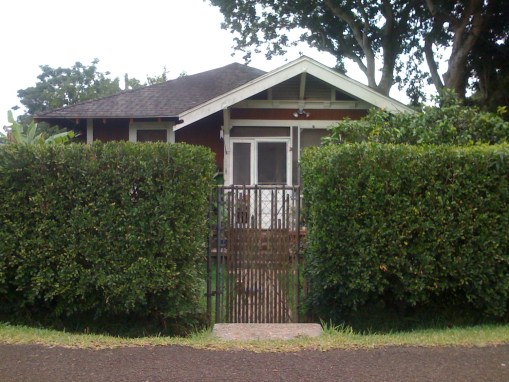
Sometimes before leaving Wahiawa, and if the people I’m with don’t mind, we turn right on Kilani avenue to see my old house. My parents rented it from Uncle Harry who lived next door. He had nine houses amidst a lychee garden. Folks drove all the way from Honolulu to buy lychee. I remember being a baby and playing with Uncle Harry’s earlobes on the chenille bedspread as he tried to get me to nap while he listened to the story on the radio and Aunty Edna fussed in the kitchen . . .

Where I lived 50 years ago. The front porch has been screened in, the mock orange hedge is twice as high, and there's a gate now. Everything else looks the same, including the mother lichee tree that must be older than I!

Where I lived 50 years ago, the front porch has been screened in, the mock orange hedge is twice as high, and a gate makes it look less inviting. Everything else looks the same, including the mother lychee tree that must be older than I!

So, you see, every so often I recall my childhood.

As I grow older and work on ascension, and as I observe our 4-month-old granddaughter, I think back on what it was like to be a baby and how important it is for adults to create happy memories for children. Some of my memories weren’t so sweet. I remember the adults laughing at me when I crawled from my room bringing my socks after they asked me to fetch my shoes, feeling frustrated that I could not talk yet to explain why I did that. But I certainly could think it!

I remember emotional things and times that woke up my senses such as when my mother took me aboard a President Lines cruise ship to dine with her visiting friend, and I burned myself on the baked potato.

I remember when Momma took me to Honolulu by taxi on her Thursdays off from piano teaching (I could walk now) to buy music at Metronome and Thayer’s for her pupils, and before coming home we would go to Woolworth, and she would give me a teaspoon of her coffee to drizzle over my vanilla ice cream. Coffee is still my favorite flavor.

(Darling husband thinks it’s amazing I can remember that far back. “Well,” I suggested, “try it. Don’t you remember the smell of your mom?”)

One time I was at a Hawaiian civic club meeting in Wahiawa where they served a bento box lunch. One bite took me back. “Where did this come from?” I asked. “That’s from Marian’s Catering.” Ahhh … I wasn’t able to identify the flavoring, but the taste that took me home was unmistakably Wahiawa from the 1950s. It hadn’t changed.

And just this past July at a friend’s memorial breakfast, someone brought prune bread from Wahiawa. When I was a kid it was called prune cake, and I have been looking for it my whole life. I ordered a prune cake from Chef Instructor Walter Schiess at Kapiolani Community College for my wedding cake, and, unable to find a recipe, he decided, “If it has prunes in it, then it must be a fruit cake.” The Old English wedding cake, three tiers tall, was gorgeous, but not prune cake. When the woman who brought the prune bread saw how ecstatic I was, she gave me a whole loaf to take home. Now I know my sweet memory is alive and well at Kilani Bakery!

Damien. Oh, yes, I was on my way to the play.  Not surprisingly, Vinnie (correct name: Vincent Linares) was FABULOUS as Father Damien. He portrays the character so very passionately. What with Aldyth Morris’s script and the venue of St. John Apostle and Evangelist Church, it was excellent theater on every level. To quote the program notes, “The play finds Damien, awakened from his deathly slumber, taking a journey through his turbulent and compelling life while answering his detractors and critics, a journey that eventually takes him home again.” Home.

On Saturday evening I attended for the first time the Ka Himeni Ana (Old Fashioned Singing)  event at the Hawaii Theatre. This concert and competition has taken place annually since 1983 to encourage the singing of Hawaiian music in the old-fashioned manner without microphones or amplification, with the exception of the steel guitar. The production was filled with nahenahe (soft, sweet) sound, the festive sight of musicians and concert goers in the beautifully renovated theatre, and the fragrant scent of hundreds of fresh ginger blossoms.  Sweet memories, indeed. I plan to go again next year.

To be continued . . .

Copyright 2009 Rebekah Luke

Special note: Vinnie Linares’s final performance of Damien will be on October 24, 2009, at an old church at Makena Beach, Maui. When available, the event details will be posted in Comments below.


Alii Sunday at Kawaiahao

31 08 2009

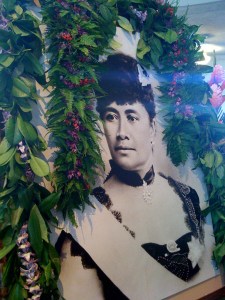
Liliu's portrait

Yesterday was Alii Sunday at Kawaiahao Church in Honolulu, honoring Queen Liliuokalani (b. 1838-d. 1917), sister of King David Kalakaua. She reigned as the last monarch of Hawaii from 1891 to 1893 when she was overthrown. Her birthday is September 2.

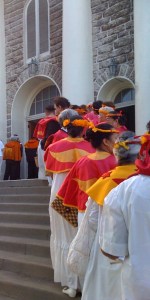
Each Alii Sunday, the Hawaiian Royal Societies and other ahahui (Hawaiian clubs) walk in the  processional, and the front pews are reserved for them.

Yesterday I attended as a member of the Koolauloa Hawaiian Civic Club with Kamakea, our vice president. We rode in to Honolulu with her son Kaimana, who is a member of the Royal Order of Kamehameha I.

This post shares the highlights for me. You may wish to go sometime. Visitors are welcome to Sunday worship service. Portions are in the Hawaiian language. Kawaiahao is part of the United Church of Christ.

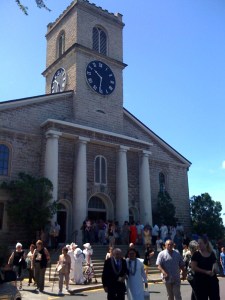
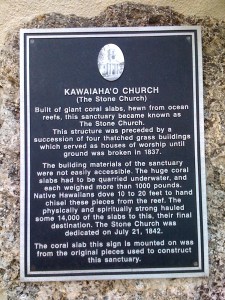
Kawaiahao Church is on the corner of King and Punchbowl streets. A plaque describes its construction

Kawaiahao Church is on the corner of King and Punchbowl streets. A plaque describes its construction.

Kawaiahao plaque

The Hawaiian Royal Societies, or Aha Hipuu, are a special sight. They include:

Royal Order of Kamehameha I who wear red and yellow capes over black suits. The different patterns and lengths of the capes indicate rank.

• Hale O Na Alii O Hawaii, whose members wear white with red and yellow capes. Hale O Na Alii O Hawaii at Kawaiahao

Ahahui Kaahumanu, whose formal attire consists of black muumuus, black hats and deep-yellow lei resembling feathers.

Ahahui Mamakakaua—Daughters and Sons of the Hawaiian Warriors wear black with red, black, and yellow capes (some capes have green).

Other groups who were represented on Alii Sunday were the Daughters of Hawaii in their pure white hats and muumuus (they operate the Queen Emma Summer Palace), the children of Queen Liliuokalani Children’s Center (QLCC is supported by Liliu’s estate, and its beneficiaries are the orphan and destitute children in Hawaii with preference to those of Hawaiian ancestry), and the Association of Hawaiian Civic Clubs that strung crown flowers into 52 strands of lei to drape on the statue of Queen Liliuokalani at the Hawaii State Capitol following the service.

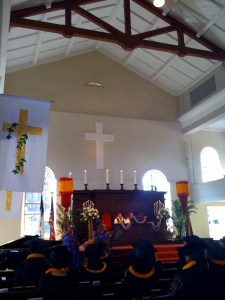
Crown flower was Queen’s favorite. The lavender blossom drapes the left side of her portrait, at the top of this post, and the altar in the next photo.

Kawaiahao interior


At left are the Ahahui Kaahumanu ladies in their formal black in the foreground. Aunty Ilima and Aunty Millie in purple muumuu sing Liliuokalani’s compositions, “Tutu” and “Paoakalani.” [See comment below.]

The church service itself was more lively and less formal than the congregational ones I attended in high school, about the last time I went. Admittedly, that was a few decades ago!

Kalowena gave a tribute to Queen Liliuokalani, and in her remarks she wondered, if Liliu’s time and our time coincided, would Google have given her an edge in maintaining Hawaii’s place in the world? Would her compositions be on iTunes, and would she be blogging and twittering?

This Sunday there was frequent applause, lots of “Amens” by the whole congregation, a testimony by a recent member for the sermon, and a hip-hop dance performance of the Black Eyed Peas’s “Where is the Love” by the youth ensemble. Apart from the pipe organist and choir in the back balcony, there was an ohana (family) choir of anyone else who wanted to sing from the front of the church.

Until she became Queen, Liliuokalani led the Kawaiahao Church choir. She composed more than 150 songs. Some were lyrics only, some were melodies without lyrics, and the rest were full arrangements. At Sunday’s service we sang “The Queen’s Prayer.” A fitting recessional was her “Aloha Oe” now famous around the world. I felt so sad.  ~ Rebekah

[See comment at the bottom.]

If you go …

Do view the 20 original portraits in oil painted by Susan S. Hoffstot entitled “Alii of Hawaii — The Hoffstot Collection” that are displayed on the walls of the right and left balconies. These were a gift from the artist and her husband William H. Hoffstot, Jr., “… to the glory of God, the honor of the Hawaiian people and the enrichment of the State of Hawaii” and dedicated on September 2, 1973.

[UPDATE: The portraits were painted by Patric Bauernschmidt, not Susan S. Hoffstot. Please read the comment by Patric’s granddaughter André below.]

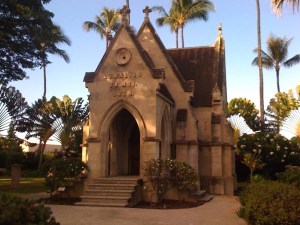
In addition to the church building are other historical structures. One is the tomb of King Lunalilo. Read the plaque explaining why Lunalilo is not buried at the Royal Mausoleum with the other monarchs.

Lunalilo's tomb

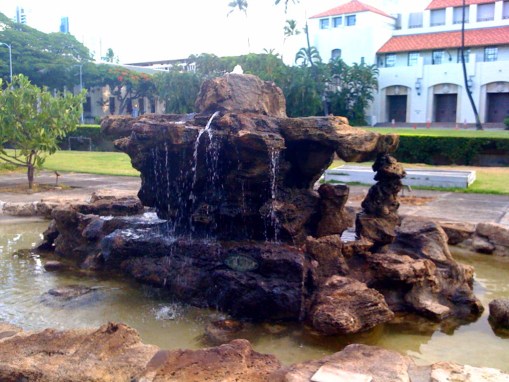
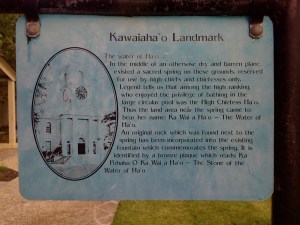
Another is a fountain on the King street side of the church. That’s the Library of Hawaii and Honolulu Hale city hall in the background.

Kawaiahao fountain

Kawaiahao fountain sign

The motto translates, "The life of the land is perpetuated in righteousness."

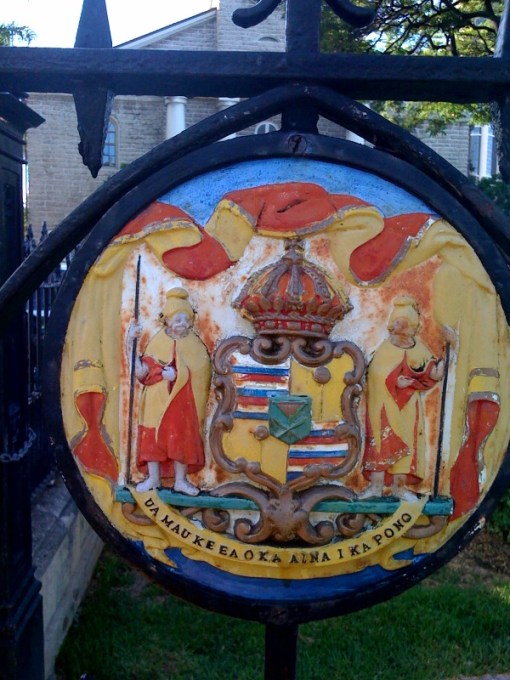
And a third is the seal on the gate to Lunalilo's tomb. "Ua mau ke ea o ka aina i ka pono." This motto became the Hawaii state motto, and it means, "The life of the land is perpetuated in righteousness."

Copyright 2009 Rebekah Luke

Rev. Rebekah Luke has a healing ministry and is ordained by the Universal Life Church. The only two tenets of the ULC are “Freedom of religion” and “Do the right thing.” For more information, click on REIKI HEALING BY OELEN on the menu bar.

Suggested reading:

Liliuokalani. Hawaii’s Story by Hawaii’s Queen. Mutual Publishing, 1991. ISBN 978-0935180855 Paperbound.

Liliuokalani, Her Majesty Queen. The Queen’s Songbook. Honolulu: Hui Hanai, 1999. Edited by Dorothy Kahananui Gillett and Barbara Barnard Smith. ISBN 0-9616738-7-7 Clothbound Edition and ISBN 0-9616738-8-5 Paperbound Edition.